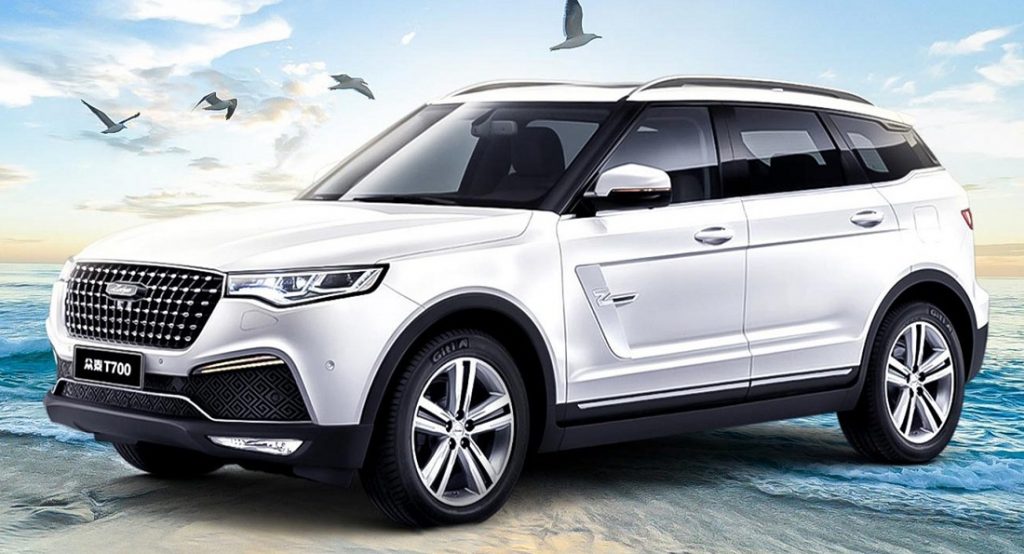
Zotye Auto has spent the better part of a decade as Chinese industry shorthand for cautionary tale—the once high-flying SUV maker whose 2020 collapse into restructuring became a case study in overreach. Yet the headlines emerging from Yongkang this year tell a different story. Debt repayments approaching 400 million yuan, a narrower forecast loss for 2025, a mold factory running at full capacity, and a stock price that has repeatedly hit limit-up all point to a company clawing its way back.
But the most telling signal of Zotye's new strategy isn't on the balance sheet. It's in the name of its latest product. The Wink Y01 International Edition has entered trial production, and the word "International" is doing serious strategic work.
An Export-First Bet, Deliberately Inverted
That Zotye would build an export-first vehicle is no accident. The company has been explicit that its survival hinges on markets beyond China's borders, and the Wink Y01 International Edition embodies that bet. The first small batch of trial-production vehicles has already rolled off the line, and notably, the model is being positioned for overseas buyers rather than for the domestic showrooms that once defined Zotye's ambitions.
This is a deliberate inversion of the usual Chinese automaker playbook, which typically launches at home, achieves scale, and only then looks abroad. Zotye, having lost its domestic footing entirely—production halted for five years—has little choice but to lead with exports.
Why the Brand Leads Abroad
The rationale is straightforward once you consider what Zotye is working with. At home, the brand's reputation is a heavy liability. Chinese consumers remember the collapse, the dealership withdrawals, and the years of silence. Rebuilding that trust requires time, capital, and a product cadence that a restructured company simply cannot yet sustain.
Overseas, particularly in Southeast Asia, the Middle East, and parts of Latin America, the Zotye name carries far less baggage. Buyers in these regions evaluate the Wink Y01 as a value proposition—an affordable small EV with contemporary styling—rather than as the comeback vehicle of a disgraced domestic player. The International Edition designation is thus less a trim level than a declaration of where the company expects to earn its revenue.
Courting Partners, Not Just Customers
Recent developments reinforce how seriously Zotye is courting foreign partners. The company has reached a preliminary consensus with Indonesia's BPKN on new energy vehicle industry cooperation, a signal that Southeast Asia is central to the export roadmap. Indonesia has become a magnet for Chinese EV investment, and Zotye's willingness to engage at the institutional level suggests it views the region not as a dumping ground for surplus inventory but as a foundational market.
For a manufacturer with limited resources, this kind of groundwork is essential—and it is telling that the Wink Y01 International Edition trial production milestone arrived alongside these diplomatic overtures rather than after them.
Managing the Noise of the Past
There is, of course, the broader context of Zotye's attempted rehabilitation. Reports that the company has denied plans to build a Tesla Cybercab, its response to stock limit-up activity, and lingering questions about the fate of its Ford joint venture all illustrate a company still managing the noise of its past. The Ford JV, once touted as Zotye's bridge to credibility, has become an open question, and analysts have openly wondered what comes next if it unravels.
Yet the export pivot offers a kind of insulation: a business built on overseas demand does not depend on winning back the Chinese consumer, nor on the goodwill of Western joint-venture partners.
What makes the Wink Y01 International Edition genuinely interesting is what it reveals about Zotye's self-assessment. A company that believed it could reclaim its domestic position would launch at home first. Zotye is instead sequencing its comeback from the outside in, using export volume to generate the cash flow and manufacturing rhythm that domestic rehabilitation would require. The full resumption of its mold factory and the batch verification of new models suggest the industrial machinery is capable of supporting this approach.
Whether overseas buyers will embrace a brand with Zotye's history remains the open question—but the strategy itself is coherent, and for the first time in years, Zotye appears to be executing against a plan rather than reacting to a crisis. In automotive terms, this is a company rebuilding its brand the way it would rebuild a chassis: from the frame outward, one verified component at a time, rather than polishing sheet metal over a structure that hasn't yet been proven.