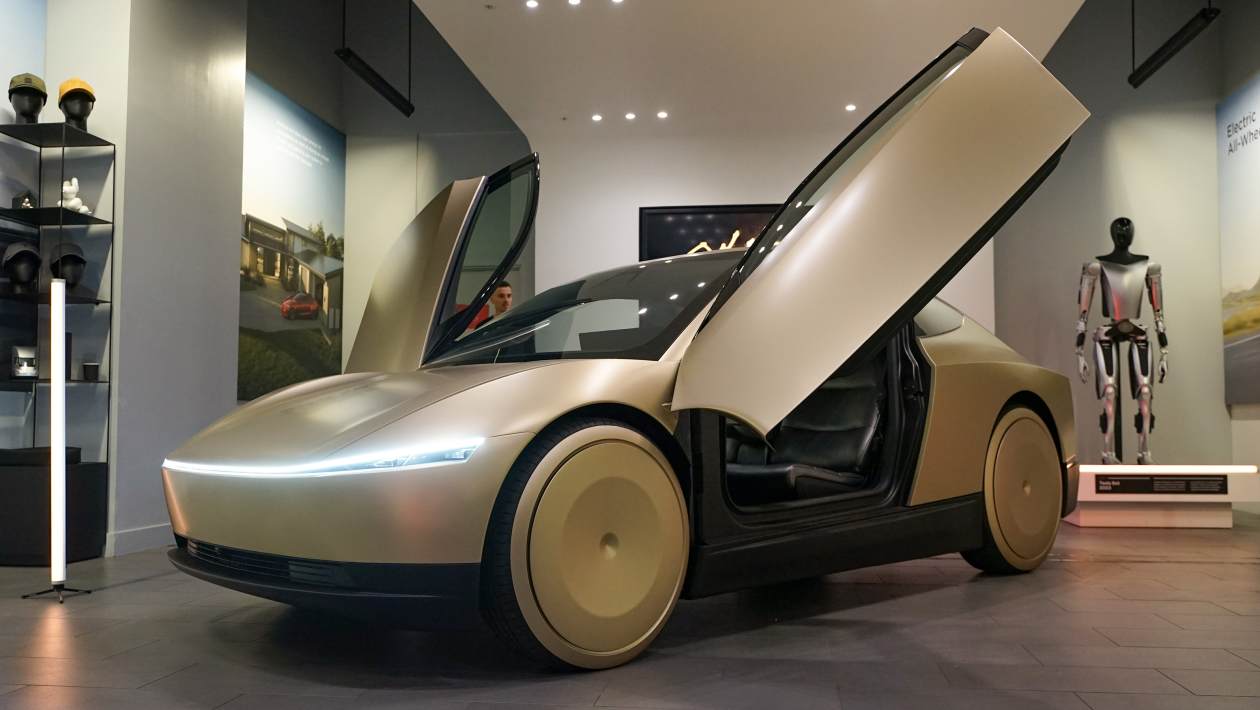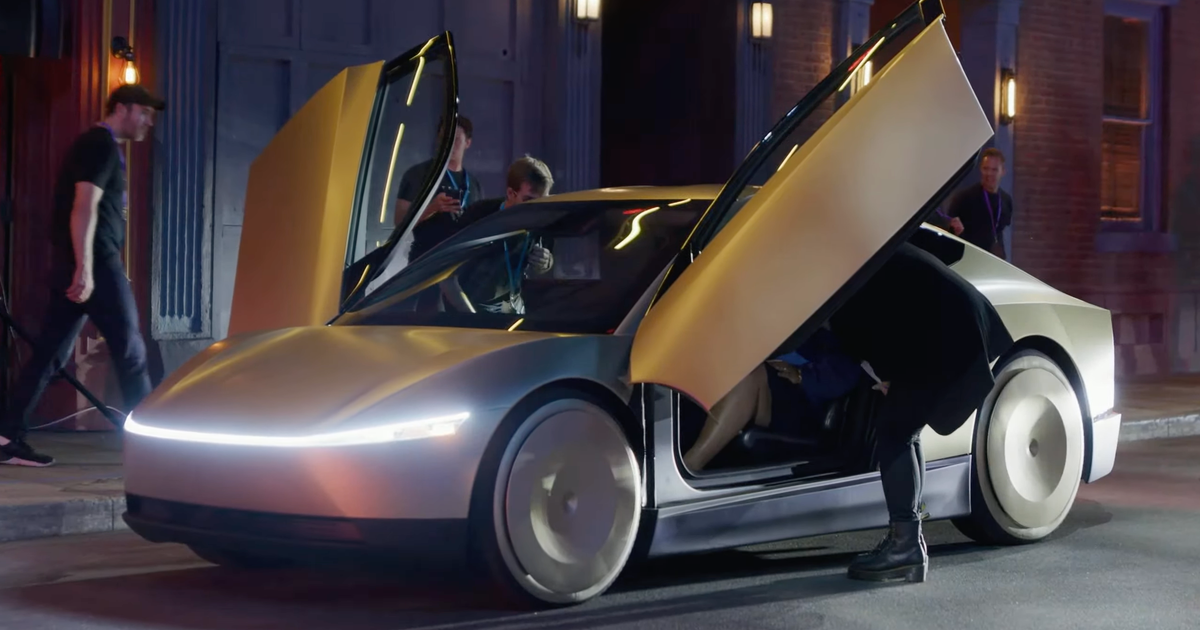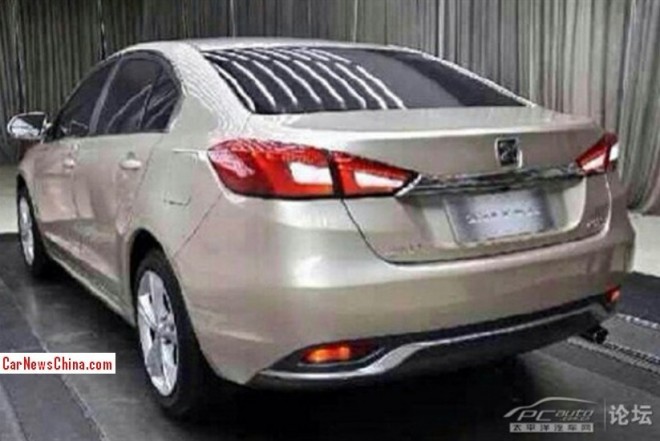
The denial was routine — a flat statement issued to Chinese financial media that Zotye Auto had no involvement in manufacturing Tesla's Cybercab. What made it remarkable was that anyone had asked at all. For a company whose production lines have sat idle for the better part of five years, the notion of being tapped to build the vehicle at the centre of Tesla's autonomy ambitions stretches credulity past breaking point. Yet the rumour travelled far enough to move Zotye's share price and force an official response — proof, if any were needed, that in China's capital markets a story is sometimes worth more than a factory.
To understand why the question was asked, you have to understand what Zotye has become. Once known — somewhat notoriously — for the SR9, a vehicle so closely modelled on the Porsche Macan that it became a case study in China's copycat era, Zotye spent the 2010s as a volume player in the lower tiers of the domestic market. Then came the collapse: production halted, debts mounted, and the company slid into the purgatory of restructuring. Only recently has the narrative begun to shift. Its 2025 losses are forecast to narrow by more than 60 percent, and the company has announced the repayment of nearly 400 million yuan in debt — modest figures beside China's EV giants, but meaningful signals of stabilisation for a firm many had written off.
A Rumour Built on Narrative, Not Capacity
The Cybercab story was never really about manufacturing capacity. It was about narrative. Tesla's Cybercab represents the bleeding edge of automotive ambition — a vehicle with no steering wheel, no pedals, and no clear production home. Speculation that a struggling Chinese automaker might quietly serve as a contract manufacturing partner says less about Zotye's actual capabilities than about the market's hunger for any story connecting a fallen brand to a rising one. Zotye's denial was swift, and its share price reaction suggests investors were only too willing to entertain the fantasy.
What Zotye Is Actually Doing
What is genuinely interesting about Zotye right now is not the rumour it rejected, but the strategy it is pursuing. The company's first small batch of Wink Y01 International Edition trial-production vehicles has rolled off the line, and the word "International" is doing deliberate work. Five years after production stopped, Zotye is betting its fate on overseas markets — a route increasingly favoured by Chinese automakers that have lost ground at home. It has held preliminary talks with Indonesia's BPKN on new energy vehicle cooperation, and it has dipped a toe into fuel cell technology through the E200FCV and an agreement with Air Liquide. These are not the moves of a company preparing to build someone else's robotaxi. They are the moves of a company trying to prove it still exists.
The Gap Between Announcing and Executing
Whether that proof holds is another matter. Zotye's vehicle production restart remains, by its own admission, unscheduled. Narrowing losses is not the same as returning to health, and trial production is not the same as volume manufacturing. The gap between announcing a comeback and executing one has swallowed many Chinese automakers, and Zotye carries the additional burden of a reputation built on imitation at precisely the moment the industry has moved on to originality.
The Irony of the Cybercab Link
There is a certain irony in the Cybercab rumour attaching itself to Zotye of all companies. A brand once accused of copying Porsche now finds itself briefly linked to the most distinctive vehicle Tesla has ever proposed. Perhaps that is why the story had legs: it offered a redemption arc too neat to ignore. But the reality is more prosaic. Zotye is not building the Cybercab. It is trying, quietly and with considerable difficulty, to build itself back into relevance — one trial vehicle, one overseas agreement, one narrowed loss at a time. The denial, in the end, was the least interesting thing about it.