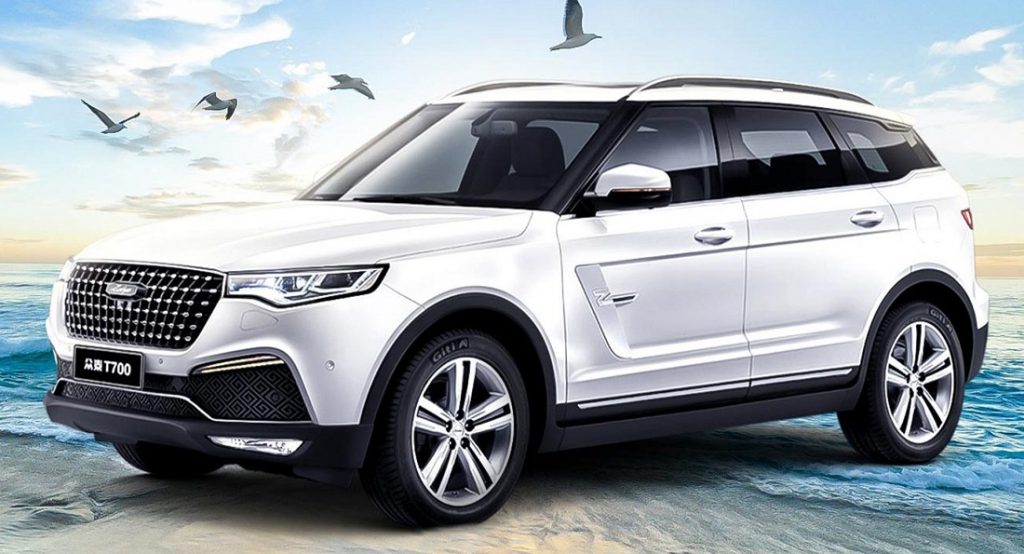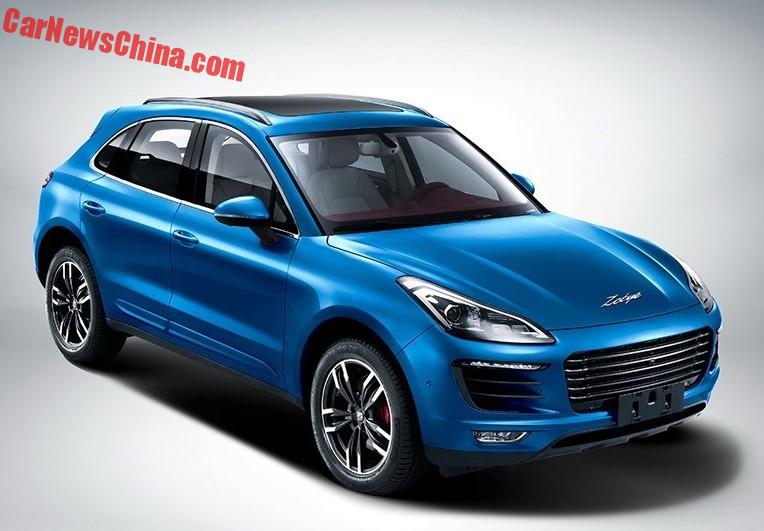
Zotye Auto has reported its first annual profit in seven years, and on paper it looks like a resurrection. In practice, it looks like a liquidation in slow motion. The Chinese automaker that built its reputation on shameless clones of the Porsche Macan did not earn its way back to profitability by selling more vehicles. It earned it by selling land and subsidiaries — monetising the balance sheet while the production line that defines the business sits silent.
That distinction matters. A car company that makes money making cars is a car company. A car company that makes money selling the ground its factory stands on is something else entirely, wearing an automotive badge as a disguise. Zotye's vehicle production line, by its own admission, still has no scheduled restart date. What it has is real estate, equity stakes, and a press release.
The Profit That Wasn't Operating Income
According to financial disclosures, Zotye swung to profitability not through vehicle sales but through asset disposals. Its 2025 loss was narrowed by over 60 percent, but the core manufacturing operation — the thing that makes an automaker an automaker — remains dormant. The company has been selling real estate, offloading equity stakes, and collecting the proceeds as though they were operating income. It is the accounting equivalent of a family selling the furniture to pay the mortgage, then announcing they are solvent.
This is not a comeback. It is an asset disposal dressed up in a press release. The headline number flatters the income statement; the underlying business does not flatter anything.
Recruitment Drives and Mould Factories
The recent news flow around Zotye is a study in cognitive dissonance. The company has launched large-scale recruitment to "struggle for survival" after years of production suspension. Its mould factory has "fully resumed production," and new models have entered batch verification — encouraging signals, until you remember that a mould factory can make moulds for anything, including parts for other manufacturers.
Shares have surged on the back of a new EV entering trial production, and the company has felt compelled to issue a formal response to its own stock limit-up — a ritual that in Chinese markets often signals speculative froth rather than fundamental recovery. Zotye has also denied plans to build Tesla's Cybercab, which is the sort of denial that tells you more about the rumour mill than about the company. Announcements are cheap in this industry. Metal is expensive.
A Qualification Is Not a Factory
The broader context is unforgiving. Eight established Chinese automakers have had their vehicle production qualifications permanently frozen as the industry's elimination race intensifies. Zotye is not competing in that race; it is watching from the pit lane. Its production qualification survives, but a qualification is a licence, not a factory. The company has signed preliminary cooperation agreements with Indonesia's BPKN on new energy vehicles, and once upon a time it announced a joint venture with Ford — a deal that has since evaporated into the same fog that swallowed its Traum sub-brand.
Read those announcements against the silence of the assembly line and the pattern becomes clear. Zotye's most valuable asset has never been its engineering. It was the land underneath its plants. In a country where industrial land values in developed regions have appreciated enormously, a struggling manufacturer sitting on hectares of real estate is effectively a property company with a car-shaped alibi. Selling that land generates cash, flatters the income statement, and buys time. It does not buy a future. Once the land is gone, the income statement reverts to what it always was: a car company that cannot sell cars.
None of this is to say Zotye is finished. Chinese automakers have staged improbable revivals before, and the recruitment drive and mould factory restart suggest someone still believes in the patient. But anyone reading "first profit in seven years" should read the footnote first. The profit came from the ground, not the garage. Until Zotye builds and sells vehicles at scale again, its comeback is a story told in land deeds and subsidiary sales — and land, unlike demand, eventually runs out.
For a brand that once measured itself in horsepower and silhouette, that is the deepest indictment of all. Cars are supposed to be the point. At Zotye, right now, they are merely the pretext.