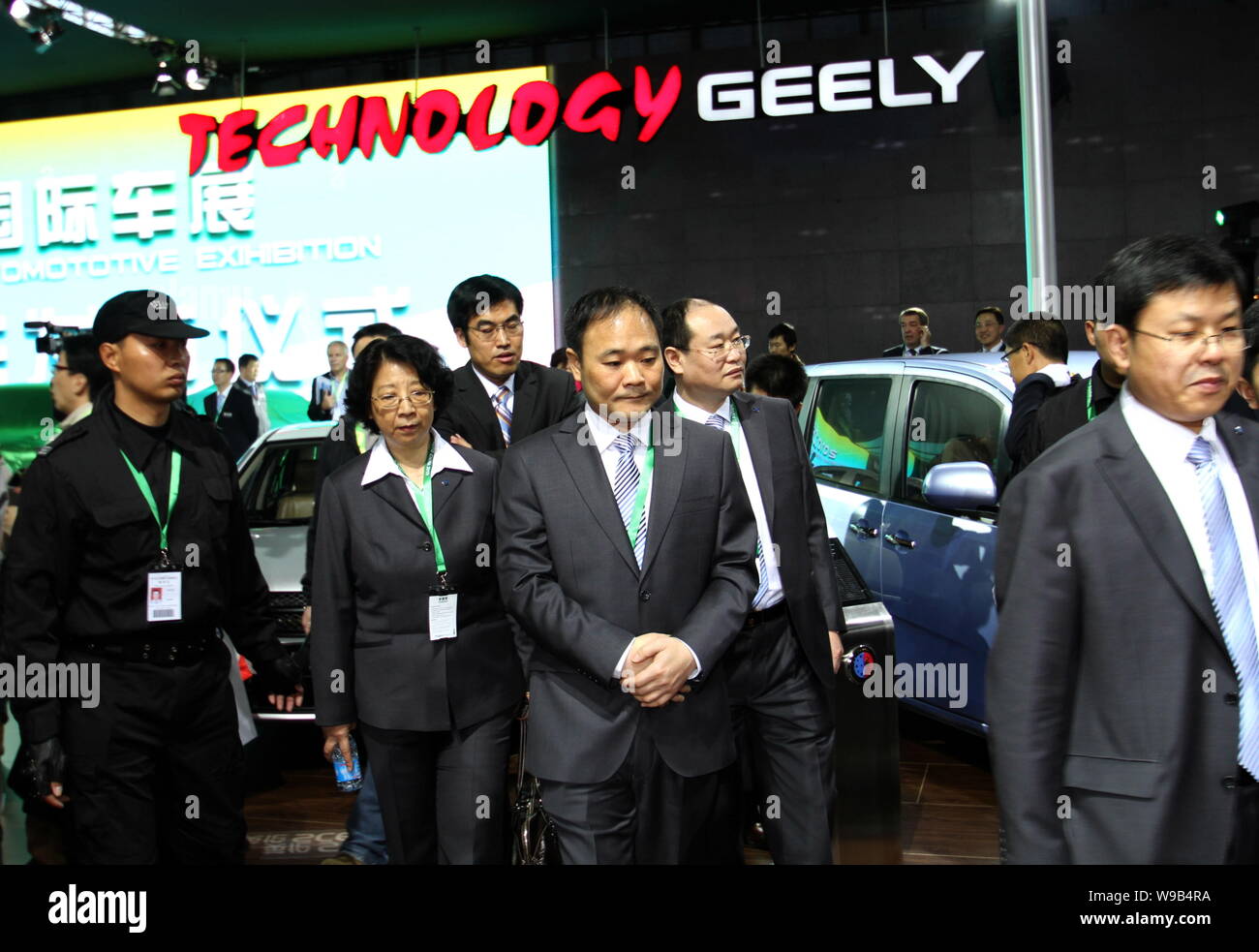
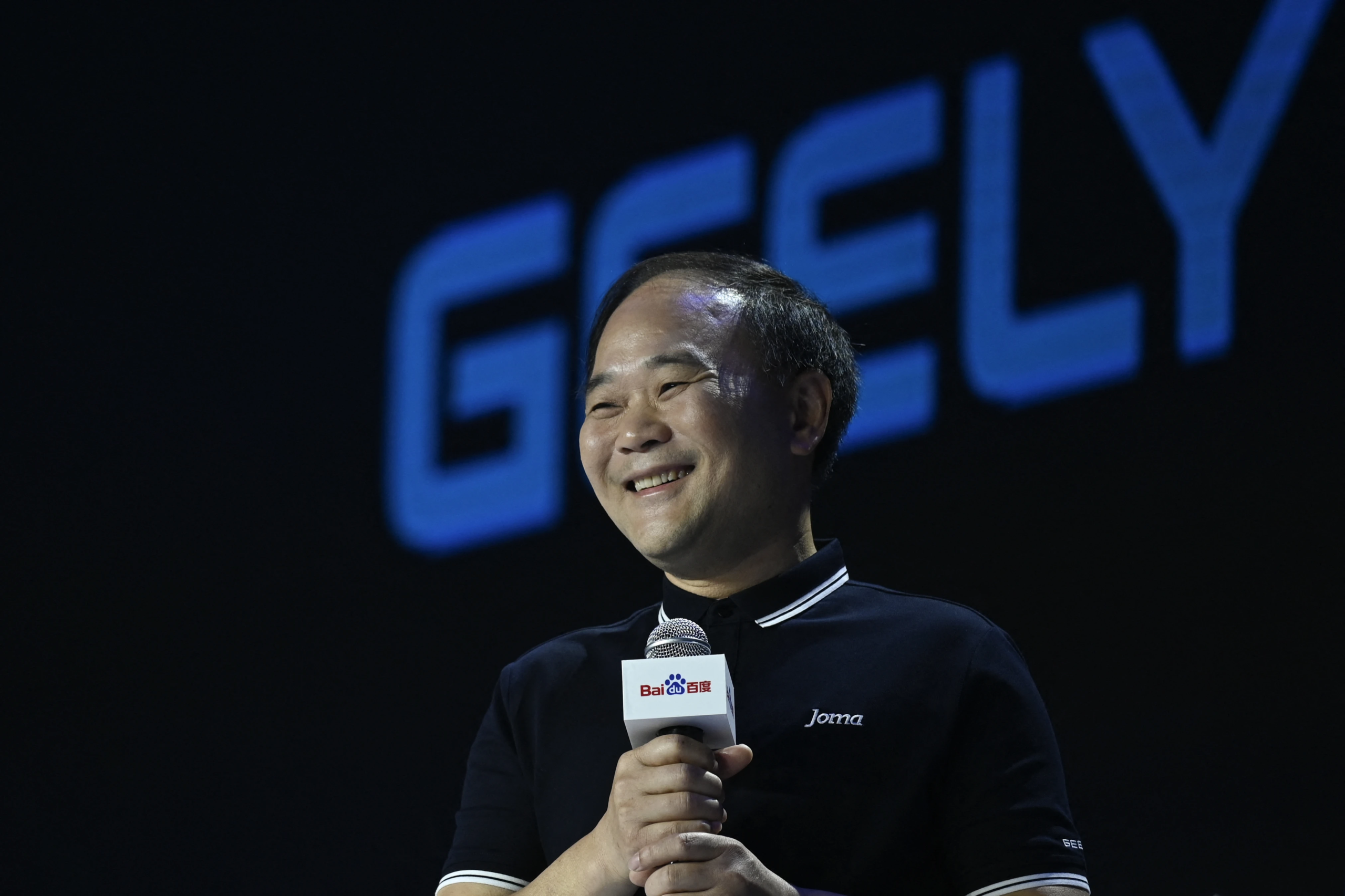
For three decades, Li Shufu *was* Geely. The farmer's son who began by manufacturing refrigerator parts and later bought Volvo was the animating force behind nearly every bold move the Zhejiang-based conglomerate made — from the $1.8 billion acquisition of the Swedish marque in 2010 to the creation of Lynk & Co, the rescue of Polestar, and the launch of Zeekr as a premium electric challenger. So when Li formally stepped down as chairman of Geely Automobile Holdings, handing the reins to a younger generation of managers, it registered as more than routine succession. It marked the end of an era defined by one man's instinct — and the beginning of one defined by institutional discipline.
The market's immediate read has been cautiously positive. Geely has been explicit that the transition forms part of a broader push to streamline its corporate structure and concentrate resources behind its Hong Kong-listed unit as the group's primary platform. That consolidation has been underway for some time. Volvo is preparing to sell Lynk & Co vehicles in Europe. Polestar has secured a $600 million loan from Geely Holding to steady its balance sheet. And Zeekr's premium momentum — underscored by a leading owner recommendation score for the Zeekr 9X — has given the group a credible luxury story to tell. A founder-free Geely, in other words, is not a rudderless one. It is a company trying to become legible to investors, regulators, and partners who prefer predictable structures to charismatic improvisation.
The Sedan Business Gets a Committee, Not a Crusader
For the sedan business specifically, the implications are subtle but real. Geely's sedans — the Emgrand, the Preface, and the electric Galaxy line — sit in the most price-sensitive, volume-driven corner of the Chinese market, where pressure from BYD and a wave of domestic rivals has been relentless.
Under Li, model decisions often carried the imprint of a single conviction: buy the technology, move fast, accept the mess. Under a management committee, the calculus shifts toward portfolio rationalisation, platform sharing, and margin discipline. That should mean fewer overlapping nameplates and more deliberate positioning — good news for the Emgrand's long-term relevance, potentially less good for niche variants that survived on founder sentiment rather than sales charts.
Think of it as the difference between a bespoke tuning house and a proper product-planning department. One chases the thrill of the new; the other makes sure every car in the showroom has a reason to exist.
A Portfolio Too Big for One Man's Gut Instinct
There is also a geopolitical dimension that a professionalised Geely is better equipped to manage. The group's sprawling empire — Volvo, Polestar, Lynk & Co, Zeekr, Lotus, and a stake in Mercedes-Benz — has made it a perennial target of scrutiny in Washington and Brussels.
Volvo recently obtained authorisation to import connected vehicles into the United States despite its Chinese ownership — an outcome that reflects patient regulatory engagement rather than headline-grabbing dealmaking. A Geely run by committee is, almost by definition, a Geely that talks less and documents more. That is precisely the posture that survives political headwinds, even if it lacks the drama of a founder's gambit.
The Template Li Leaves Behind
What Li leaves behind is not a vacuum but a template. His successor generation inherits the deepest brand portfolio of any Chinese automaker, a deepening partnership with Zhejiang province to build a world-class auto cluster, and alliances such as the one with Gree on smart manufacturing.
The sedans that carry the Geely badge into the next decade will be judged less on the audacity of their origins and more on the consistency of their execution. That is the trade every founder-led company eventually makes. The coupe-shaped silhouette of a Preface, the value proposition of an Emgrand, the quiet electric surge of a Galaxy — none of those will be decided by a single restless mind anymore. They will be decided by process, by committee, by the slow machinery of a mature company.
Li Shufu built the machine. The question now is whether the machine can build the next chapter without him.