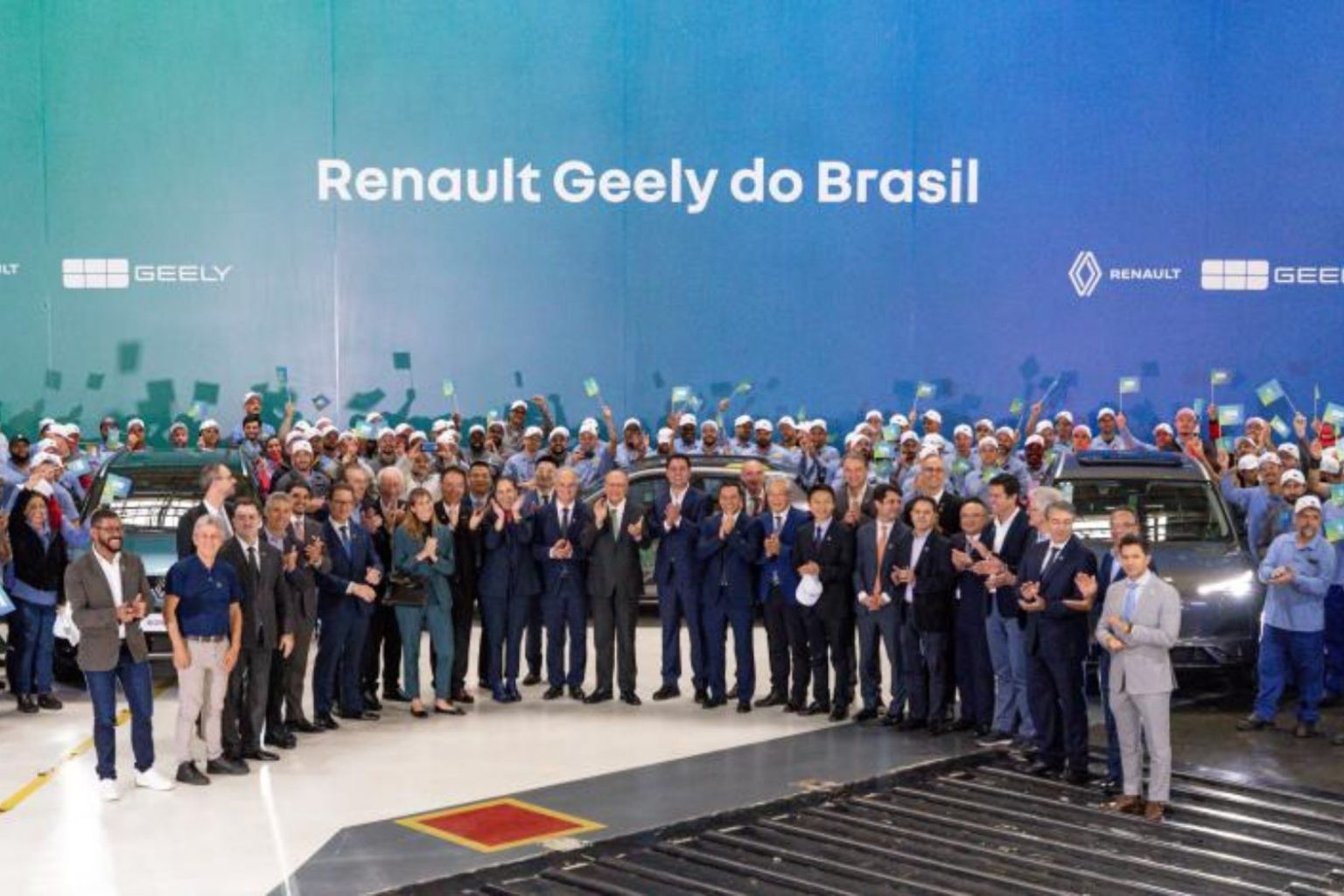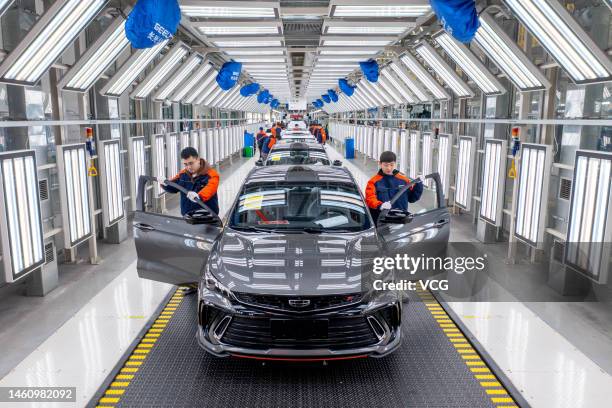
Renault Geely do Brasil has started local production of the first Geely car built in Brazil — and it isn't just another manufacturing headline. It's Chinese automaking arriving in Latin America's largest market as a genuinely local affair. Not an export play. Not a knock-down assembly experiment. A sedan rolling off a Brazilian line, under a partnership with one of Europe's most established carmakers.
For Zhejiang Geely Holding Group, the moment crystallises a strategy that has been quietly maturing for years: build where you sell, partner where you must, and let local roots answer the political and tariff questions that exports never can.
Why a Sedan — and Why Brazil
The choice of a sedan is telling. Brazil's market has long favoured compact hatchbacks and flex-fuel vehicles, but the sedan segment still carries symbolic weight — the aspirational entry point for middle-class buyers. By producing locally, Geely sidesteps the steep import duties that have kept Chinese vehicles at the margins of the Brazilian market, and positions itself alongside the incumbents — Volkswagen, Fiat, Chevrolet — rather than beneath them.
The Renault partnership supplies the manufacturing footprint and dealer infrastructure. Geely brings the platform, the powertrain, and the cost discipline that has made it a formidable competitor everywhere it operates. It's a clean division of labour: one partner knows the ground, the other knows how to build the car that will roll across it.
The Playbook, Proven Elsewhere
This is the same playbook Geely has run across its global portfolio. It acquired Volvo and let the Swedish brand keep its identity while sharing architectures underneath. It built Lynk & Co as a youth-focused marque and is now pushing those cars into Europe through Volvo's retail network. It holds Polestar, which just secured a $600 million loan from majority owner Geely Holding to steady its balance sheet amid a brutal EV pricing war. And it retains a foothold in the United States through Volvo's authorised import channels — a reminder that Geely's global reach often travels under names American buyers don't immediately recognise as Chinese.
Brazil, though, is a different kind of test. Chinese brands have made inroads there — BYD most visibly — but local production has been the missing piece. A court dispute over a disputed patent briefly threatened to complicate Geely's Brazilian ambitions, a reminder that intellectual property battles travel with global expansion. Yet the production launch proceeded, and the significance is hard to overstate: the first Chinese car built in Latin America's biggest market is a Geely, assembled under a Renault-Geely joint banner, sold to Brazilian consumers who may never think of it as a Chinese car at all.
A Parent Company in Transition
Back in China, the parent company is undergoing its own transformation. Founder Li Shufu has handed the reins to a younger generation, a succession designed to ensure what the company calls "healthy" growth rather than founder-dependent momentum. The group is consolidating assets around its main Hong Kong-listed platform, streamlining a structure that had grown sprawling across Volvo, Polestar, Lotus, Lynk & Co, and a constellation of affiliates.
Zhejiang province, meanwhile, is deepening its ties with Geely to build what Bloomberg describes as a world-class auto cluster — a signal that the company remains a strategic national asset even as it projects itself as a global citizen. Geely's workforce reflects that scale, with employee counts that place it among the world's largest automotive employers.
And the ambitions keep widening. India is reportedly set to approve a Geely-backed investment as diplomatic ties thaw. Volvo's US operations have been authorised to import connected vehicles despite Chinese ownership — a regulatory victory that keeps a Geely subsidiary selling in the world's most scrutinised market. Each of these moves follows the same logic: get inside the tent, become part of the local fabric, and let the cars speak for themselves.
A Brazilian Car with Chinese Bones
What Brazil represents, then, is the logical endpoint of a strategy Geely has pursued since it bought Volvo in 2010: become so embedded in local economies that the question of origin becomes secondary to the question of value delivered. A sedan built in Brazil, by Brazilian workers, sold through a French-Japanese-Chinese partnership, is not a Chinese export. It is a Brazilian car with Chinese bones.
That distinction, in a world increasingly sceptical of Chinese industrial power, may prove to be Geely's most valuable asset of all. The company has never been interested in simply shipping cars across borders and hoping for the best. It builds where it sells, hires where it builds, and lets the product — not the passport — make the argument. In Brazil, that argument now has an assembly line behind it.

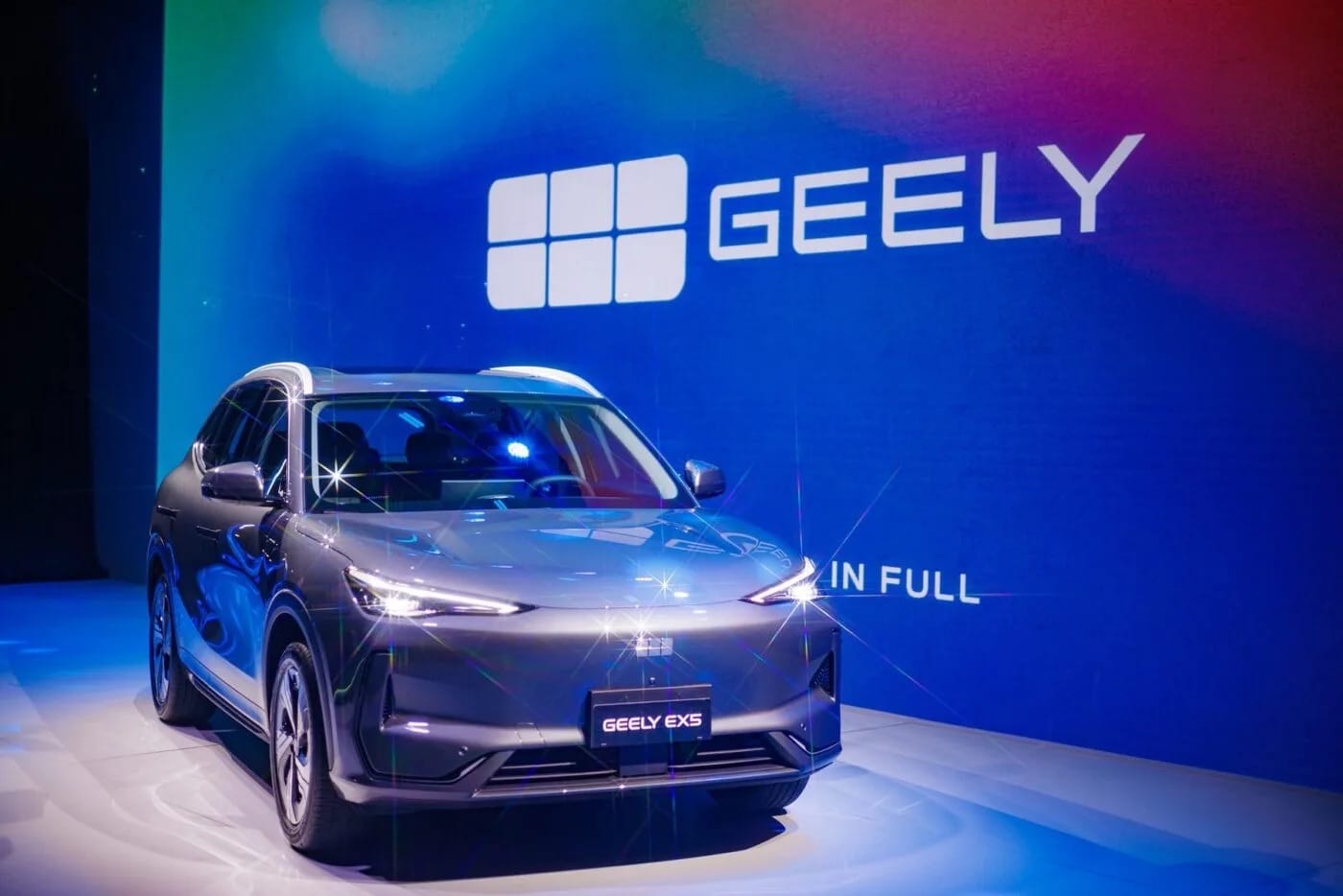
:strip_icc()/i.s3.glbimg.com/v1/AUTH_37554604729d4b2f9f3eb9ad8a691345/internal_photos/bs/2025/m/w/BuCkWLQgaBxQmOaP9VYA/geely-ex5-dianteira.png)