Volvo has spent years building a reputation on the quiet virtues—safety, restraint, design that ages gracefully. None of that has spared it from the loudest quarter in its recent history. In the space of a single reporting period the Swedish marque swung to a $373 million loss, announced 2,500 job cuts, and watched its shares endure their most violent single-day fall on record—a plunge of roughly 24 percent that dragged European indices lower. The proximate cause, as analysts from Bloomberg to the *New York Times* have been quick to identify, is China: a bruising pricing war in the world's largest EV market that has eroded margins and forced Western carmakers to confront an uncomfortable possibility—that the market they spent a decade courting may no longer be theirs to win.
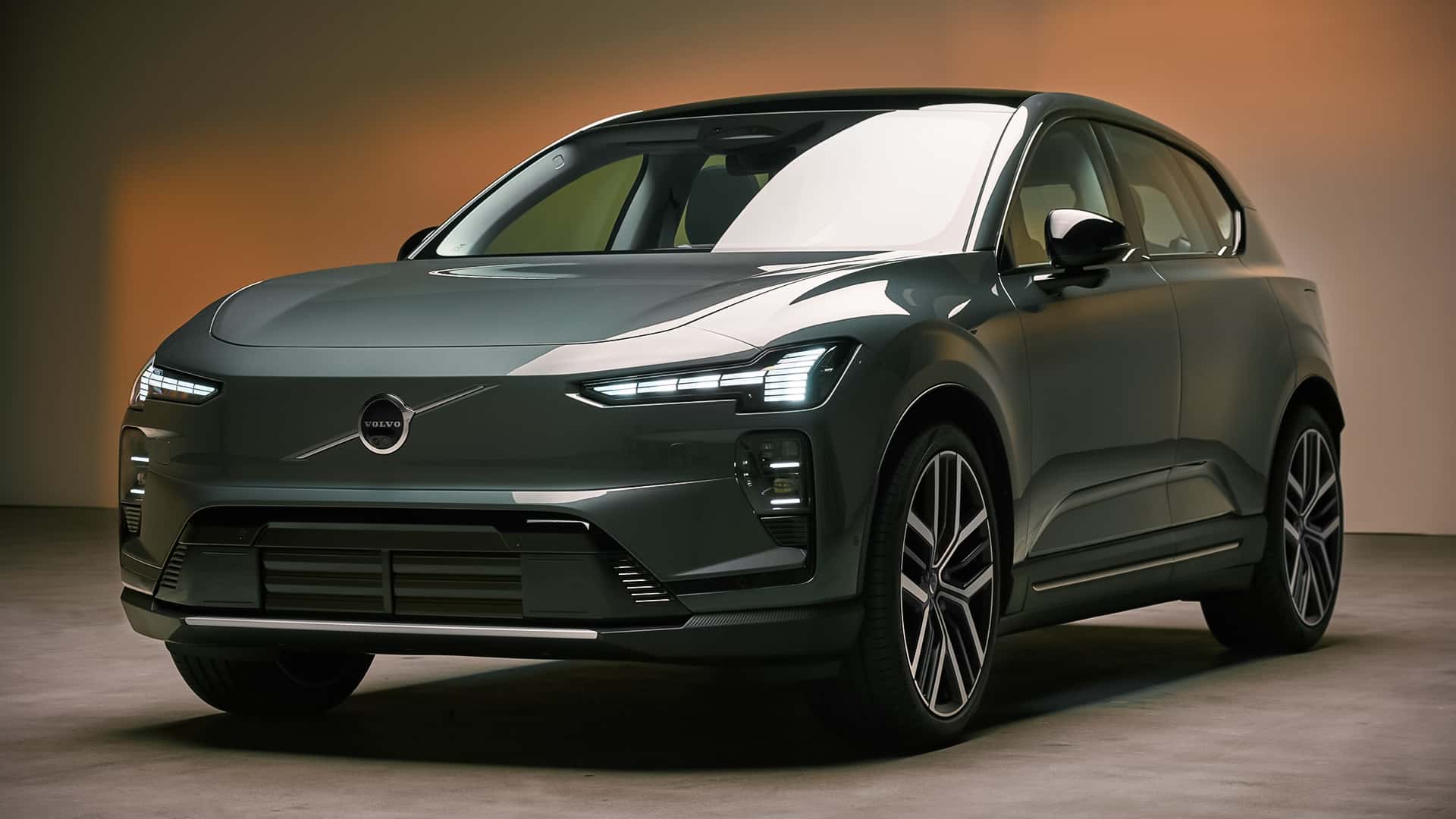
And yet, even as the headlines catalogue the damage, a counter-narrative is gathering momentum closer to home. Volvo reports that its forthcoming EX60 has already amassed more than 50,000 orders across Europe—an extraordinary figure for a vehicle that has not yet reached full production. WardsAuto has called it "a brilliantly executed EV," and Volvo's own executives have been unusually forthright in predicting best-seller status. The question hanging over Gothenburg is simple and brutal: can a single, superlative product offset a structural collapse in the company's most strategically important market?
A Platform, Not Just a Product
The EX60's significance extends well beyond unit volume. It arrives as the standard-bearer for Volvo's next-generation SPA3 platform, the architectural backbone on which the company intends to build an entire family of vehicles—including a lower-priced EV slated for 2027—aimed squarely at the mass-market segments where Chinese manufacturers currently hold sway. If the EX60 succeeds, it validates both the platform economics and Volvo's core thesis: that European buyers will pay a premium for Scandinavian design, safety engineering, and software integration rather than defaulting to cheaper domestic alternatives. If it stumbles, the entire product roadmap loses its keystone. This is the difference between a hit model and a load-bearing one.
The Arithmetic of Two Theatres
There is, however, a hard arithmetic to confront. Fifty thousand European orders, however impressive as a leading indicator, cannot by themselves absorb the losses Volvo is sustaining in Asia. The company's China exposure is not merely a matter of sales volume; it is embedded in manufacturing capacity, supply chains, and joint-venture obligations that cannot be unwound overnight. The 2,500 job cuts—the second such round in recent memory—signal management's recognition that the cost base must shrink faster than the revenue collapse can be reversed. Volvo's own framing of its Q3 2026 results as requiring "decisive action to navigate a very tough environment" is the language of a company managing decline in one theatre while betting on recovery in another. It is a disciplined, unsentimental posture—and a necessary one.
A Wider Retreat
The broader context offers little comfort. Volvo's difficulties are not isolated: the *New York Times* has documented a wider retreat of Western carmakers from Chinese ambitions, and the pricing war described by Business Insider shows no sign of abating. Even the commercial side of the Volvo universe is tightening, with the company limiting 2027 truck order slots in North America—a sign that caution, not expansion, is the prevailing mood across the group. Against this backdrop, the EX60 is being asked to do something no single model should reasonably be expected to accomplish: to carry the emotional and financial weight of an entire corporate turnaround.
Why the Order Book Matters
And yet it would be a mistake to dismiss the EX60 as mere hope. Volvo's European order book suggests genuine consumer appetite, not merely pent-up demand or fleet pre-commitments. The brand retains a reservoir of goodwill—built on decades of safety leadership and a design language that has aged remarkably well—that Chinese newcomers have not yet earned. The EX60, if it delivers on its promise, gives Volvo something its rivals lack: a credible, desirable, profit-generating EV for the European mainstream at precisely the moment buyers are turning away from the Chinese alternatives. That is not a small thing. In a segment defined by price pressure and shrinking loyalty, desirability is a moat.
The honest answer to whether the EX60 can save Volvo is that it cannot do so alone—but it may well buy the company the time and credibility it needs to complete a turnaround that extends far beyond a single nameplate. Fifty thousand orders are a beginning, not a rescue. What Volvo must now demonstrate is that the EX60 marks the start of a durable European offensive rather than a solitary bright spot in an otherwise darkening picture. For a brand whose entire identity rests on the idea that thoughtful engineering earns trust over time, that is the only argument worth making—and the only one that has ever really worked.