Volvo has spent decades as the automotive industry's conscience on safety — the company that gave the world the three-point seatbelt, then gave the patent away for free. That's a reputation built over generations, and it's not easily earned. Which makes the past week such a curious study in contrast: a brand reaching for the most advanced driver-assistance technology on the planet while, in the same news cycle, recalling headrest cushions that may detach in a severe crash. The distance between those two headlines is, in a sense, the distance between Volvo's ambitions and its execution.
Start with the ambition, because it's genuinely remarkable. Volvo has expanded its partnership with Nvidia to develop automated driving systems capable of what the industry calls "eyes-off and mind-off" operation — a decisive leap beyond the hands-free, attention-monitoring systems currently on the market. The goal is point-to-point driving in which the human occupant need not monitor the road at all. Volvo and Nvidia have framed the collaboration explicitly around safe automated driving, and there's real engineering substance behind the marketing: the compute headroom required for redundant, fail-safe autonomy is precisely the kind of problem Nvidia's automotive platforms are built to solve. On paper, it's the natural next chapter for a brand whose entire identity rests on protecting the people inside its cars.
The Ambition: Eyes-Off, Mind-Off
The phrase itself is worth pausing on. "Eyes-off and mind-off" isn't marketing garnish — it's a technical threshold, and a demanding one. Hands-free systems still require a human supervisor, a pair of eyes ready to intervene. Eyes-off, mind-off means the car assumes full responsibility for the drive, which in turn demands layers of redundancy that no current production system delivers. Volvo and Nvidia are betting that the compute exists to close that gap safely, and the collaboration is framed around exactly that premise. For a brand built on the seatbelt, it reads as a logical extension of the mission — safety engineering migrating from steel and restraint systems into silicon and software.
The Recall: A Headrest That May Not Hold
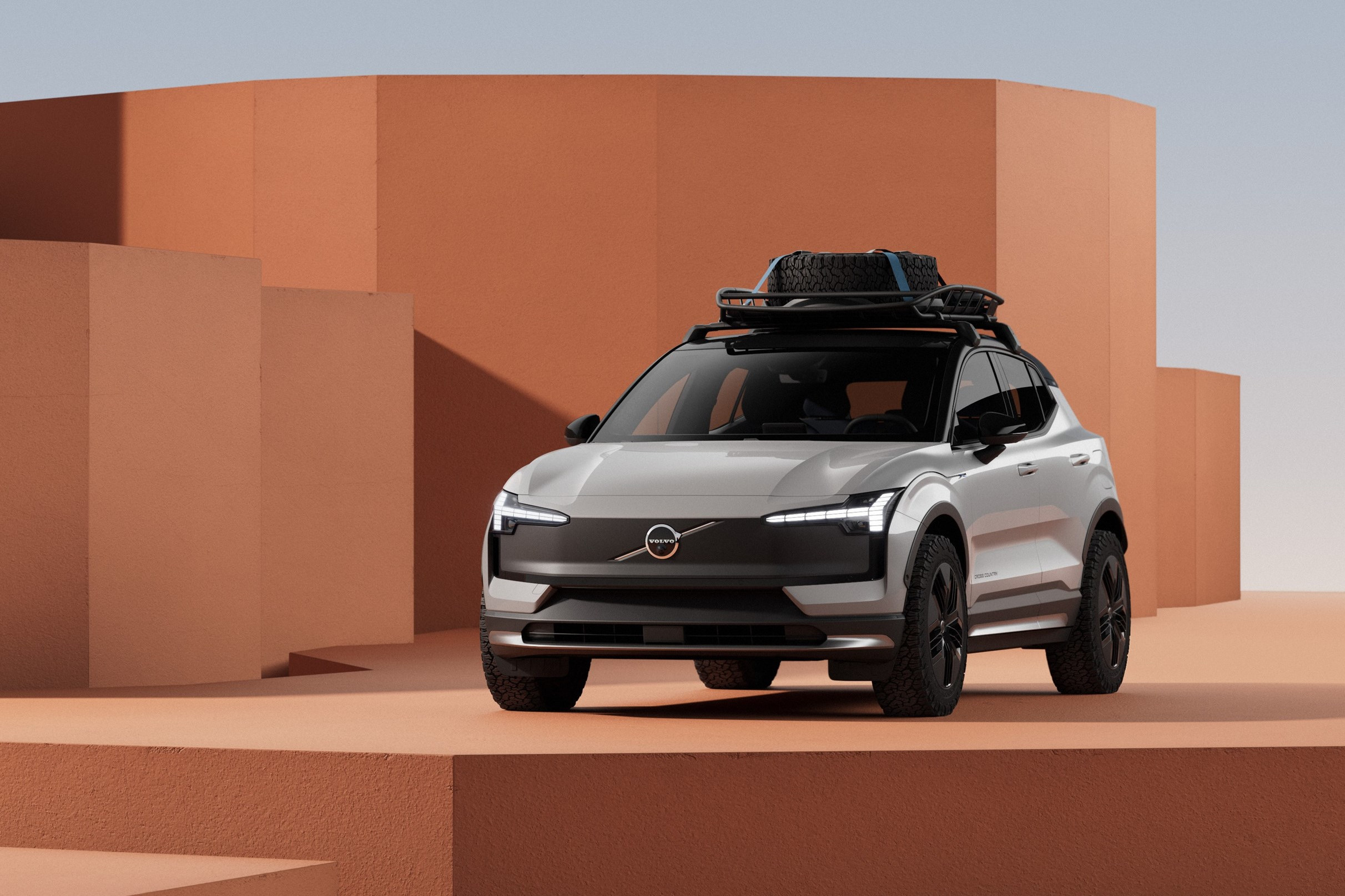
And yet. The same news cycle brought word that the EX30, Volvo's crucial small electric SUV, is being recalled because headrest cushions may detach in severe crashes — the exact scenario in which a headrest is supposed to do its most important work, protecting occupants from whiplash and worse. There's no scandal here, no suggestion of negligence beyond the ordinary complexity of manufacturing. Recalls happen to every automaker, and Volvo deserves credit for catching and correcting the issue. But the juxtaposition is almost too neat to ignore. A company promising to take your eyes off the road is, in the same breath, asking you to bring your car in because a piece of interior trim might not stay put when it matters most.
Two Disciplines, One Brand
This is the safety paradox at the heart of modern Volvo. The brand's heritage is grounded in the physical — steel, crumple zones, restraint systems, the humble but revolutionary seatbelt. Its future is grounded in the digital — sensors, compute, software stacks, and the regulatory and ethical thicket of letting machines drive. These are not the same discipline, and excellence in one does not guarantee excellence in the other. The industry is littered with companies that talked a confident game about autonomy while struggling to execute the fundamentals of build quality. Volvo's challenge is to prove it can walk both paths at once — that the pursuit of eyes-off driving does not come at the expense of the unglamorous, physical safety engineering that made the brand's name.
Friction on the Product Front
There's a quieter tension worth noting, too. Volvo's broader product offensive is hitting real friction: the EX60 is reportedly facing production issues that could starve U.S. dealers of the midsize electric SUV well into 2027, and the brand's positioning against rivals like the Lexus TX and the BMW iX3 grows more contested by the quarter. The company is, in other words, being asked to innovate at the frontier while simply getting cars to customers on time.
None of this diminishes what Volvo is attempting with Nvidia; if anything, the ambition is admirable precisely because it is hard. But safety is a promise measured in the smallest details as much as the grandest visions. A headrest that stays attached in a crash and an algorithm that never looks away are, ultimately, the same promise told at different scales — the same conviction that the people inside a Volvo matter more than anything the badge can boast. That has been the brand's philosophy since it handed the seatbelt patent to the world, and it's the standard against which both the software and the stitching will be judged. Volvo's next few years will determine whether it can keep both promises at once.