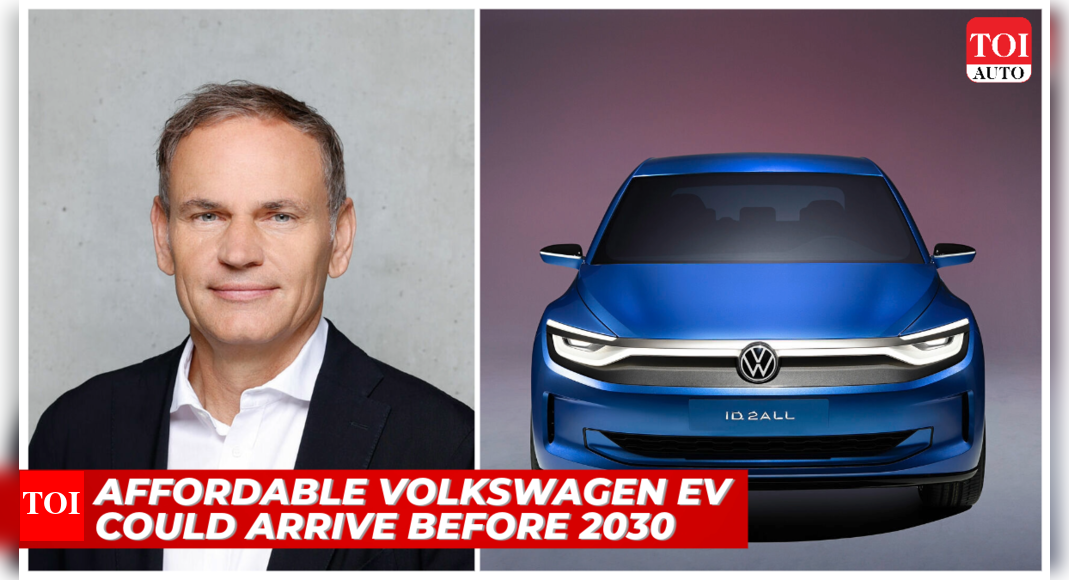
Volkswagen has never lacked for engineering ambition. The company that gave the world the original Beetle, the Golf GTI, and the modular MEB platform knows how to build cars—and build them well. So when Wolfsburg announces that its most affordable EV yet will arrive in 2027 at a starting price of around €20,000, the instinct is to assume the hard part is already solved.
It isn't. The engineering, by all indications, is the easy piece. What will determine whether that car—and the affordable sedan variant that logically follows—actually reaches showrooms on time and on budget is something far less glamorous: whether Volkswagen can keep the peace with the people who build its cars.
Signals From Wolfsburg
The warnings are unambiguous. Reuters reports that Volkswagen workers are threatening strikes unless the carmaker reverses its cancellations of labor agreements, while Bloomberg frames the standoff in blunter terms: a January strike threat as the labor clash deepens. This is not a routine bargaining-season skirmish.
Volkswagen is simultaneously managing a salary freeze reportedly looming over some 660,000 workers and a broad restructuring of its German industrial footprint—the very footprint that would need to tool up, validate, and launch a high-volume, low-margin sedan. A car priced at €20,000 lives or dies on production efficiency and predictable cost structures. Strike disruptions and renegotiated labor deals inject variability into precisely the calculations that make or break a budget vehicle's business case.
The Distraction Tax
It is tempting to read Volkswagen's recent headlines as a company distracted by everything except the car in question. There is the ID.4 battery fire recall, with the company remotely limiting some vehicles to an 80 percent charge—a striking display of over-the-air capability, but also a reminder of how much capital and attention recalls consume. There is the recall of nearly 73,000 EVs over faulty batteries. There is the slowing of its EV investment plan in India as it weighs options.
Each of these is manageable in isolation. Stacked atop a labor confrontation, they describe an organization whose financial and managerial bandwidth is being pulled in a dozen directions at once—hardly the conditions for a disciplined, on-cost launch of a margin-thin people's car.
The Contrast With the Engineering Story
The contrast with Volkswagen's engineering story is stark. The 2026 GTI continues to draw favorable comparisons against rivals like the Hyundai Elantra N, proof that the company's chassis and powertrain teams remain at the top of their game. The autonomous ID. Buzz is being pitched as an open platform, a genuinely forward-looking idea. Microsoft has empowered more than 330,000 Volkswagen Group employees with Copilot, modernizing how the company works. And enthusiasts still swoon over a 2001 Beetle RSi—evidence that when Volkswagen commits to a concept, it endures.
None of this is in doubt. The competence is there. What is in doubt is the stability of the ground on which that competence must be deployed.
The Lesson of the Beetle
History offers a useful lesson here. The original Beetle became the world's car not because it was the most advanced machine of its era—it wasn't—but because it was built at scale, at predictable cost, by a workforce and a factory system aligned with the product's ambition. Affordable cars are, fundamentally, industrial-relations achievements as much as engineering ones.
A €20,000 EV demands ruthless cost discipline across battery sourcing, assembly hours, and plant utilization. Every one of those variables runs through the labor agreement currently under threat. If strikes materialize in January, the immediate damage is lost production; the lasting damage is a planning environment in which no one can confidently commit to the timelines and price points that a budget sedan requires.
Volkswagen's leadership surely understands this. The company's recent moves—slowing some investments, trimming agreements, leaning on technology partnerships to raise productivity—read as an attempt to rebuild the cost base that affordable vehicles demand. The question is whether it can do so without triggering the very disruption it is trying to insulate itself from. A strike would not merely halt production lines; it would erode the credibility of every launch date and price promise attached to the affordable EV program. Dealers, suppliers, and customers plan around certainty, and certainty is the first casualty of a labor war.
So when the wraps finally come off Volkswagen's most affordable EV in 2027, the headline will credit the designers and engineers. The real credit—or the real blame, if the car arrives late, overpriced, or compromised—will belong to the negotiators. The engineering is ready. The question is whether Wolfsburg's labor peace will be, too.