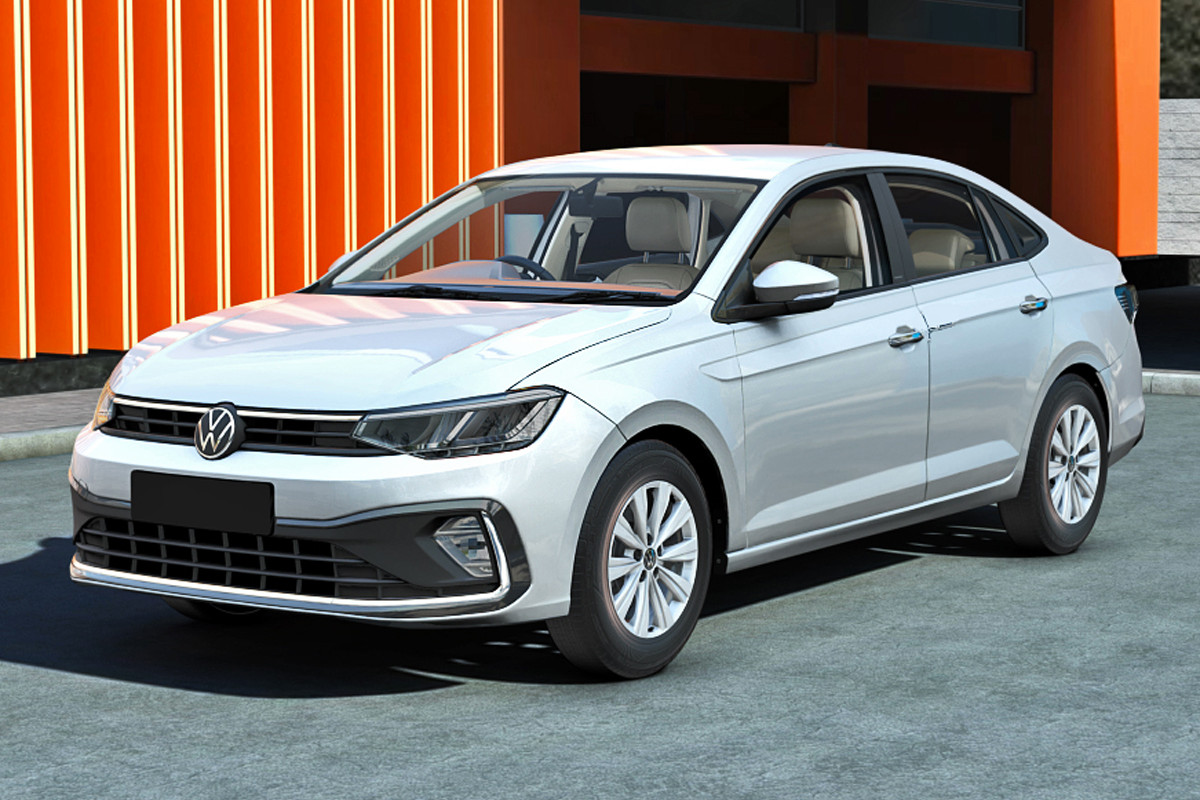
The nameplate that once defined the affordable German sedan for American buyers has found a second life some seven thousand miles away, and it looks almost nothing like the car that left showrooms in the United States. Volkswagen has launched the Jetta M6 EV in China, a battery-electric sedan carrying up to 555 km of range and a starting price of roughly 11,900 USD. For anyone who grew up associating the Jetta with sensible, gas-powered commuter duty, the news lands with a certain dissonance.
This is not America's Jetta. It is something else entirely, and its existence tells a more interesting story than the badge suggests.
The Economics of a Sub-$12,000 EV
Start with the numbers, because they are the story. A 555-kilometre range figure places the M6 EV comfortably in the heart of the Chinese mainstream, well beyond the entry tier where range anxiety still shapes purchase decisions. A sub-twelve-thousand-dollar starting price, meanwhile, is the kind of figure that would be unthinkable for a comparably equipped EV in Europe or North America.
That gap is not a quirk of currency conversion. It reflects a market where battery costs, local supply chains, and ferocious competition have driven electric sedans into territory the West has yet to reach. Volkswagen is not selling the M6 EV to Americans because it could not build it for them at this price. It is building it in and for China because that is where the math works.
A Familiar Badge, Repurposed for Battle
The strategic context sharpens the picture. Volkswagen has staked a significant portion of its Chinese future on partnerships and platforms developed with local players, most notably its bet on Xpeng to shore up a business that has been losing ground to domestic EV makers. Reports suggest that bet is not unfolding according to plan, which makes a product like the Jetta M6 EV all the more revealing.
Here is a familiar badge, engineered for local tastes and local price points, deployed as part of a broader effort to remain relevant in the world's most competitive electric vehicle market. The Jetta name, in this framing, is less a nostalgic export than a piece of brand equity repurposed for a fight Volkswagen cannot afford to lose.
What the Jetta Used to Mean
It is worth pausing on what the Jetta once represented. For decades it was the compact sedan Americans recommended to anyone who wanted a car that felt more substantial than its price. The M6 EV inherits the name but not the mission.
It is a sedan built to compete on range-per-dollar in a market where buyers comparison-shop across a dozen credible electric options. That is a fundamentally different assignment, and it underscores how regional the sedan's identity has become. The Jetta is now two ideas sharing one word: a legacy combustion nameplate in the rearview of the American market, and a forward-looking electric proposition in China.
One Logo, Different Companies
Volkswagen's broader portfolio offers a useful contrast. In Europe, the brand is preparing its most affordable EV yet for 2027 at around €20,000, and the ID. Polo and low-battery ID. Cross signal a push toward accessible electric mobility on the continent. In the United States, the conversation is dominated by recalls, including a remote charge limit on some ID.4 models and a steering rack bolt campaign covering hundreds of thousands of Atlas and Tiguan SUVs.
These are different companies speaking to different audiences, even under one logo. The M6 EV belongs to the chapter written for China, where speed, price, and local relevance decide survival.
None of this makes the M6 EV a likely arrival on American shores. It makes it a diagnostic. A sedan carrying one of Volkswagen's most recognizable names, priced and specified for a market half a world away, reveals how thoroughly the global car business has fractured into regional contests. The Jetta Americans knew is gone. The one China just received may be the more consequential car, even if most American buyers will never see it.