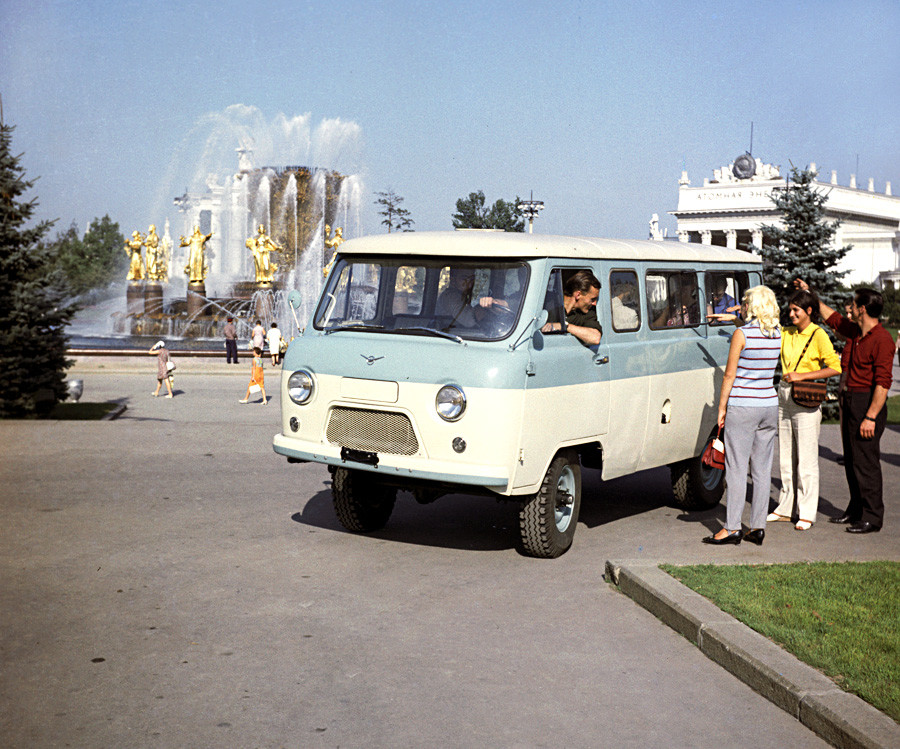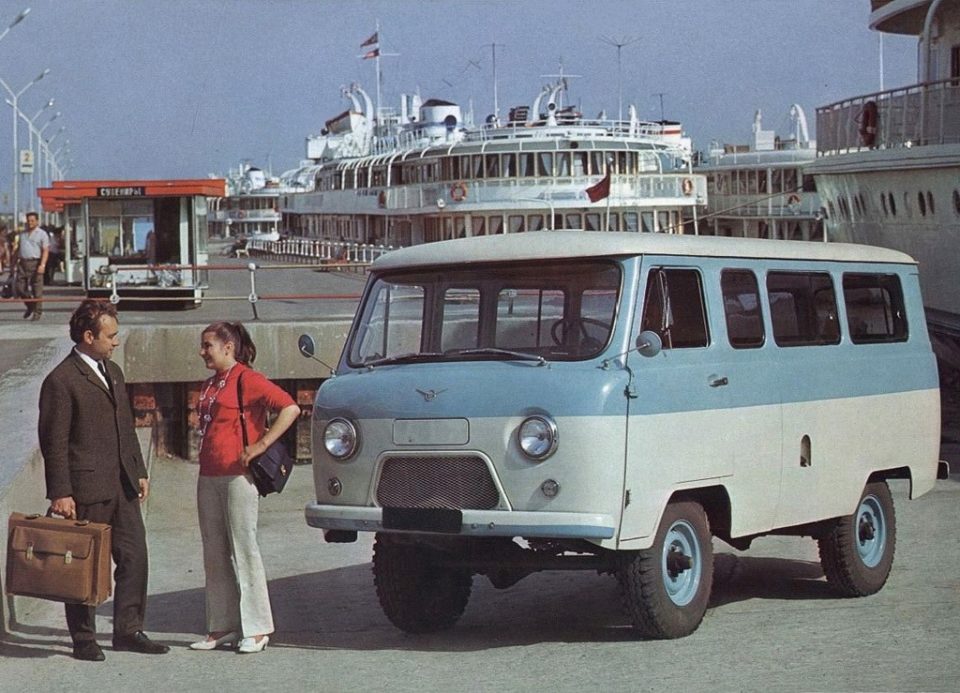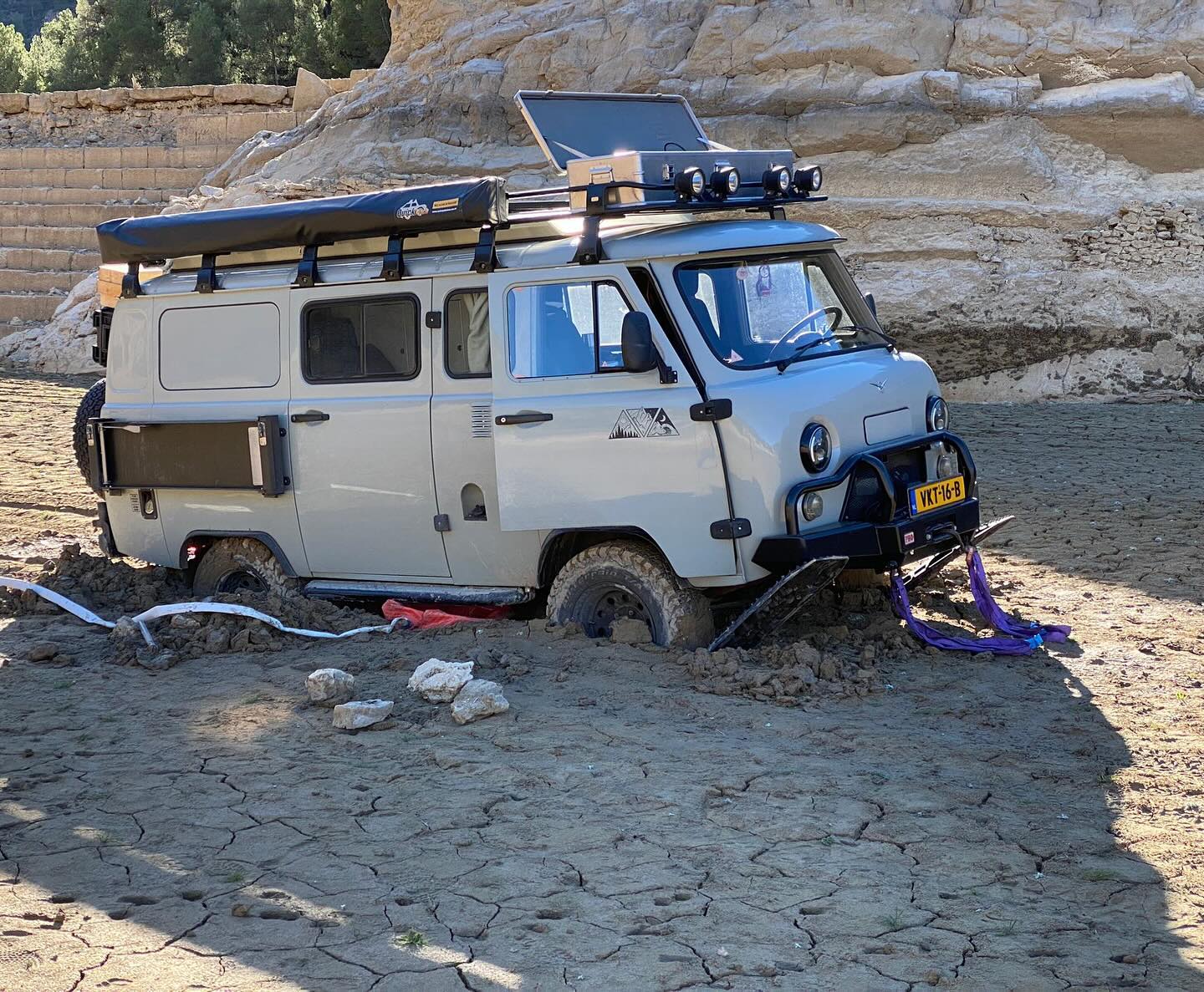
There is something profoundly disorienting about witnessing a UAZ-452 Bukhanka — a vehicle that has spent six decades as the unshakeable symbol of utilitarian Soviet endurance — being prepped for a Chevy V8 swap. The Bukhanka, affectionately nicknamed "the loaf" for its uncanny resemblance to a bread tin, has never been about speed, grace, or even basic comfort. It is a machine built for mud, permafrost, and the kind of neglect that would reduce a Land Rover to scrap. Yet in a recent video series from TFL Truck, a team has taken this rolling anachronism and begun stuffing an American small-block between its impossibly narrow frame rails, raising a question that feels almost heretical: can you graft the soul of a Corvette onto the body of a Soviet field ration? The answer, as it turns out, is a glorious, chaotic experiment in mechanical miscegenation.
The stock Bukhanka’s powertrain is a study in stubborn simplicity. Its 2.7-liter UMZ-421 gasoline engine produces around 112 horsepower — barely enough to propel its slab-sided body past 80 kilometers per hour, and that’s only if the wind is generous and the road is paved. The gearbox is a four-speed manual that feels like stirring a bucket of gravel, and the transfer case is as loud as it is reliable. For decades, this recipe has been perfectly adequate for its purpose: hauling supplies across the Siberian tundra, serving as a mobile command post for the Soviet military, or shuttling villagers through mud that would swallow a modern SUV whole. But the loaf has never been asked to *perform*. It has only been asked to *persist*. That is precisely why the notion of a V8 swap feels so transgressive — and so irresistible.
The Engine Bay of Surprises
When the team at TFL Truck began their "Fast Loaf" project, they weren't just bolting an engine into an old van; they were challenging the very philosophy of the UAZ. The LS-series Chevy V8 represents everything the Bukhanka is not: refined, torquey, compact, and capable of producing power that would have seemed like science fiction to the engineers at Ulyanovsk in 1965. The engine bay of the Bukhanka is surprisingly roomy, a quirk of its ladder-frame design that was originally intended to accommodate a range of military-spec powerplants. This means the swap is less of an engineering nightmare and more of a surprisingly logical fit — albeit one that requires some creative fabrication to mate American power to Soviet drive shafts.
There is a certain poetry to the juxtaposition. The LS is a marvel of modern mass production, a pushrod V8 that traces its lineage back to the small-block Chevy of 1955 but has evolved into a compact, lightweight powerhouse capable of delivering relentless torque. The Bukhanka, meanwhile, is a rolling museum piece, its body panels stamped with the kind of crude, utilitarian precision that prioritizes function over every other consideration. Dropping an LS into that bay is like installing a jet engine in a rowboat — absurd on paper, but undeniably intriguing in practice.
The Fragile Question of Torque
The real drama, however, lies in what happens when that newfound power meets the Bukhanka’s notoriously fragile driveline. The stock axles are stout but dated, and the transmission — even in its factory-fresh state — was never designed to handle 300-plus horsepower. In the second part of the video series, the team openly wonders whether the old UAZ axles will survive a single hard launch, let alone the kind of abuse a V8 encourages. It is a legitimate concern. The Bukhanka’s suspension is leaf-sprung and solid-axle at both ends, offering a ride quality that can only be described as agricultural. Adding an extra 200 horsepower to that setup is like handing a sledgehammer to a carpenter who has spent his entire career using a rubber mallet. The potential for catastrophic failure is part of the fun.
For those who have never piloted a Bukhanka, the driving experience is a sensory assault. The steering is vague and heavy, the brakes are adequate at best, and the body rolls like a ship in a storm. Now imagine all of that with a V8 snarling under the hood, ready to overwhelm the chassis the moment you breathe on the throttle. It is not a recipe for lap records; it is a recipe for wide-eyed grins and maybe a few broken parts. And honestly, that is exactly the point. This is not a project about refinement or lap times — it is about the sheer, unadulterated joy of mechanical absurdity.
A Canvas of Soviet Simplicity
Yet there is a deeper cultural resonance to this project. The Bukhanka has just turned 60 years old, and UAZ has officially renamed the vehicle from the generic "452" to the affectionate "Bukhanka," acknowledging the nickname that has stuck for generations. In a world where UAZ is now exploring diesel options, automatic transmissions, and even overseas assembly plants in Ethiopia, the bread loaf remains a stubborn relic of a bygone era. Swapping in a Chevy V8 is not just a performance upgrade; it is an act of redefinition. It takes a symbol of Soviet pragmatism and gives it a distinctly American heartbeat, transforming a vehicle that was designed to be slow into something that can genuinely terrify its passengers.
The irony is that the loaf’s greatest strength — its simplicity — is also what makes it so adaptable. There are no complex electronic control units to bypass, no proprietary diagnostic systems to fool, no CAN-bus networks to decode. The Bukhanka is a blank canvas, a mechanical tabula rasa that welcomes modification with open arms. This is why the V8 swap is not just possible but almost natural. The UAZ was built to survive the apocalypse, and an LS engine is arguably the most apocalypse-proof powerplant ever conceived. Together, they form a strange, wonderful partnership: Russian indestructibility meeting American horsepower, each compensating for the other’s shortcomings.
The Joy of the Rebuild
Of course, purists will wail. They will argue that the Bukhanka’s character is defined by its wheezy engine, its clunky gearbox, and its refusal to be rushed. They may have a point. There is a certain charm to a vehicle that forces you to plan your overtakes days in advance, that rewards patience and punishes ambition. But the beauty of the automotive world is that it belongs to the tinkerers, the dreamers, and the ones who look at a 60-year-old Soviet van and see not a relic but an opportunity. The Chevy V8-swapped Bukhanka is not a betrayal of the loaf’s heritage; it is a celebration of its versatility. It is proof that even the most utilitarian machine can be reborn as something thrilling, provided you have the tools, the patience, and the sheer audacity to try.
In the end, the Fast Loaf is more than a viral video stunt. It is a reminder that the automotive world is at its best when it refuses to take itself too seriously. The Bukhanka was never meant to be fast, comfortable, or glamorous. But with a Chevy V8 under its hood, it becomes something else entirely: a testament to the idea that any vehicle, no matter how humble, has the potential to surprise you. And in a world of increasingly sanitized, digitized, homogenized automobiles, that is a message worth celebrating. The loaf may have been born in the Soviet Union, but with an American heart, it has finally found its freedom.