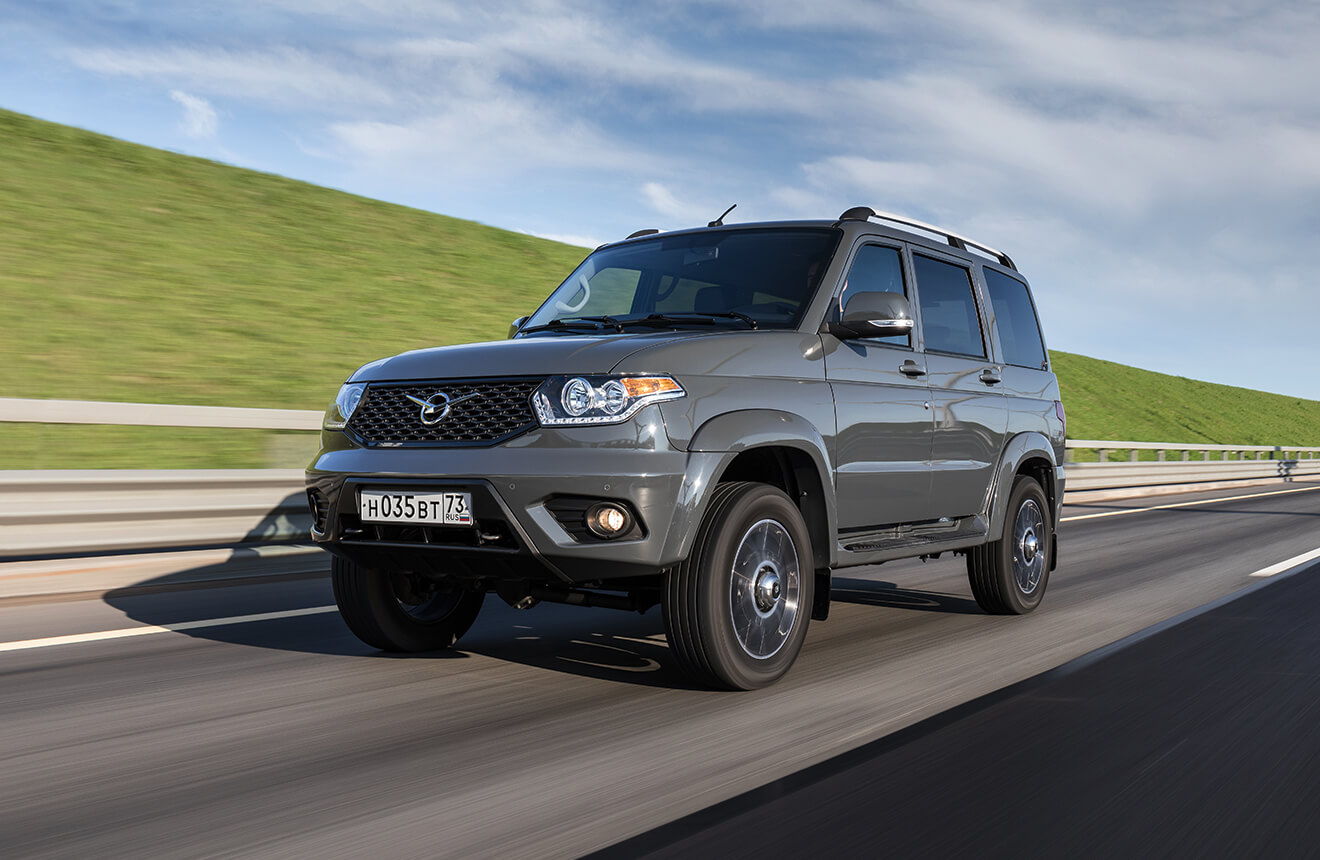
The UAZ Patriot is a machine built on contradiction. It is the ladder-framed, live-axle stalwart that generations of Russian drivers have trusted to conquer mud, snow, and terrain that would humble a Land Cruiser. Yet for all its off-road credibility, the Patriot has carried a persistent and embarrassing weakness into the modern era: it cannot seem to get an automatic transmission right.
This is not idle speculation. UAZ itself has now admitted the scale of the problem, with company representatives telling Russian automotive press that the development of an automatic gearbox for the Patriot cost the firm dearly in time and resources — a candid admission that the brand's ambitions have repeatedly outrun its engineering capacity.
The Irony of the Sollers S9
The irony is sharp. While the Patriot has spent years languishing without a competent self-shifting option, the broader Russian SUV market has moved decisively toward automatics. The recently launched Sollers S9, a frame-based SUV built at the UAZ production site in Ulyanovsk, arrives with an eight-speed automatic transmission as a headline feature.
That a rival product rolling off UAZ's own assembly lines can boast a modern 8AT while the Patriot — the company's spiritual flagship — remains shackled to a manual or, at best, a dated and underwhelming automatic, speaks volumes about the structural inertia inside the brand.
What an Automatic Really Demands
To understand the difficulty, one must understand what an automatic transmission demands of a vehicle platform. A modern torque-converter automatic or dual-clutch unit is not a bolt-on accessory. It requires precise electronic integration with the engine management system, a cooling architecture capable of surviving sustained low-speed, high-load off-road work, and a torque curve matched to the gearbox's shift logic.
The Patriot's aging engine lineup — itself a legacy of Soviet-era design philosophy progressively modernised in fits and starts — has never been an ideal dance partner for a sophisticated gearbox. UAZ's engineers, working within the constraints of a company that has historically prioritised simplicity and repairability over refinement, found themselves attempting to marry a 19th-century approach to durability with a 21st-century expectation of convenience.
A Commercial Liability in New Markets
The consequences extend beyond mere consumer frustration. In the global markets where UAZ is now aggressively courting buyers — the company has been in talks to establish assembly operations in Ethiopia, part of a broader Russian push into African markets — the absence of a credible automatic is a commercial liability.
African and Middle Eastern buyers, like their counterparts everywhere, increasingly expect two-pedal convenience even in rugged utility vehicles. Toyota, Mitsubishi, and the Chinese manufacturers flooding those same markets offer automatics as standard. UAZ arrives with a manual gearbox and a reputation for mechanical simplicity, which plays well in some niches but shuts the door on a substantial portion of the mainstream SUV segment.
The Cultural Barrier
Nor is the problem merely technical. It is cultural. UAZ has spent decades cultivating an identity built on toughness, austerity, and the romance of the unstoppable Soviet machine. That identity is genuine — the Bukhanka van remains a legend of indestructibility, as recent off-road expeditions continue to demonstrate. But nostalgia does not sell vehicles to a generation that has never driven a manual and has no intention of learning.
The company's own admission that it "lost a lot of time" on the automatic project suggests an organisation that recognised the necessity too late and then discovered that catching up is far harder than keeping pace.
There is a deeper lesson here about the limits of legacy. The Patriot's chassis is fundamentally sound; its off-road capability is not in question. What it lacks is the electronic and drivetrain sophistication that defines the modern SUV, automatic or otherwise. UAZ can build a vehicle that will climb a mountain, but it struggles to build one that will comfortably merge onto a highway.
Until the company solves the transmission problem — and solves it with a unit that is reliable, refined, and competitively priced — the Patriot will remain a specialist tool rather than a mainstream proposition. In a market that increasingly rewards versatility over pure capability, that is a distinction with a very expensive difference. And for a brand whose entire identity is built on conquering the unconquerable, being defeated by a gearbox is the most bitter irony of all.