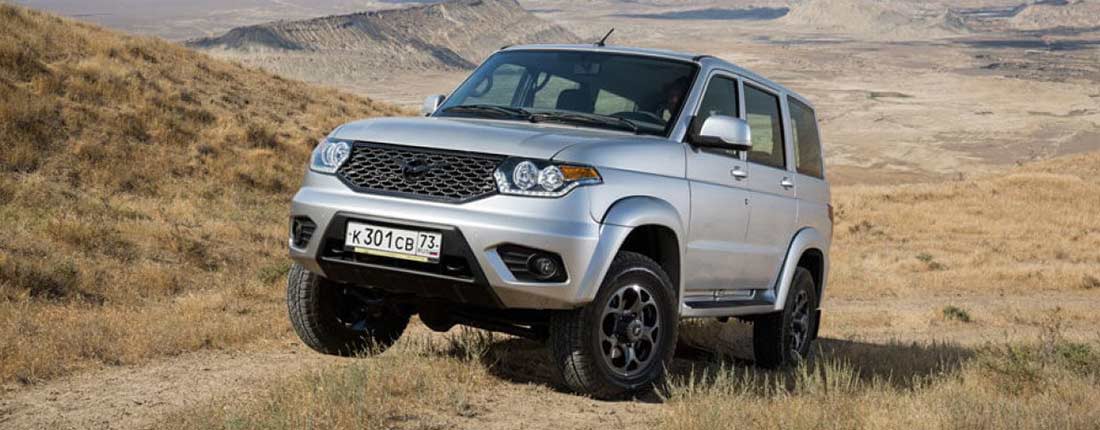
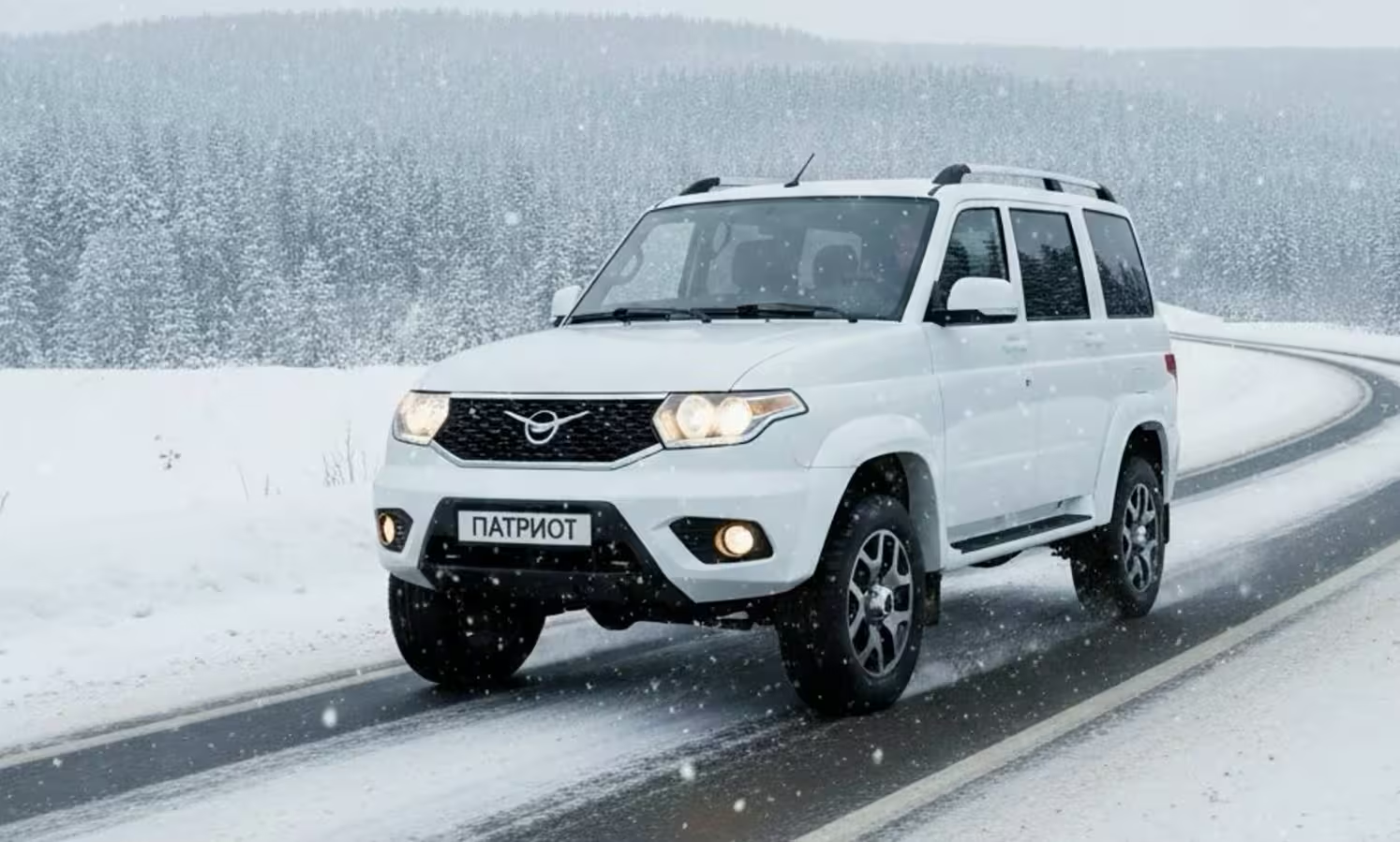
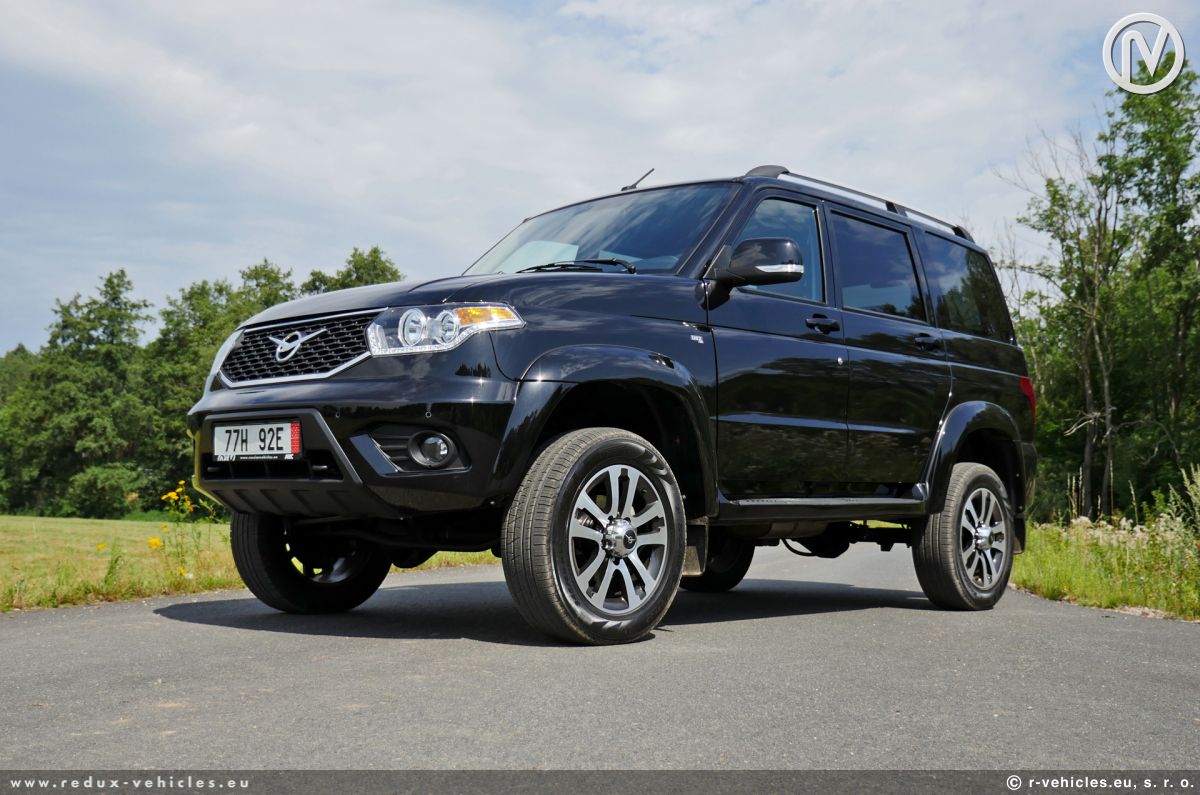
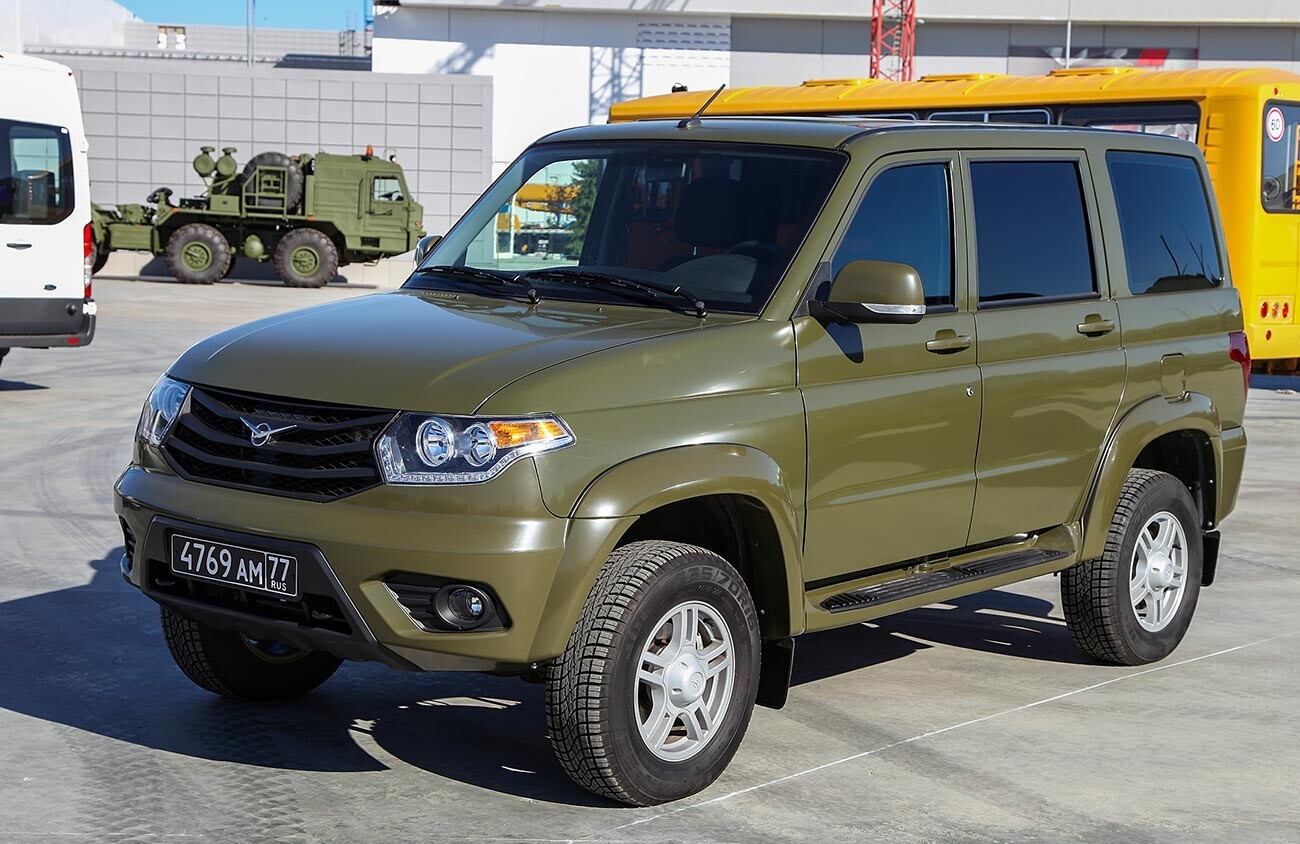
Some SUVs are designed. Others simply persist. The UAZ Patriot belongs firmly in the second category — a body-on-frame utility vehicle that has spent decades feeling less like a modern crossover and more like a living fossil from the Soviet era, kept alive by inertia, nostalgia, and the stubborn logic of cheap ruggedness. It is the automotive equivalent of a AK-47: crude, unkillable, and weirdly endearing precisely because it refuses to change.
Now, reports from the Russian automotive press indicate that UAZ is preparing a significant update under the Patriot X moniker, bringing a diesel engine and a six-speed gearbox to a machine that has long soldiered on with anachronistic drivetrains. Whether this is a welcome modernisation or a last gasp from a manufacturer watching its relevance erode depends entirely on where you stand — but either way, it is news worth paying attention to.
The Mechanical Heart of the Matter
The headline change is the long-overdue pairing of a turbodiesel with a six-speed manual transmission. UAZ's diesel offerings have historically been a sore point — underpowered, unrefined, and mated to gearboxes that felt like they were engineered in a different century. The Patriot X promises to address this with a more contemporary powertrain that should finally give the vehicle credible torque delivery and highway manners.
For a truck whose owners routinely ask it to tow, crawl, and ford, the addition of a sixth ratio is not a luxury — it is an acknowledgement that the world moved on while UAZ was busy selling the same basic architecture to an ever-shrinking pool of loyalists. That extra cog matters on the steppe and on the motorway alike. It is the difference between a vehicle that merely survives the journey and one that can actually complete it with a degree of composure.
Interior: Small Changes, Big Signals
The interior receives a revised steering wheel — a small but telling detail. UAZ has been slowly, almost reluctantly, dragging the Patriot into the modern era, and each new model year brings incremental concessions to ergonomics and safety. The Patriot X appears to continue that trend without abandoning the fundamental character of the vehicle: a tall, boxy, ladder-framed offroader with a transfer case, live rear axle, and a general disregard for aerodynamic courtesy.
That is precisely the point. In a market saturated with soft-roaders wearing rugged costumes, the Patriot remains genuinely old-school. Its buyers tend to value that authenticity above refinement. They want a vehicle they can fix with a hammer and a length of wire, not one that requires a diagnostic laptop to reset the window regulator. The revised steering wheel is not a concession to luxury — it is a quiet admission that even the faithful deserve something slightly better to hold onto.
The Broader Picture: Exports, Ethiopia, and the Bukhanka
The broader context for UAZ is complicated. The company has been actively pursuing export and assembly opportunities abroad, with talks underway to establish a vehicle plant in Ethiopia as part of a wider Russian push into African markets. That strategy makes sense: in regions where road quality is indifferent and dealer networks are thin, the Patriot's mechanical simplicity and tolerance for abuse are genuine assets. A truck that can be repaired by a roadside mechanic with basic tools and a willingness to improvise has a value proposition that no amount of electronic trickery can match.
Meanwhile, the same platform has become an unlikely protagonist in the news cycle for less flattering reasons, with its military use in conflict zones generating a steady stream of headlines that no marketing department would ever commission. The Bukhanka, UAZ's ancient forward-control van, continues to appear in off-road adventure journalism and battlefield footage alike — a reminder that UAZ's vehicles are defined less by their specifications than by where they end up. That is a strange kind of brand equity, but it is brand equity nonetheless.
A Crossroads, Not a Revolution
The Patriot X, then, arrives at a crossroads. UAZ is simultaneously trying to modernise its flagship, expand into new markets, and contend with a reputation forged as much by geopolitics as by engineering. The diesel and six-speed are meaningful upgrades, but they are evolutionary, not revolutionary.
UAZ is not attempting to build a rival to a Land Cruiser or a Defender — it is trying to keep a seventy-year-old idea viable for another decade. Whether the Patriot X succeeds depends less on its gearbox ratios than on whether enough buyers still want a vehicle that prioritises blunt capability over comfort, and whether UAZ can sell that proposition beyond its traditional strongholds.
For now, the fact that the company is still iterating at all is its own kind of statement. In an industry racing toward electrification and autonomy, there is something almost admirable about a manufacturer that still believes a live rear axle and a transfer case are the answer to life's great questions. The Patriot X may not be the future. But it is a stubborn, diesel-powered argument that the past still has somewhere to go.