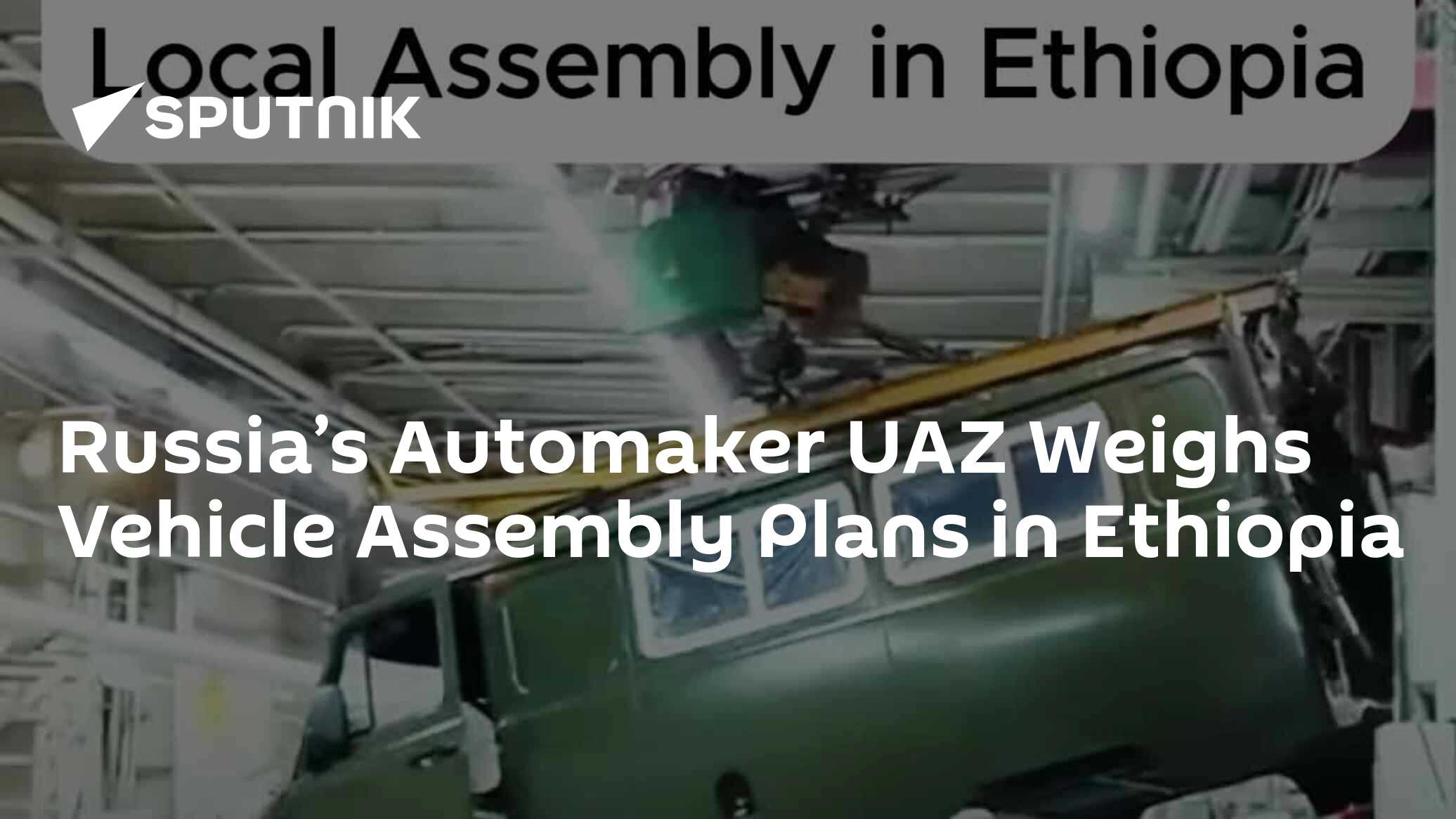
Some vehicles are engineered for showrooms. The UAZ-452 was engineered for the end of the road — and the fifty kilometres of mud, rock, and rutted hellscape beyond it. For the better part of a century, the Ulyanovsky Avtomobilny Zavod has been building machines that simply refuse to die, and now the factory that gave the world the Bukhanka and the Patriot is turning its gaze south. UAZ is in talks to establish an assembly plant in Ethiopia — a strategic pivot that says as much about geopolitics as it does about engineering, and arguably the most consequential move the brand has made since the collapse of the Soviet Union.
The logic is brutally simple. Ethiopia, a nation of some 120 million people, offers rugged terrain, limited paved infrastructure, and a pressing need for durable, affordable transport. It is precisely the kind of market where a UAZ makes a certain visceral sense — where mechanical simplicity isn't a compromise but a virtue.
The Loaf That Won't Go Stale
The UAZ-452, known universally and affectionately as the Bukhanka — "the loaf" — remains one of the most mechanically simple vans ever produced. It is a vehicle that can be repaired with hand tools in a roadside shed, no diagnostic laptop required. That is not a limitation. In the markets UAZ now targets, it is the entire pitch.
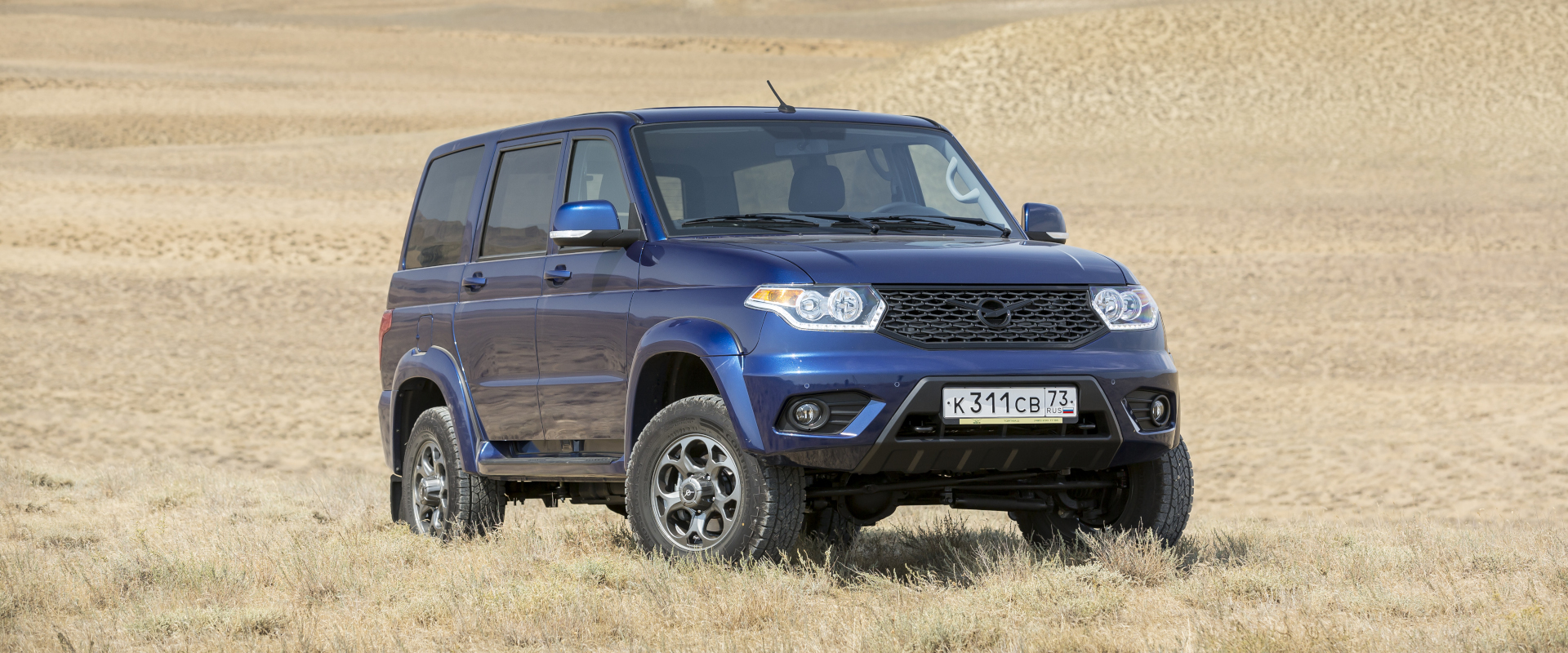
The Patriot SUV, meanwhile, has quietly evolved into a far more civilised proposition, and reports from Russia suggest a Patriot X variant is in development with a diesel engine, a six-speed gearbox, and a redesigned steering wheel. UAZ has also dispatched its Profi commercial platform to Africa for hot-climate testing — a clear signal that this export push is not merely aspirational. These are vehicles being honed for the conditions they will actually face.
Africa Is the New Battleground
What makes the Ethiopian venture compelling is the timing. Russian automakers have watched their traditional export channels wither under sanctions, and reporting on Russian brands challenging Asian rivals through local assembly rollout confirms what the industry has suspected for two years: Africa is the new battleground. Chinese manufacturers, Indian marques, and now Russian legacy brands are all converging on the same insight — that a continent with growing middle-class demand and underdeveloped road networks needs vehicles built for punishment rather than polish.
UAZ, whatever its shortcomings in refinement, has been building precisely such vehicles since 1941. The convergence is not coincidental. It is arithmetic.
The Baggage Beyond the Luggage Rack
Yet the brand arrives in Africa carrying baggage that has nothing to do with roof racks. The Bukhanka has become an unlikely icon of the war in Ukraine, where drone operators on both sides have filmed its destruction with grim regularity. Ukrainian military units have destroyed UAZ vehicles in the Lyman direction, on the Southern Slobozhanshchyna axis, and along the front line, and these clips circulate widely. A recent Yahoo Autos feature took a Soviet-era Bukhanka into wild mud tracks and found the old beast endearing, even admirable — but that same vehicle, in olive drab, has become shorthand for a certain kind of military vulnerability.
UAZ cannot control how its vehicles are perceived abroad, but the association is unlikely to help in markets where neutrality is prized. It is a reputational headwind the company will have to outrun.
The Hard Part
The company's domestic challenges are equally instructive. UAZ has publicly admitted losing significant time developing an automatic transmission for the Patriot — a concession that speaks to the broader difficulty Russian industry faces in modernising without access to Western components. An Ethiopian assembly plant would sidestep some of those supply-chain problems by sourcing regionally and building for local conditions, but it would also test whether UAZ can deliver consistent quality at scale, something it has historically struggled to do even in Ulyanovsk.
None of this is insurmountable. It is simply the price of ambition for a manufacturer accustomed to doing more with less.
There is a certain poetry in the proposition. The Bukhanka was designed for Soviet roads that were barely roads at all, for a climate and terrain that punished weakness. Ethiopia offers the same fundamental challenge: altitude, heat, dust, and distances that break lesser machines. If UAZ can establish genuine local assembly, train technicians, and hold its prices below the Chinese competition, it may find that the qualities that made it a Soviet workhorse translate directly into African ones. The company that built the van that refuses to die may yet discover that its best years lie not behind it in Russia, but ahead of it in the Horn of Africa.