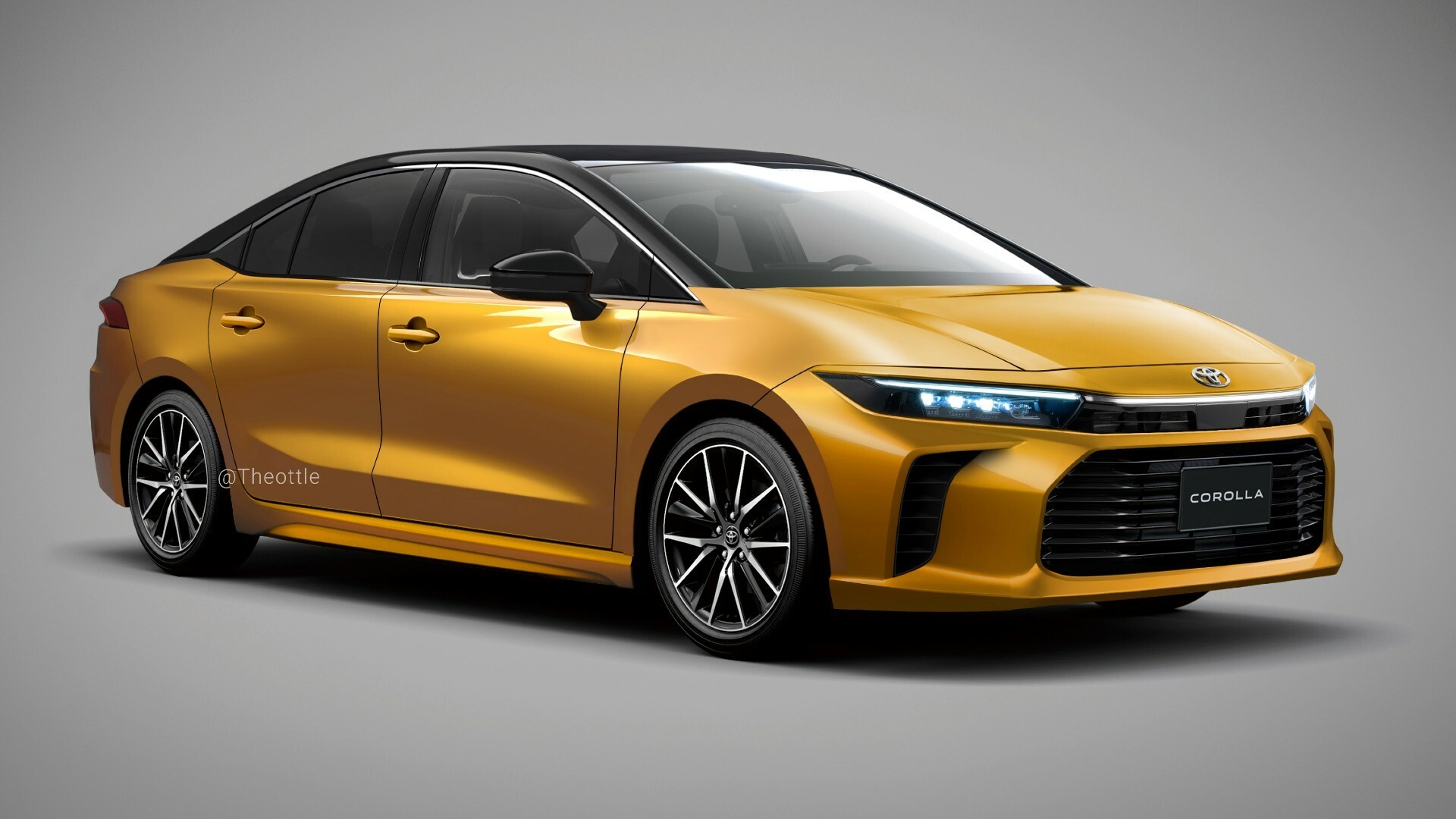
Toyota has spent more than a quarter-century teaching the world how to build a hybrid, and the next act may be its most consequential yet. According to reporting from Car and Driver, the next-generation Corolla will adopt a more compact hybrid system delivering roughly 15 percent better fuel economy than the current car. On paper, that reads like a mid-cycle improvement. In practice, it is a quiet but profound statement about where Toyota believes the humble sedan belongs in an increasingly crossover-obsessed market.
The engineering story behind that figure matters as much as the number itself. Toyota's next-generation hybrid, developed for what the company calls future multi-pathway vehicle platforms, shrinks the hardware — electric motor, power control unit, and battery packaging — while simultaneously raising thermal and electrical efficiency. Smaller components mean less mass, more packaging freedom, and lower cost per vehicle, all of which allow Toyota to deploy electrification deeper into its lineup without inflating sticker prices. The Corolla, the world's best-selling nameplate, is the natural beneficiary and the natural proving ground.
The Efficiency Argument, Recalibrated
Context is everything here. The current Corolla Hybrid already returns fuel economy that would have seemed implausible for a gasoline sedan a decade ago, and it does so without asking drivers to change their habits, hunt for chargers, or pay a premium for the privilege. A further 15 percent gain pushes the car into territory that begins to make the efficiency argument for plug-in hybrids and even some EVs look less automatic. For the enormous share of buyers who lack home charging or simply want one dependable car, a Corolla that sips fuel more sparingly than ever is not a compromise — it is the rational choice, refined.
A Hedge Across Futures, With One Through-Line
There is strategic elegance in the timing, too. Toyota's recent headlines sketch a company hedging across every plausible future at once: an autonomous taxi trial with Waymo in Japan set for 2027, rugged Woodland concepts at SEMA spanning everything from the Sienna to the bZ electric SUV, a Tacoma TRD Pro trading blows with the Ford Ranger Raptor, and a Prius Plug-in Hybrid that reviewers insist deserves more attention than it gets. Amid that sprawl, the Corolla's compact hybrid is the through-line — the volume machine that turns next-generation engineering into next-generation sales. Rivals are taking note; even first-drive reviews of competitors now measure themselves against Toyota's hybrid benchmark by name.
The Sedan Isn't Dead — It's Getting Smarter
The sedan, we are told endlessly, is dying. Toyota appears to be betting otherwise, and betting with its best engineering rather than its marketing department. A more compact hybrid system means the Corolla can keep its footprint sensible, its price accessible, and its efficiency class-leading — precisely the combination that has kept the nameplate atop global sales charts for decades. Fifteen percent is not a rounding error; applied across millions of vehicles, it is a meaningful reduction in real-world consumption and emissions, achieved with technology that requires no new infrastructure and no leap of faith from the buyer.
What makes this genuinely newsworthy is the discipline it represents. In an industry chasing dramatic announcements, Toyota is refining the formula that made it the world's largest automaker: incremental, compounding gains delivered at scale. The next Corolla will not arrive with a headline-grabbing range figure or a radical silhouette. It will arrive with a smaller, smarter hybrid heart and a fuel-economy number that quietly embarrasses larger, heavier, more fashionable machines. For the sedan, that may prove to be not a stay of execution but a second wind — engineered, characteristically, in Toyota City.


