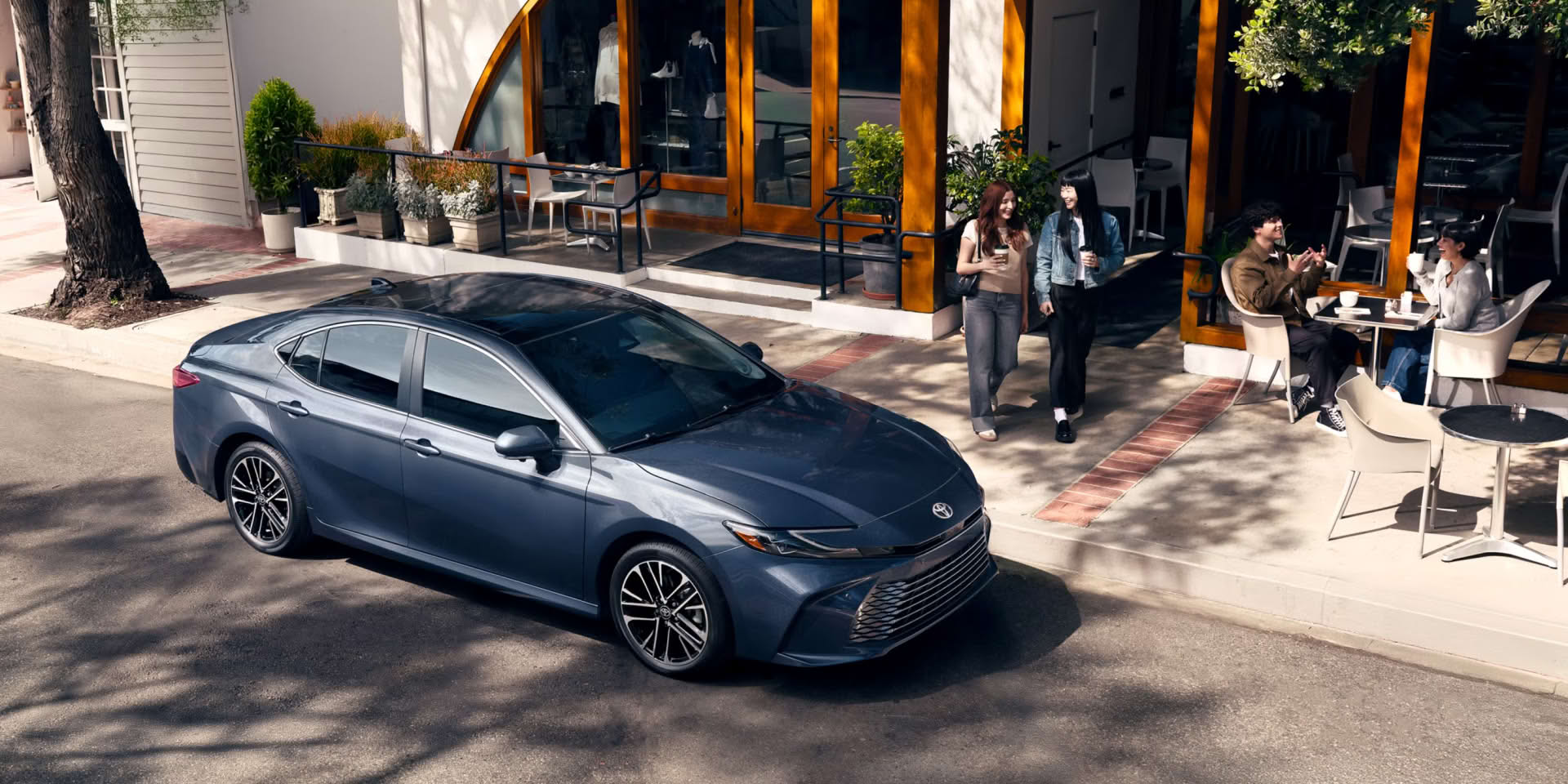
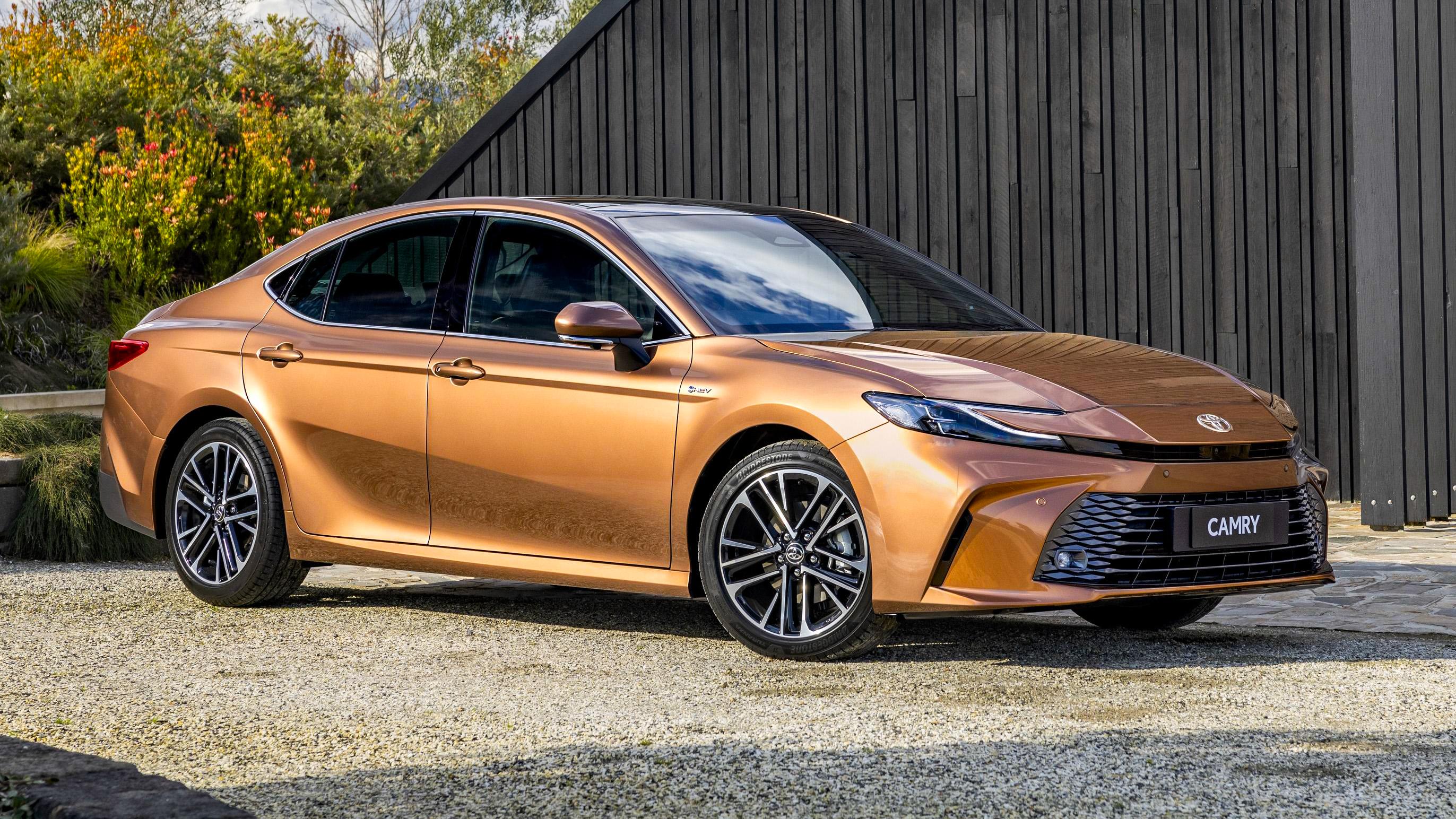
For two decades, the Toyota Prius wasn't just a car—it was a rolling manifesto. Its wedge silhouette screamed eco-warrior, its fuel economy readouts turned every commute into a scoreboard for planetary salvation. But walk into a Toyota showroom in 2025 and you'll witness a fascinating strategic pivot that borders on psychological warfare against the brand's own legacy. Toyota has deliberately dialed back Prius sales, and in its place, the gloriously unassuming Camry has emerged as the company's true ideological counterweight. The anti-Prius is quietly outselling the electric revolution's narrative, and it's not even close.
The Camry's genius has always been its refusal to take a stand. Where the Prius shouted about tomorrow, the Camry simply exists in the present—a masterclass in anonymous competence. But the latest generation has weaponized that anonymity. By making every Camry a hybrid, dropping the pure internal combustion powertrain entirely, Toyota has pulled off a sleight of hand the Prius could never manage. It has normalized electrification to the point of invisibility. No moralizing. No eco-posturing. No aerodynamic weirdness to explain to your neighbors. Just a sedan that looks like a sedan, drives like a sedan, and happens to return 50 mpg while doing it. This is the anti-Prius strategy in its purest form: don't sell the technology, sell the product in which the technology happens to reside.
The Art of Selling Boring
The results speak to a profound understanding of American consumer psychology. While Tesla and its Chinese rivals fight over early adopters and tech enthusiasts, the Camry has quietly become Toyota's third best-selling vehicle, with a waiting list that rivals the queue for a supercar. This isn't because the Camry is exciting—it isn't. It's because Toyota recognized a fundamental truth: most buyers don't want a revolution; they want a reliable appliance that doesn't force them to contemplate their carbon footprint every time they merge onto the interstate.
The Prius demanded its owners become ambassadors for a cause. Every Prius driver was, whether they liked it or not, a walking advertisement for environmental consciousness. The Camry lets its owners be anonymous again. And for the average commuter, that anonymity is the ultimate luxury. There's something quietly subversive about a car that delivers hybrid efficiency without asking you to join a movement. It's electrification for people who just want to get to work on time.
Marketing Without the Lecture
Toyota's corporate messaging has shifted accordingly, and the change is unmistakable. Look at the brand's recent marketing pushes—from the RAV4's new rugged trims to that gloriously absurd viral stunt involving an $86 box of ice cream sandwiches to sell the Sienna minivan—and you'll spot a pattern. Toyota is leaning into lifestyle, utility, and humor, deliberately steering away from the earnest, lecture-adjacent tone that defined the Prius era.
The Camry fits this new playbook perfectly. It's the car for people who want the benefits of electrification without the identity that comes attached to it. Toyota understands that the future isn't about converting the faithful; it's about capturing the indifferent. And the Camry is the perfect trap for that vast, silent majority. It's not trying to change your mind about anything—it's just trying to change your car, and doing so with such seamless competence that you barely notice the transition happening.
The Safe Harbor in a Stormy Sea
This strategy also insulates Toyota from the political volatility that has begun to plague the EV market. With tariffs on Canadian-built vehicles looming and federal EV policy shifting with each election cycle, Toyota's decision to keep the Camry as a self-charging hybrid—no plug, no drama—positions it as the safe harbor in a stormy regulatory sea. The Prius, for all its historical significance, became a political lightning rod. The Camry is a bridge car for a divided nation: conservative enough to avoid triggering range anxiety, progressive enough to deliver class-leading fuel economy. It's the automotive equivalent of a Swiss bank account—boring, secure, and universally accepted.
There's an undeniable irony in all this. For years, critics dismissed the Camry as the default choice for rental fleets and retirees. But in a market where even used Toyotas no longer represent the bargain they once did, the Camry has become a status symbol of a different sort—one that signals financial prudence, risk aversion, and a quiet confidence that doesn't need to shout. The Prius was the car for people who wanted to change the world. The Camry is the car for people who have realized the world is going to change regardless, and they'd rather just get to work on time.
In that sense, Toyota hasn't just built a better sedan. It has built the perfect antidote to the very movement it once led. And in doing so, it has reminded us that the most revolutionary thing a car company can do isn't to chase the future—it's to make the future so unremarkable that everyone wants to live in it. That's not surrender. That's strategy. And it's working.