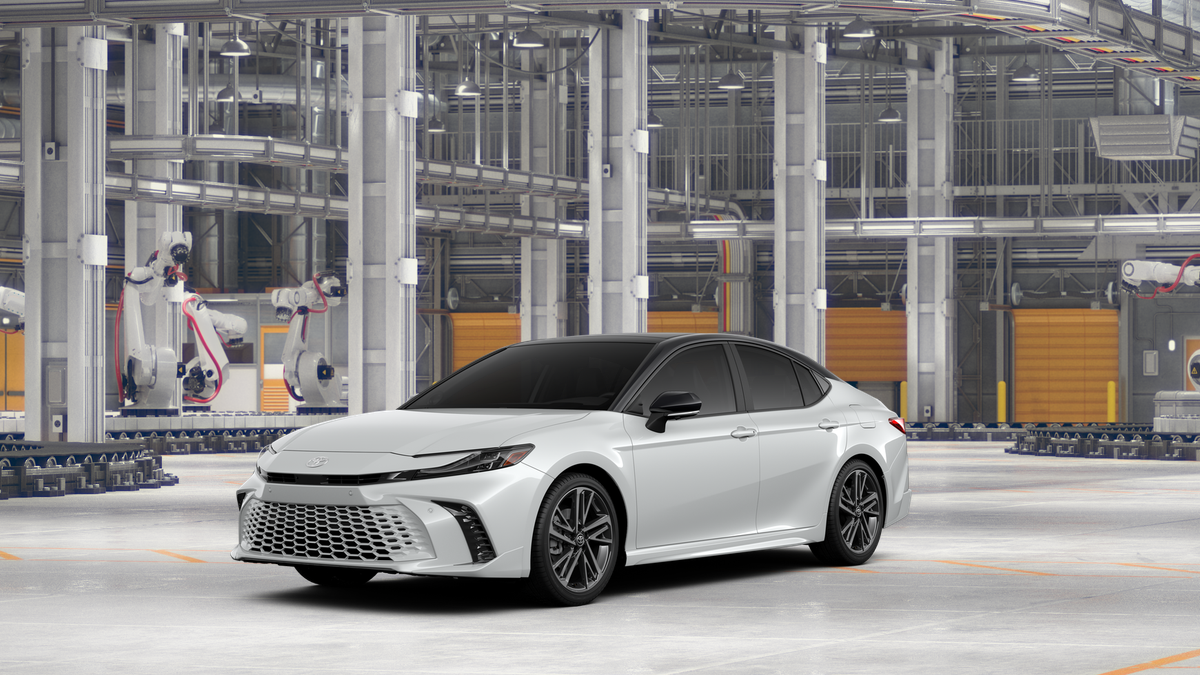
When Toyota announced that the ninth-generation Camry would abandon the V6 and arrive exclusively as a hybrid, the decision landed like a provocation. Sedans were already a shrinking corner of the market, and here was the world's largest automaker stripping the gasoline-only option from its most recognizable family car. Critics called it a surrender dressed up as strategy. Two model years later, the verdict is arriving not with a bang but with a shrug of quiet inevitability: the gamble is working, and the 2026 Camry is the proof.
The brilliance of the strategy lies in its restraint. Toyota did not rebrand the Camry as a techno-futurist statement or bury its hybrid hardware beneath a sci-fi shell. The 2026 Camry remains an honest, mid-size sedan — a fact that has not gone unnoticed by reviewers who have spent the past year mourning the disappearance of straightforward four-doors. The hybrid system is simply there, standard, unremarkable in operation and remarkable only in its results. There is no plug, no learning curve, no lifestyle change demanded of the buyer. Toyota's bet was that most sedan shoppers never wanted a hybrid as a statement; they wanted one as an appliance, and the Camry delivers exactly that.
The Quiet Competence of the Everyday Sedan
That quiet competence is the point. The 2026 Camry returns fuel economy that makes its predecessor's four-cylinder look thirsty while offering more torque than the old V6 in everyday driving. It asks nothing of the driver and offers no novelty to explain away. Toyota understood something its rivals have been slower to grasp: the hybrid transition does not require evangelism if the product simply outperforms what it replaced. The Camry did not need to convince anyone; it needed to be better, and it is.
The Other Side of the Hybrid Ledger
The broader hybrid ledger, however, is not unblemished, and Toyota's dominance in the space has made every stumble more visible. The company's recent recall of roughly 105,800 U.S. vehicles — including Land Cruiser Hybrids — over fire risk served as a reminder that electrified drivetrains introduce new failure modes that regulators and engineers are still learning to police. Reports of a Toyota owner stranded for two months in Alaska after discovering her vehicle's hybrid complications, and a British Columbia owner locked in a $13,000 dispute after a transmission failure, underscore that hybridization is not a frictionless upgrade. Toyota's reputation for bulletproof reliability is an asset precisely because it is not unconditional, and each of these stories chips at the margin of that trust.
Demand Outrunning Supply
Yet context matters. The same news cycle that carried those cautionary tales also carried a telling data point from the Wall Street Journal: Toyota's top-selling SUV has become suddenly difficult to find on dealer lots. Demand for Toyota's hybridized lineup is outpacing supply so severely that shoppers are cross-shopping in frustration. That is not the symptom of a brand in trouble; it is the symptom of a brand whose product planning is running ahead of its production capacity. The Camry's hybrid-only gambit sits at the center of that dynamic, a sedan that skeptics predicted would wither now quietly absorbing buyers who once defaulted to a crossover.
An Empire Built on Sensible
There is a certain irony in the timeline. As Car and Driver's archive road test of the 1979 Toyota Corona LE Liftback reminds us, Toyota built its American empire on modest, sensible cars that asked little and delivered much. The 2026 Camry is that same proposition, updated for an era when "sensible" happens to mean electrified. The sedan market may never return to its former glory, but Toyota has demonstrated that a disciplined, unglamorous product decision — take the most conventional car you sell and make the efficient choice the only choice — can outperform louder, more theatrical electrification strategies.
The gamble, in other words, was never really a gamble. It was a calculated read on a buying public that rewards competence over novelty. The 2026 Camry is winning not because it is exciting, but because it is exactly what Toyota promised: an honest sedan, hybrid by default, better than what came before. In a market addicted to disruption, that may be the most subversive thing on four wheels.