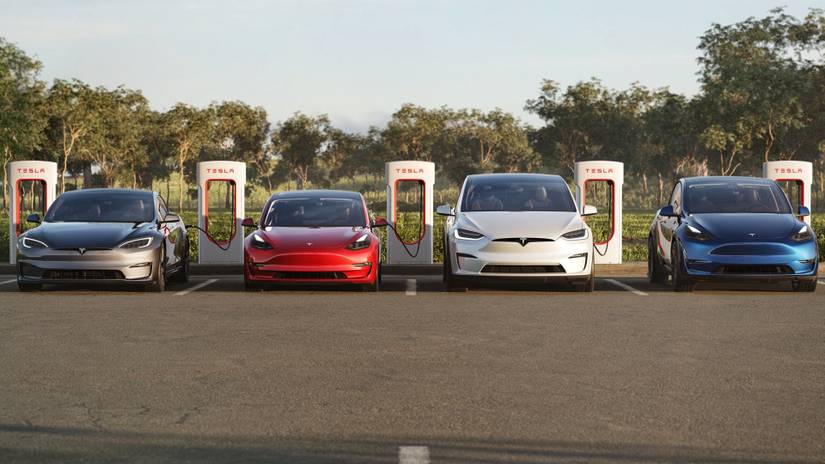
In an industry that genuflects before the quarterly earnings call and stages the product roadshow as high theatre, Tesla has quietly handed a meaningful slice of its infrastructure strategy to the people who actually plug in. The company's recent reveal of 36 new Supercharger sites picked by owners is neither a marketing stunt nor a feel-good community gesture. It is the clearest articulation yet of a growth philosophy no competitor has managed to replicate: let the customer vote with their charging history, their commute, and their complaints — then build the network accordingly.
The mechanics are deceptively simple. For several years Tesla has solicited Supercharger location suggestions directly through its in-app voting mechanism, letting owners nominate and upvote the corridors, waypoints, and urban pockets most starved of fast charging. What makes the latest announcement notable is the scale and the follow-through. Thirty-six sites is not a pilot program. It is a rolling commitment to a feedback loop in which the people paying for the cars effectively co-author the map their cars depend on — a fundamentally different posture from the traditional automaker model, where infrastructure decisions are made in a boardroom in Detroit or Stuttgart and handed down to a dealer network with its own incentives to resist.
The Moat Nobody Can Copy
Consider the contrast with the broader competitive landscape. Rivian is making genuine progress on its R2 platform and the master plan to close the gap with Tesla, and analysts are breathlessly asking whether a Model 3 moment is coming for the challenger. But the gap that matters here is not sticker price, range, or even software polish. It is the compounding advantage of a charging network that grows in the exact shape of its users' demand.
Tesla's stock has climbed more than 1,300 percent over three years, and while no single factor explains that run, the Supercharger moat — now opening to other brands while still being shaped by Tesla owners — is among the most underrated contributors. A competitor can copy the plug standard. It cannot easily copy a decade of accumulated, owner-generated geographic intelligence.
Owners as Site-Acquisition Scouts
There is a lesson buried in the noise of any given news cycle. The same week Tesla revealed the owner-selected sites, headlines also carried a tragic Chicago crash, a South Korean court rejecting owners' Full Self-Driving refund claims, and rivals BYD, Xiaomi, and XPeng reporting strong year-end sales in China. Tesla's world is never quiet, and not every story flatters the brand.
Yet the Supercharger vote quietly demonstrates a form of customer control rare in this industry — not control over the product itself, but over the environment in which the product lives. Owners are not merely consulted. They are effectively acting as the company's site-acquisition scouts, and Tesla is treating their input as a genuine planning input rather than a suggestion box.
The Elegance of Lower Forecasting Risk
The strategic logic is worth spelling out. Charging infrastructure is capital-intensive, slow to permit, and easy to misallocate. A station where nobody charges is a sunk cost; failing to build one where hundreds of owners routinely pass through is a missed retention opportunity. By letting owners surface the gaps, Tesla reduces its own forecasting risk while deepening loyalty — an owner who nominated a site and later charges there holds a small but real stake in the network's success. That psychological ownership is difficult to manufacture and nearly impossible to buy.
None of this guarantees Tesla's dominance, and the company's habit of generating controversy — from Optimus robot reservation rumors to the decision to ditch Solar Roof tiles — ensures the narrative will stay volatile. But in the specific, unglamorous business of where to put a fast charger, Tesla has built something its rivals have not: a growth strategy its customers literally control. The map is the message, and the owners are the cartographers.


