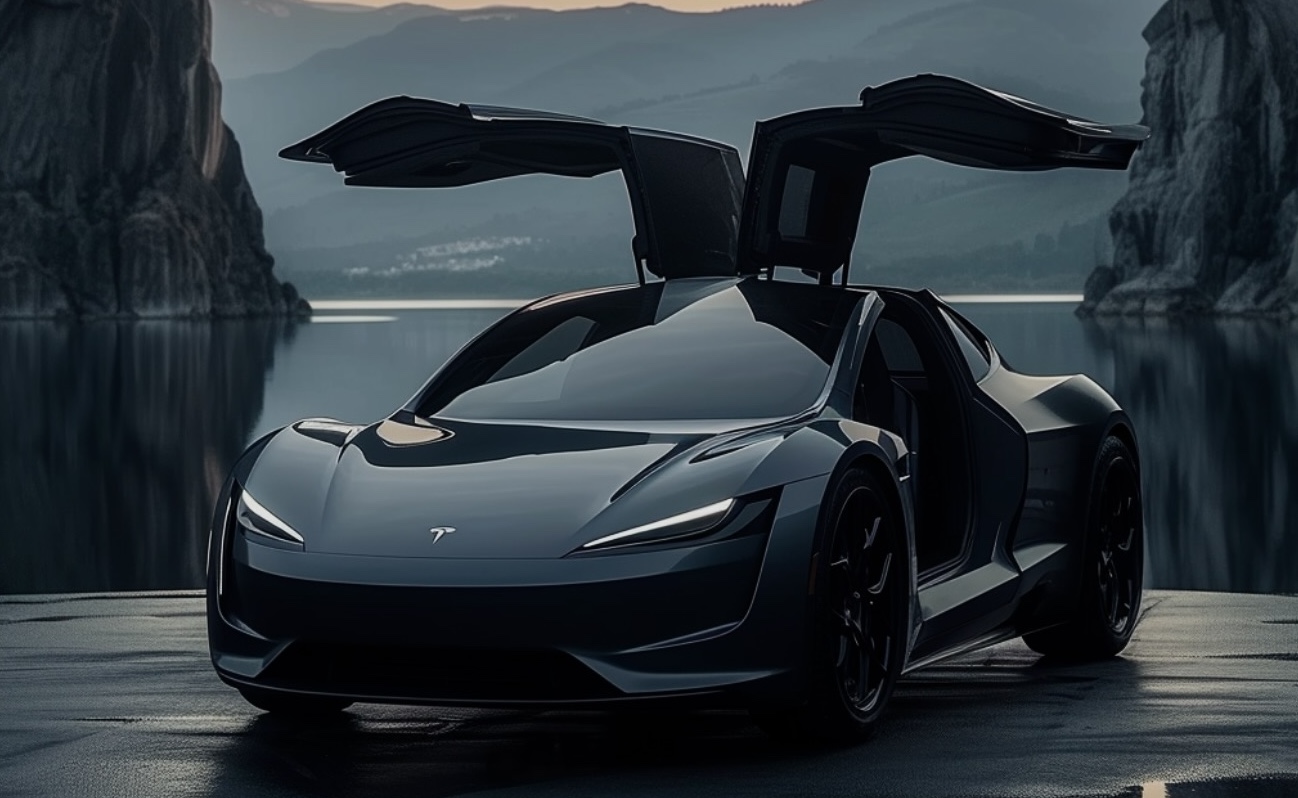
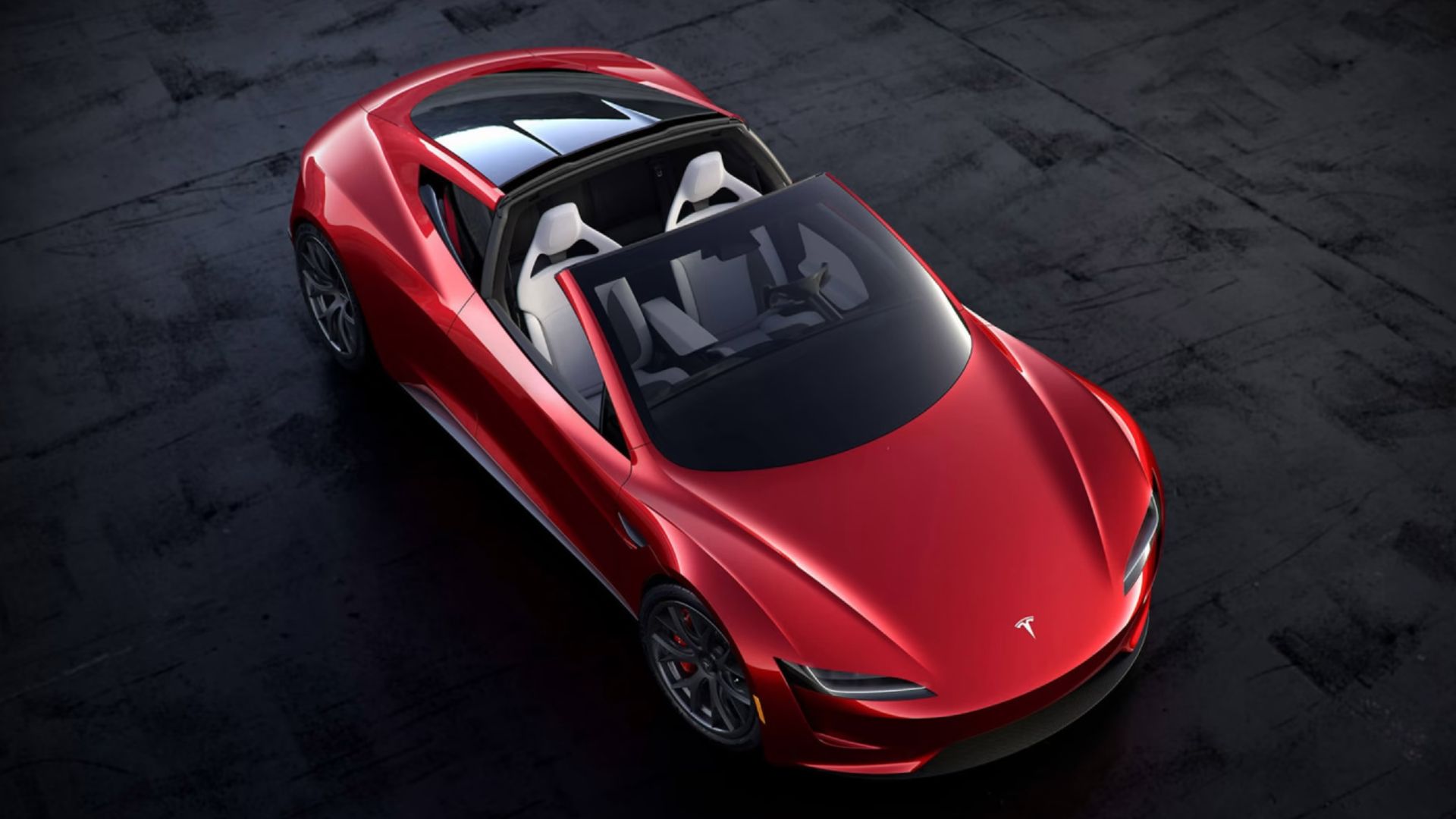
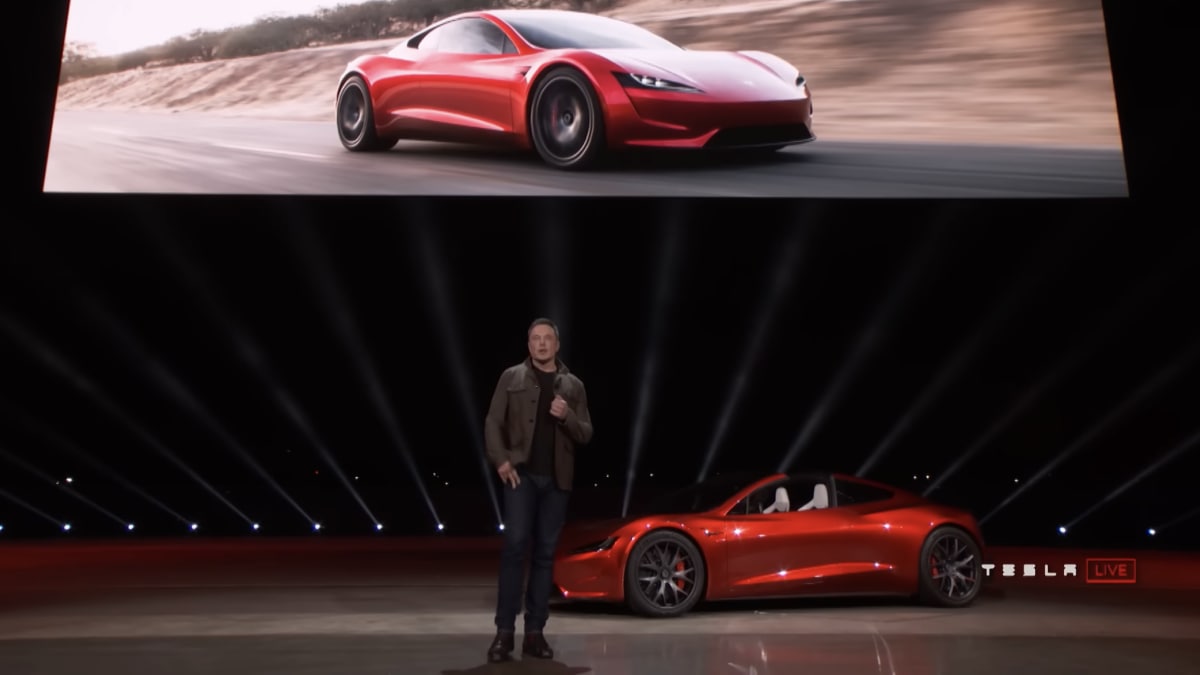
The headlines wrote themselves. At a reveal event nearly a decade in the making, Tesla finally pulled the cover off the next-generation Roadster — and it didn't merely accelerate. It levitated. Fitted with SpaceX cold-gas thrusters, the car reportedly hit 60 mph in under one second, performed barrel rolls, and drove upside down. Elon Musk, never a man to underpromise, framed it as proof of what happens when you refuse to accept the physics everyone else takes for granted. Car and Driver, Edmunds, Top Gear, and the Financial Times all rushed to confirm what the internet had already decided: Tesla had built a flying car.
It is a spectacular piece of theater, and theater has always been Tesla's most underrated product. But while the world watched a sports car hover above a stage, a quieter story broke the same week, buried beneath the barrel rolls. According to The Wall Street Journal and Reuters, the executive who runs Tesla's energy business has left the company. No thrusters. No memes. Just a resignation, a job title vacated, and a division that quietly generates some of Tesla's most durable revenue suddenly without its leader.
The Company You See, The Company You Own
That juxtaposition is the whole story of Tesla in 2025, compressed into seventy-two hours. The company you *see* is a spectacle machine — a flying Roadster, a rumored SpaceX-Tesla merger that one analyst claims could push Musk's net worth toward $2 trillion, a stock that spikes on every reveal. The company you *own*, if you're a shareholder, increasingly depends on the parts that don't make the highlight reel: battery storage, solar, grid-scale installations, and the unglamorous infrastructure of electrification.
What the Energy Division Actually Represents
Consider what's really at stake here. Tesla's storage deployments have grown into a genuine industrial business, one that sells Megapacks to utilities and data centers at a moment when AI's power appetite is exploding. It is less exciting than a car that flies. It is also, arguably, more essential to the company's long-term valuation than any halo vehicle. And its boss just left.
A Pattern Tesla Knows Well
We have seen this pattern before. Tesla has a long history of executive turnover, particularly in the operational trenches where Musk's attention is rarely fixed. The Roadster reveal will dominate the news cycle for a week. The energy leadership vacuum will not be noticed until a quarterly deployment number comes in soft, or a major utility contract slips, or a competitor moves faster on grid storage while Tesla's internal focus drifts toward another spectacle.
None of this means the Roadster is a distraction in the pejorative sense. The reveal is a legitimate engineering flex, a brand statement, and a useful reminder that Tesla still does things no legacy automaker would dare attempt. But a flying car does not sell itself for years — the Roadster has already been delayed nearly a decade, and its production timeline remains, charitably, vague.
The Boring Machinery That Sustains the Show
What sustains a company between reveals is not the show. It is the boring machinery: the energy storage contracts, the grid partnerships, the division heads who show up every day while the founder is on stage. Tesla just lost one of those people, on the same week it reminded the world why we can't look away from the stage.
Both things are true. The Roadster flies. And the energy boss walked out the door. Only one of them will show up in the stock chart six quarters from now.