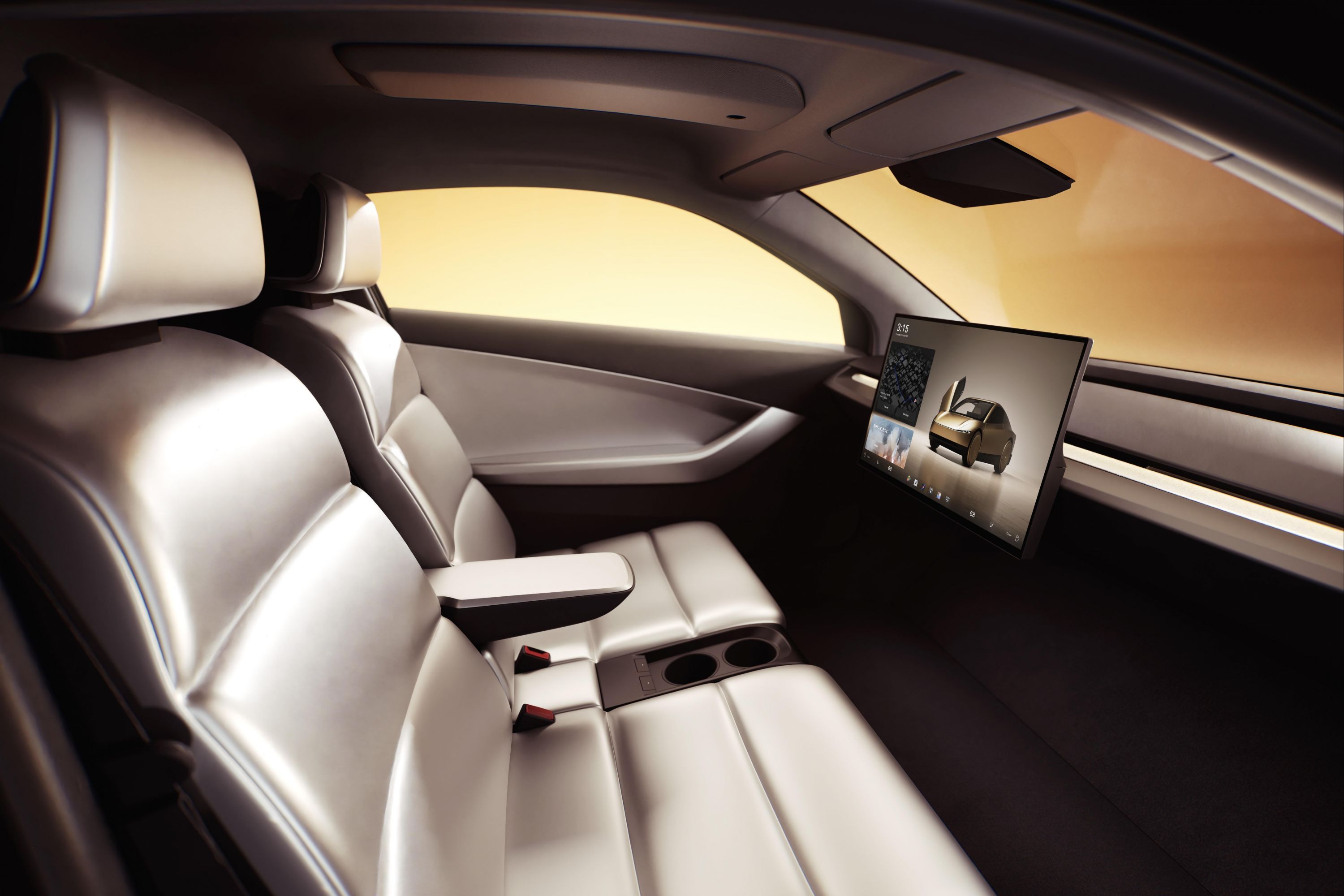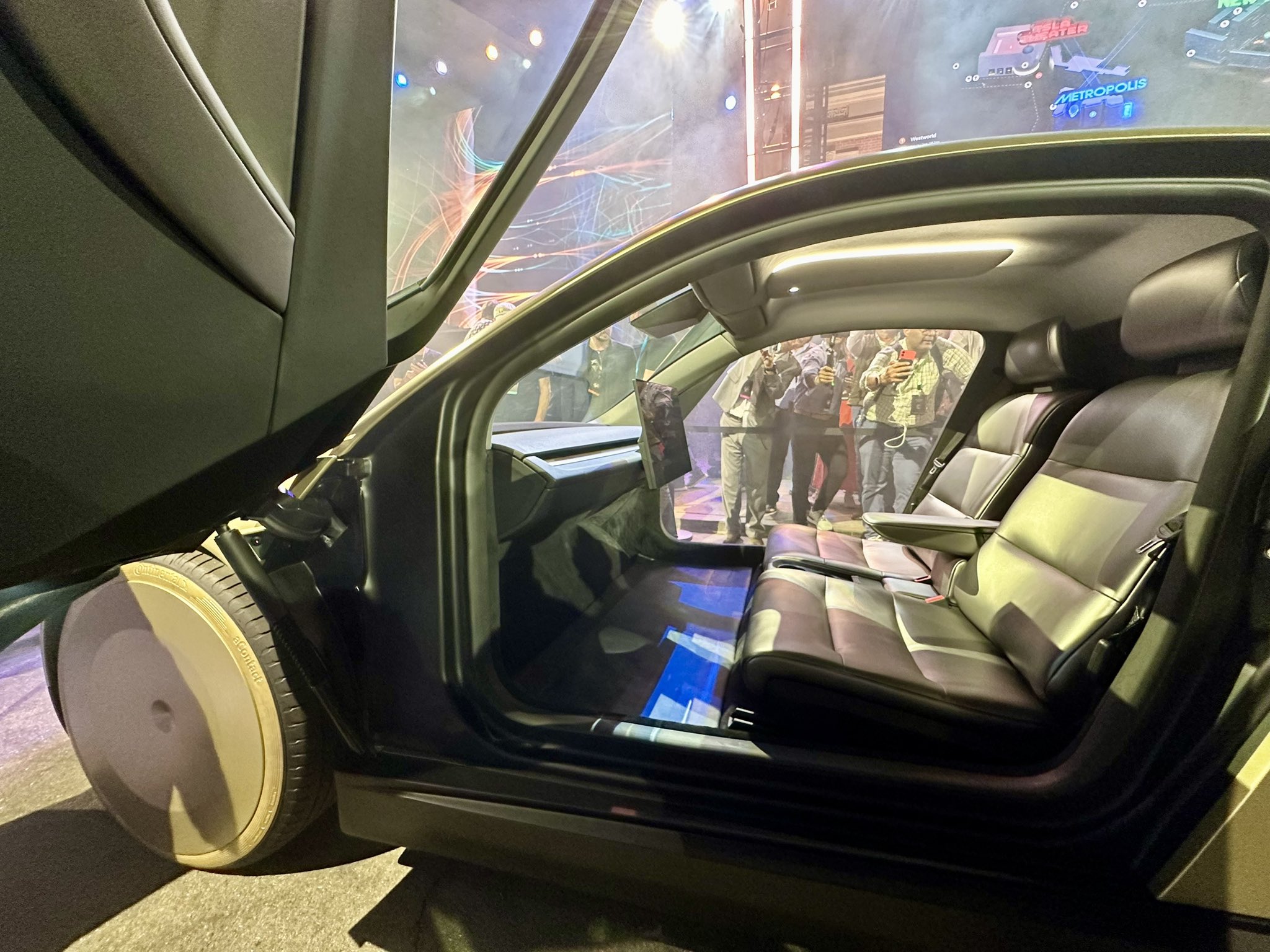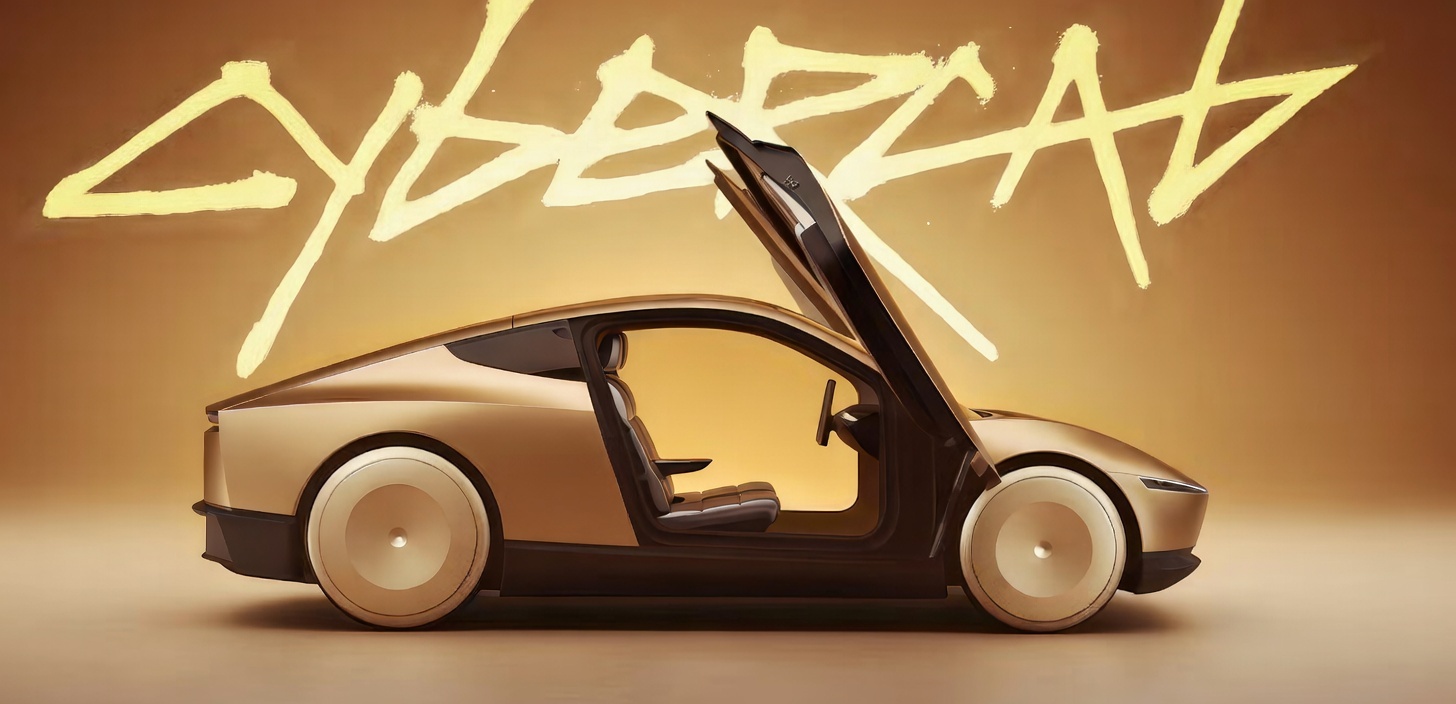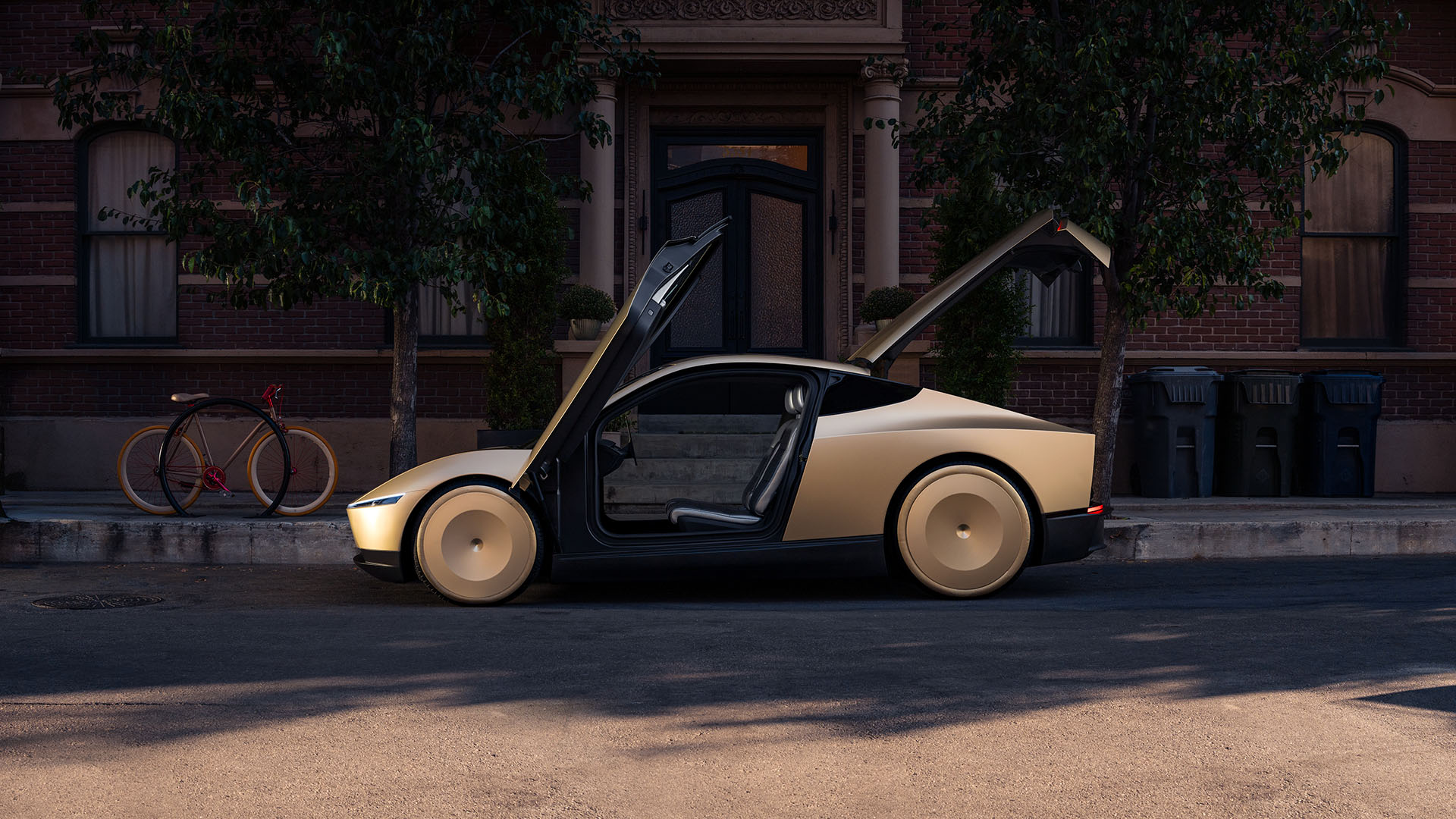
The most revealing detail to emerge from Tesla's Cybercab program isn't the absent steering wheel. It isn't the ambitious production targets, or even the Texas fire department's pointed questions about how first responders might extract occupants from a vehicle with no manual controls. It's a software glitch.
Passengers in the steering-wheel-free Cybercab reportedly discovered they could summon manual driving controls through a virtual joystick on the in-vehicle screen. A backdoor into the very capability Tesla spent years insisting the car would never need. The company that built its entire autonomy narrative on the premise that humans are the problem accidentally left a human in the driver's seat.
The Contradiction, Rendered in Code
Consider what the glitch actually represents. Tesla's core promise with the Cybercab is a machine stripped of every human interface — a vehicle that renders the driver obsolete. The company has staked its valuation, its identity, and its founder's credibility on the idea that the software will simply be ready.
Yet the hardware and software Tesla shipped to real passengers still contained a latent manual override. Not as a designed safety feature. As an oversight. That's not a cosmetic bug. It's a philosophical contradiction rendered in code: a car designed to eliminate human control that couldn't quite stop offering it.
An Uncomfortable Debut
The timing stings, because the Cybercab's public arrival lands against a backdrop that keeps testing the limits of that promise. A Tesla crash in midtown Manhattan killed a passenger and critically injured the driver, with reports pointing to drunken operation. A Guardian investigation detailed how an abusive ex-partner remotely controlled a woman's Tesla to harass her — a reminder that connectivity, the same connective tissue that enables over-the-air autonomy updates, is also a vector for control.
Meanwhile, Rivian is openly pursuing Level 4 robotaxis with a more cautious, staged architecture, positioning itself as the disciplined alternative to Tesla's maximalism. Every one of these stories orbits the same question: who is actually in control of a Tesla, and does the company even know?
The Messy Middle Tesla Won't Admit Exists
The virtual joystick incident exposes a deeper truth about Tesla's autonomy strategy. Full self-driving has always been presented as a binary — a switch that flips from human-driven to fully autonomous. But the Cybercab glitch reveals the messy middle Tesla refuses to acknowledge: a gray zone where the vehicle is neither fully in control nor fully relinquishing it.
That ambiguity is exactly where liability, regulation, and public trust live. The Texas fire department's concern about the lack of a steering wheel isn't technophobia. It's a recognition that a vehicle designed to have no human fallback must be flawless in a way no software has ever been. The joystick glitch proves the fallback still exists, half-hidden and uninvited.
Faith Is Not an Architecture
There's an irony in Tesla's would-be fleet owners clamoring to partner with the company even as these cracks widen. The enthusiasm reflects the brand's gravitational pull — the belief that Tesla will eventually solve what others can't.
But faith is not an architecture. An autonomy program that accidentally ships manual controls to passengers is a program whose internal identity is fractured. Tesla wants to be the company that removes the driver. It keeps behaving like a company that can't decide whether the driver is a liability to be deleted or a safety net to be quietly retained.
That indecision is the real story. Not the glitch itself, which will likely be patched, but what it betrays about Tesla's unresolved relationship with human agency. Until the company can articulate — in its engineering, not just its marketing — whether the human is the problem or the partner, the Cybercab will remain a beautiful contradiction: a driverless car with a joystick, a revolution that keeps leaving itself an exit.