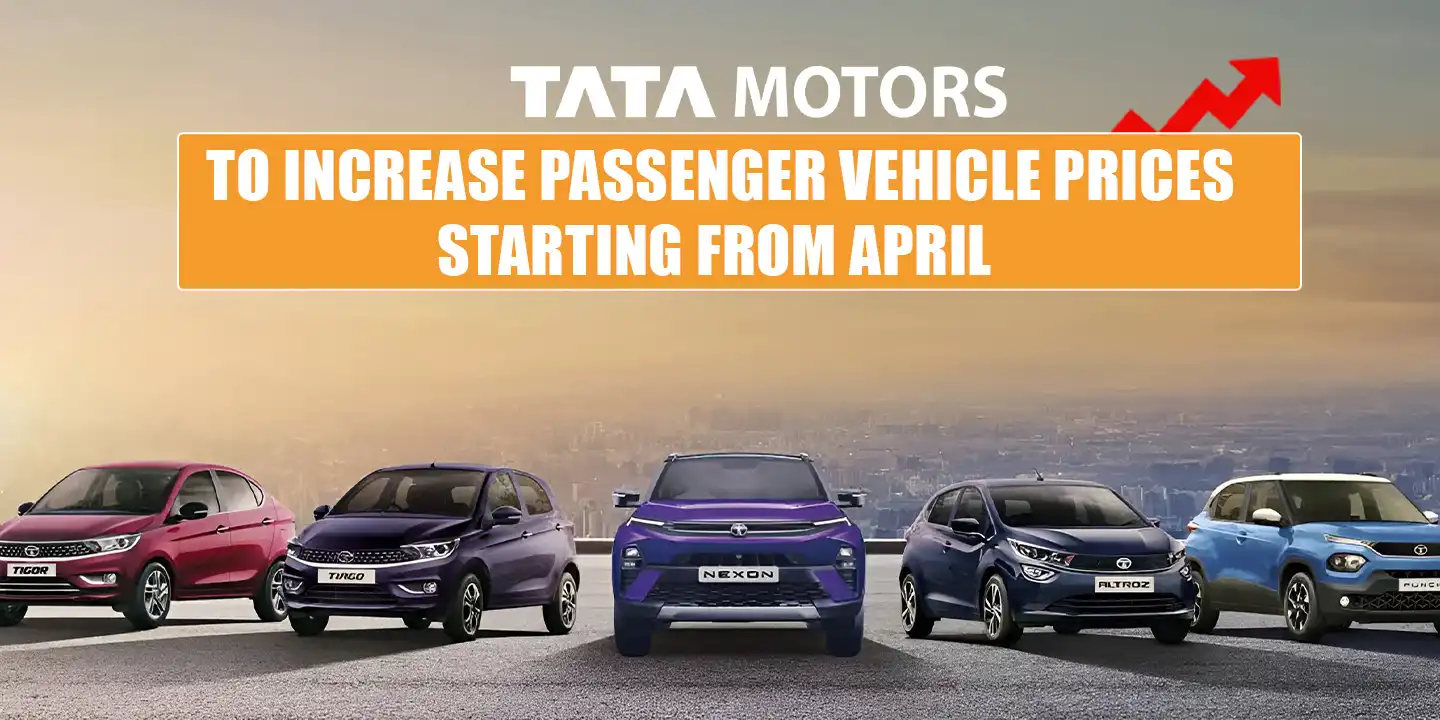
On September 1, Tata Motors will do something it has spent the better part of a decade avoiding: ask its customers to pay meaningfully more for the same cars. The company's passenger vehicle division has confirmed a price increase of up to ₹25,000 across its range, with the Tata Punch and Punch EV absorbing hikes of as much as ₹20,000. For a brand whose modern resurgence was built almost entirely on undercutting the competition while out-featuring it, this is not a routine inflationary adjustment. It is a quiet admission that the arithmetic underpinning Tata's value proposition has changed.
The immediate cause is commodity costs. Steel, aluminium, and precious metals have climbed steadily through the year, and Tata is hardly alone — Maruti Suzuki and Hyundai have announced similar moves. But framing this as a sector-wide pass-through misses what makes Tata's position uniquely awkward. The company's Q1 profit fell 80.2 percent even as revenue rose, and its passenger vehicle shares slid after management warned on margins. When a business is growing volume but bleeding profitability, a price hike is less a choice than a necessity. The question is whether the market will accept it.
The Price-Sensitive Problem
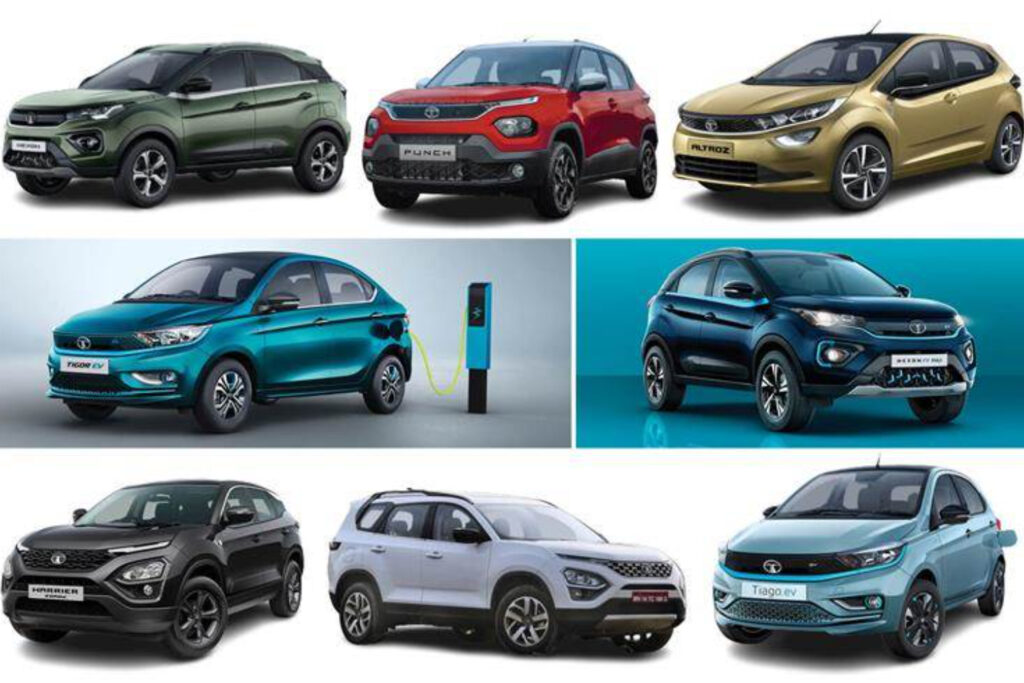
That question matters more for Tata than for its rivals because Tata's customers are unusually price-sensitive. The Punch, the Nexon, and the Tiago built their reputations on offering more car per rupee than anyone else — bigger screens, stronger safety ratings, and bolder design at prices that made established players uncomfortable. That formula worked brilliantly in a market where first-time buyers and upgraders from two-wheelers were the core audience. But those buyers have elastic budgets. A ₹25,000 increase on a car that costs under ₹10 lakh is not a rounding error; it is a meaningful shift in the monthly EMI and the down payment calculation.
The timing compounds the difficulty. Tata has simultaneously unveiled a new identity for its passenger vehicle business under the Tata.Cars banner, a rebranding exercise meant to signal ambition and aspiration. Critics have asked, reasonably, why a company that had already reinvented the car needed to reinvent its name. The rebrand and the price hike, arriving together, send mixed signals: one says Tata is moving upmarket, the other says Tata can no longer afford to be the value champion. Customers notice such contradictions.
Where Differentiation Earns Its Keep
There is, however, a counterargument worth taking seriously. Tata's EV share stands at 43 percent despite intensifying competition, which suggests that where the product is genuinely differentiated, buyers are willing to pay. The Punch EV and the Nexon EV do not compete on price alone; they compete on packaging, on the credibility Tata has built in electric mobility, and on the practical appeal of lower running costs. A price increase on an EV that saves its owner money every month is a different proposition from one on a petrol hatchback in a crowded segment.
The broader strategic picture is also shifting. Tata's commercial vehicle arm is pushing into electric trucks, and partnerships such as DrivePay, the in-car fuel payment system developed with ToneTag, IndianOil, and NPCI, point toward a future where Tata's relationship with the customer extends well beyond the showroom. In that world, the sticker price of a sedan or hatchback is only one line in a longer ledger. But that future is not yet here, and today's buyer still walks into a showroom with a fixed budget and a sharp eye for what else that money could buy.
A Different Kind of Argument
What September 1 really tests, then, is whether Tata's brand equity has matured enough to survive the loss of its sharpest weapon. For years the company's pitch was simple: more car, less money. Now it must argue something harder — that the car itself, its safety, its technology, its electric drivetrain, is worth the premium regardless of what the competition charges. That is a more durable position if Tata can hold it. It is also a far less forgiving one, because value, once surrendered, is difficult to reclaim.
The road ahead asks Tata to prove that its engineering and design language can carry a price tag without the discount doing the talking.