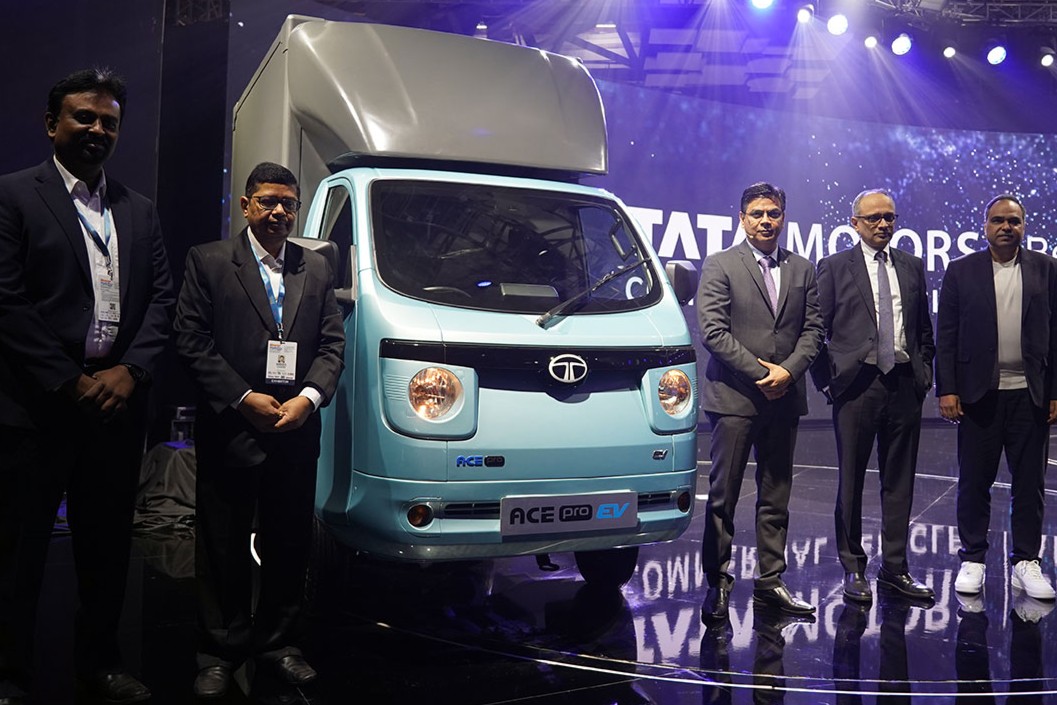
Tata Motors has spent the better part of a decade being celebrated — and occasionally patronised — as India's passenger EV pioneer. The Nexon EV, the Punch EV, and now the Sierra EV have made the brand synonymous with the country's electric transition in the private car market. But while the spotlight stayed trained on showrooms, something far more consequential has been quietly assembling in the commercial vehicle division. Tata's electric truck ambitions are no longer a pilot programme or a press-release curiosity. They are a business model, and it is built on a premise that most legacy automakers still treat as heresy: that the future of electric trucks may not be about selling trucks at all.
The clearest signal came with the partnership between Tata Motors and Drivn to deploy over 1,000 electric trucks on a leasing-based model. Read that again, because it inverts the traditional commercial vehicle playbook.
Friction, Dissolved
Fleet operators in India have historically been capital-constrained, credit-sensitive, and deeply sceptical of new powertrain technology. Asking a mid-sized logistics operator to write a cheque for an electric truck — with residual value uncertainty, charging infrastructure gaps, and battery replacement costs looming — was always going to be a hard sell. Leasing dissolves most of that friction. The operator pays for uptime and kilometres, not for a depreciating asset with an unproven second-hand market.
This is the strategy nobody saw coming, because it looks less like manufacturing and more like infrastructure finance. Tata isn't simply pushing metal; it is underwriting the risk that fleet owners refuse to carry. In doing so, it converts a technology sale into a service relationship — one that generates recurring revenue, locks in long-term parts and service business, and keeps the trucks within Tata's own ecosystem for their entire operational life. For a company that already dominates India's commercial vehicle market, that is a defensible moat in a way that a one-time vehicle sale never is.
The Order Book Speaks
The demand signals suggest the bet is landing. Tata Motors has secured over 3,400 electric commercial vehicle orders, alongside 500 e-bus orders — numbers that would have seemed fanciful for Indian electric CVs just three years ago. The company has publicly acknowledged strong electric CV demand while flagging a China cell supply bottleneck expected to ease by quarter-end, a candid admission that the constraint on growth is now upstream battery supply rather than customer appetite. That is a far better problem to have than the reverse.
Why Leasing Is the Real Story
There is a broader logic at work too. India's freight sector is under mounting pressure to decarbonise, with tightening emission norms, urban diesel bans, and corporate ESG mandates pushing large shippers to demand cleaner logistics partners. A leasing model lets Tata position itself as the enabler of that transition rather than a vendor waiting for customers to arrive with capital in hand. It also creates a data pipeline — telematics, duty cycles, battery degradation curves — that will inform the next generation of products in ways a traditional sales channel never could.
Risk, Honestly Stated
None of this is without risk. Leasing stretches Tata's balance sheet, exposes it to residual value assumptions that remain untested at scale, and depends on a charging and service network that must keep pace with deployment. The cell supply bottleneck is a reminder that even the cleverest commercial model cannot outrun physics and geopolitics. And passenger EV bookings tripling in six months — with production capacity now the binding constraint — shows that Tata's attention and capital are being pulled in multiple directions at once.
Yet the strategic clarity is striking. In passenger cars, Tata is fighting a familiar battle for market share against rivals old and new. In commercial vehicles, it is quietly writing new rules. Leasing electric trucks to Indian fleet operators is not a marketing gesture; it is an attempt to own the entire value chain of freight electrification — vehicle, finance, service, and data. If it works, the question will no longer be whether Tata leads India's EV transition, but whether anyone else can find a way in.


