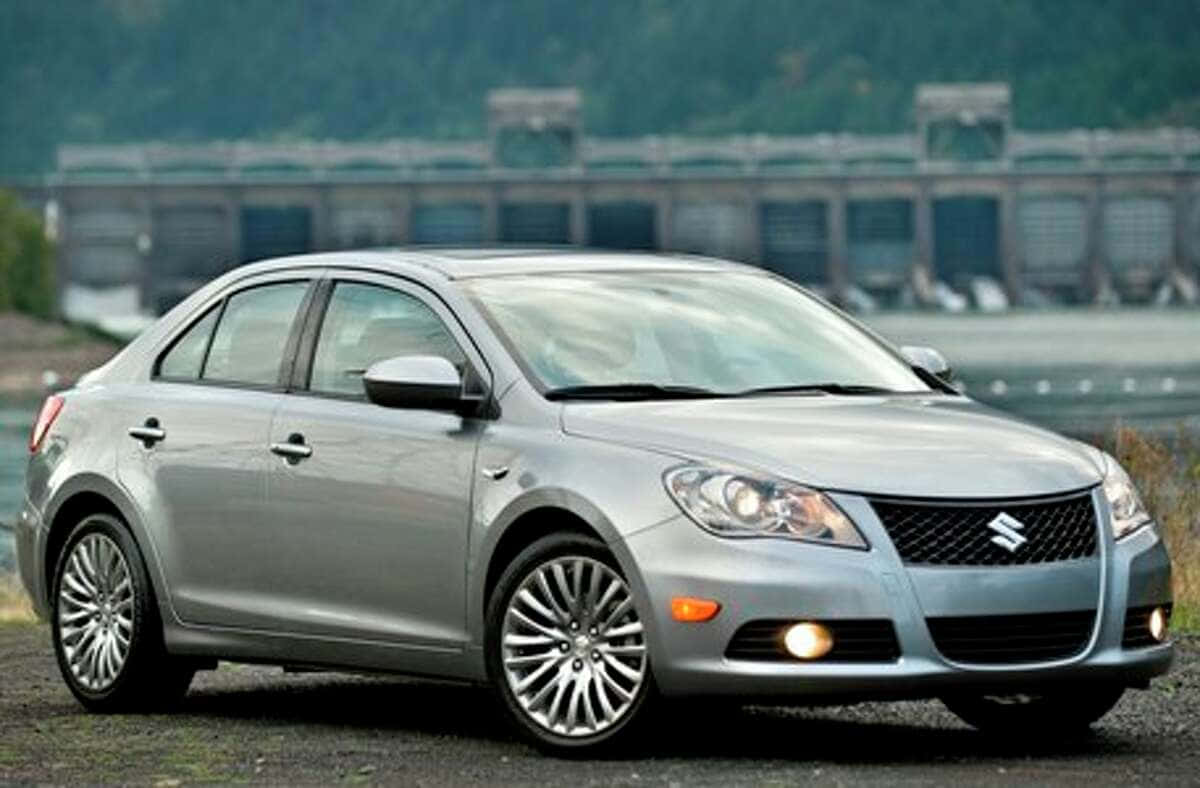
Suzuki has never been a company that chased size for its own sake. It built its reputation on small, light, cleverly packaged cars — machines that punched above their weight because they didn't carry any. So there's a certain logic to the fact that the sedan, once a cornerstone of the brand's global ambitions, has all but vanished from Suzuki showrooms across Europe, North America, and much of Asia. What looks at first like retreat is actually something more deliberate: a portfolio triage executed with unusual discipline by a manufacturer that has decided its four-wheeled future lies in India, in compact SUVs, and increasingly, in electrification.
The withdrawal wasn't accidental, and it wasn't overnight. It was a slow, calculated narrowing of focus — the kind of decision that looks obvious in hindsight and painful in the moment. And the story of how it happened, and what it means for the brand's identity, is more interesting than the disappearance itself.
The Long Goodbye in the West
Suzuki's exit from the US passenger car market in 2012 marked the beginning of the end for sedans like the Kizashi — a genuinely ambitious mid-sizer that arrived just as the company's American distribution network collapsed beneath it. The car deserved better. It was the kind of machine Suzuki rarely allowed itself to build: substantial, dynamically credible, and unmistakably a statement of intent. But intent without infrastructure is just a brochure.
In Europe, the story unfolded with less drama and the same outcome. The Swift Dzire and its successors never achieved the cultural penetration of the hatchback that spawned them. Buyers chasing a small four-door gravitated toward established compact sedans from Volkswagen, Skoda, and Hyundai — brands with the badge equity to make a sedan feel like a sensible upgrade rather than a compromise. By the mid-2020s, Suzuki's European sedan presence had been reduced to a handful of markets where the Dzire lingered as a fleet and taxi proposition rather than a retail one. Not a funeral. Just a quiet fade.
India, Where the Sedan Still Sells
India tells a very different story — and it's the story that now matters most. Through Maruti Suzuki, the company commands roughly 40 percent of the world's fourth-largest car market, and the sedan, far from dying, remains a viable and profitable category. The Dzire is a perennial bestseller. The Ciaz persists as a value-oriented executive option. The Nexa retail channel continues to push sedan models with aggressive festive-season incentives, and recent discount campaigns offering up to Rs 85,000 off models including the XL6, Fronx, and Grand Vitara underline just how fiercely Maruti Suzuki defends its volume position at home.
In India, the sedan is not nostalgia. It is inventory. And inventory, moved at scale, is what keeps the lights on.
The SUV Tide and the Electric Question
Yet even in India, the winds are shifting. Consumer migration toward SUVs and crossovers has been relentless, and Suzuki's own product cadence reflects it. The Grand Vitara, the Fronx, and the Jimny have absorbed the marketing oxygen that sedans once commanded. The decision to prioritise high-riding body styles isn't sentimental — it's arithmetic. Margins are better, platforms are shared more efficiently, and buyers in every major market have voted with their wallets.
The next chapter may render the sedan debate moot entirely. Suzuki has confirmed plans to launch an ultracompact EV in Japan, aimed squarely at the kei-car segment where the brand has historically been strongest. That follows the global debut of the e Vitara, the company's first serious mass-market electric vehicle — a car that has already generated debate over its pricing. Australian buyers, for instance, are being asked to consider whether a $59,000 Suzuki represents value in a crowded EV field. That question cuts to the heart of the pivot: Suzuki built its identity on affordability, and electrification threatens to erode that advantage.
The Jimny, the Motorcycles, and the Name Itself
Meanwhile, the brand's cultural energy has migrated elsewhere. The Jimny has become a tuning phenomenon, with Japanese aftermarket firms reimagining it as everything from a miniature GMC Typhoon to a retro off-road icon. Motorcycle enthusiasts still celebrate Suzuki's two-wheeled heritage, from the TM400K of 1974 to the current crop of new models sharing showroom space with Ducati and Honda. Even the name has become strangely diffuse — search for "Suzuki" today and you may find a Cubs outfielder, an NHL centre, or a goalkeeper being touted as Ederson's heir before you find a sedan.
That dilution of meaning is precisely the risk. Suzuki's four-wheeled future is now concentrated in India, in compact crossovers, and in an EV transition it must execute without abandoning the value proposition that made it beloved. The sedan was never the soul of the company — but its quiet disappearance is a reminder that even the most disciplined manufacturers cannot control every market they once claimed.
Suzuki has chosen its battles. The question is whether the territory it has chosen to defend will be enough.