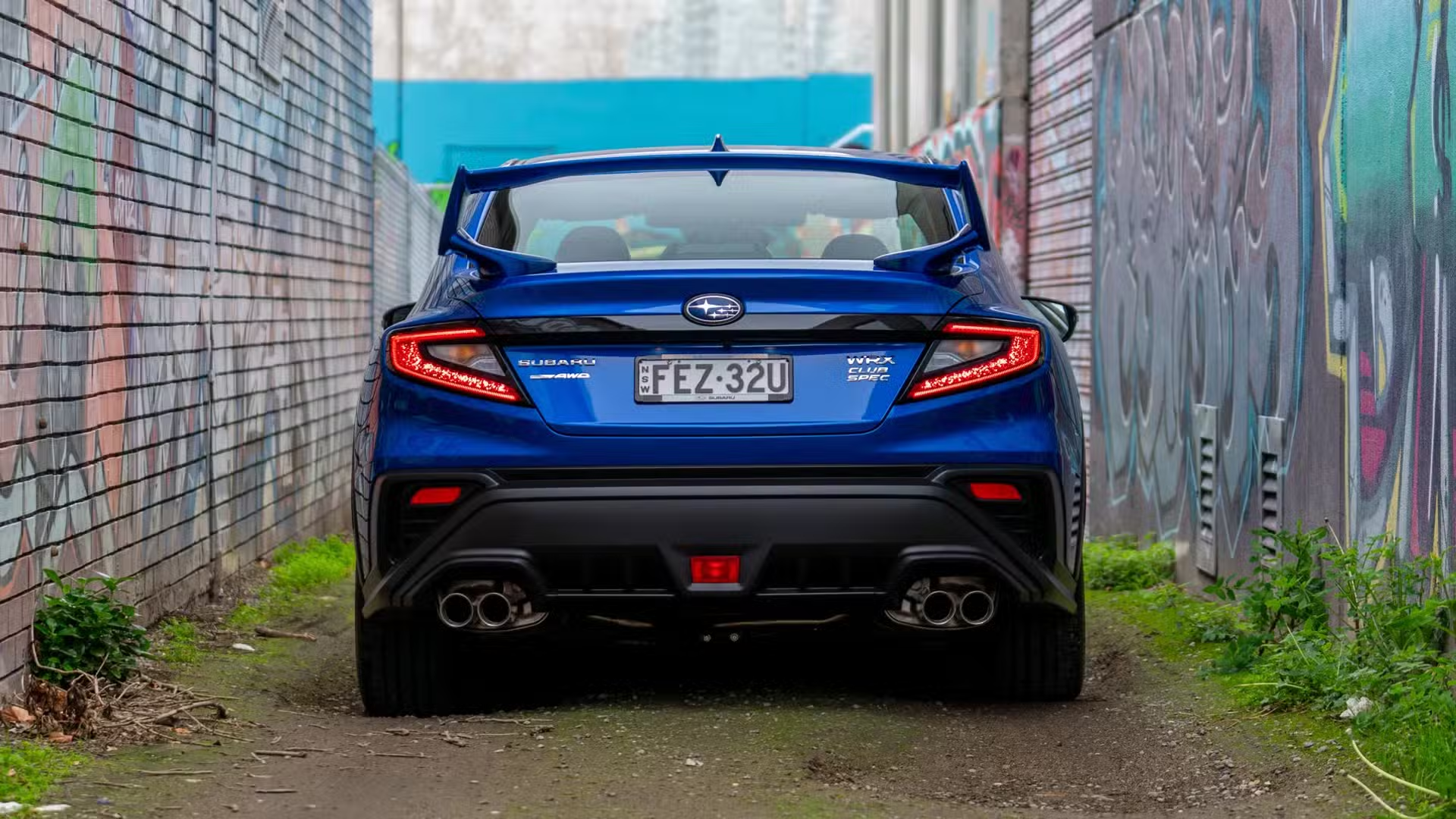
Subaru has spent the better part of a decade methodically sanding down its own rough edges. The rally-bred upstart that once sold turbocharged wagons to people who genuinely needed them has become a sensible suburban institution—a brand now synonymous with dog-friendly commercials and zero-percent financing. So when word broke that a new six-speed manual WRX is on the way, enthusiasts could be forgiven for a flicker of hope.
The fine print, as ever, is where the story lives: this one is for Japan only.
According to reports from Car and Driver, CarBuzz, and Motor1, Subaru is teasing a fresh manual-equipped WRX for its home market—and the mechanical details are the sort of thing that makes a certain kind of driver go quiet and misty-eyed. The gearbox in question is reportedly the same unit lifted from the previous-generation WRX STI, a transmission with genuine motorsport provenance, a proper mechanical feel, and a reputation for absorbing abuse that would shame a lesser cog-swapper. That Subaru is keeping this hardware alive at all is notable. That it is doing so exclusively for Japanese buyers is the part that stings.
The Stick Shift, Still Standing
Let us be clear about what this represents. In an era when the manual transmission is being quietly euthanised across the industry—sacrificed on the altar of electrification and the dual-clutch—Subaru still builds a stick-shift performance sedan. It still believes, somewhere in its corporate heart, that a driver should be involved in the process.
The problem is that this belief apparently does not extend to the markets where the WRX built its legend. North American and European enthusiasts—the very people who bought the bugeyes and the blobeyes and kept the aftermarket alive for three decades—are being told to admire from a distance.
A Business Case With a Bittersweet Aftertaste
This is, of course, a business decision, and one can construct the logic. Manual take rates have collapsed. The regulatory environment in Europe is openly hostile to combustion performance cars—Subaru has already announced it will drop gasoline models there entirely by the end of 2027. The company is pouring resources into an in-house EV platform and fighting for relevance in a struggling but slowly reviving electric market.
The manual WRX, in that light, is a sentimental flourish for the domestic faithful—a nod to the boxer engine's sixty-year heritage before that engine's European production ends next year. It is a love letter written in Japanese and mailed only to Tokyo.
The Brand's Two Faces
Yet the timing is impossible to ignore. The same week Subaru teases this forbidden fruit, it also recalls attention with warnings that Forester and Crosstrek owners should not drive their SUVs, and trims the price of the 2027 Outback to a more affordable $32,995. The brand's public face is practical, safety-conscious, and value-driven—a Crosstrek Wilderness trading blows with a Bronco Sport, a Forester owner hand-calculating 40 mpg.
These are worthy stories. But they are not the stories that built the brand's soul.
A Confession, Not Just an Announcement
The manual WRX for Japan is therefore more than a product announcement. It is a confession. It admits that Subaru still knows how to build the car its enthusiasts want—and that it has chosen, deliberately, not to sell it to them.
For the devoted, that is a complicated thing to sit with. The car is alive. The door is simply closed. And for a brand whose identity was forged in turbocharged, all-wheel-drive, stick-shift defiance, that closed door says as much about where Subaru is going as any EV platform ever could.