For a brand that has spent the better part of four decades as the automotive equivalent of a punchline, SsangYong has demonstrated a remarkable talent for survival. Bankruptcy, a revolving door of owners, and a stateside reputation so thin that its retreat from the American market barely registered as news—the Korean marque has weathered it all. Yet the recent revelation that KG Mobility—the corporate entity formerly known as SsangYong Motor—has entered a partnership with China's Chery represents something far more significant than another chapter in an already convoluted corporate history. It may be the lifeline that finally allows one of the industry's most idiosyncratic SUV specialists to build vehicles worthy of its engineering ambitions.
To understand why this matters, you have to appreciate the peculiar position SsangYong has occupied for decades. Here was a company with genuine four-wheel-drive expertise, producing body-on-frame SUVs like the Rexton and the rugged Korando long before the crossover boom made such vehicles fashionable. It dabbled in electric propulsion with the CCR-1, an early Korean EV experiment that predated mainstream electrification by years. It even produced the Musso, a pickup that earned a cult following among those who valued substance over badge prestige. And yet the brand never escaped its reputation for oddball styling, questionable build quality, and the lingering stigma of its origins.
The American Problem
The American market proved particularly unforgiving. SsangYong's brief stateside tenure was marked by dismal sales and a dealer network that seemed perpetually on life support. The brand's withdrawal was less a strategic retreat than an acknowledgment of reality: American buyers simply would not pay premium-adjacent prices for vehicles that felt a generation behind their competitors. The Jalopnik headline asking whether a 1998 Korando at $16,400 represents an ultra-rare bargain captures the paradox perfectly—these are genuinely interesting vehicles, but interesting rarely translates to commercially viable.
Why the Timing Finally Works
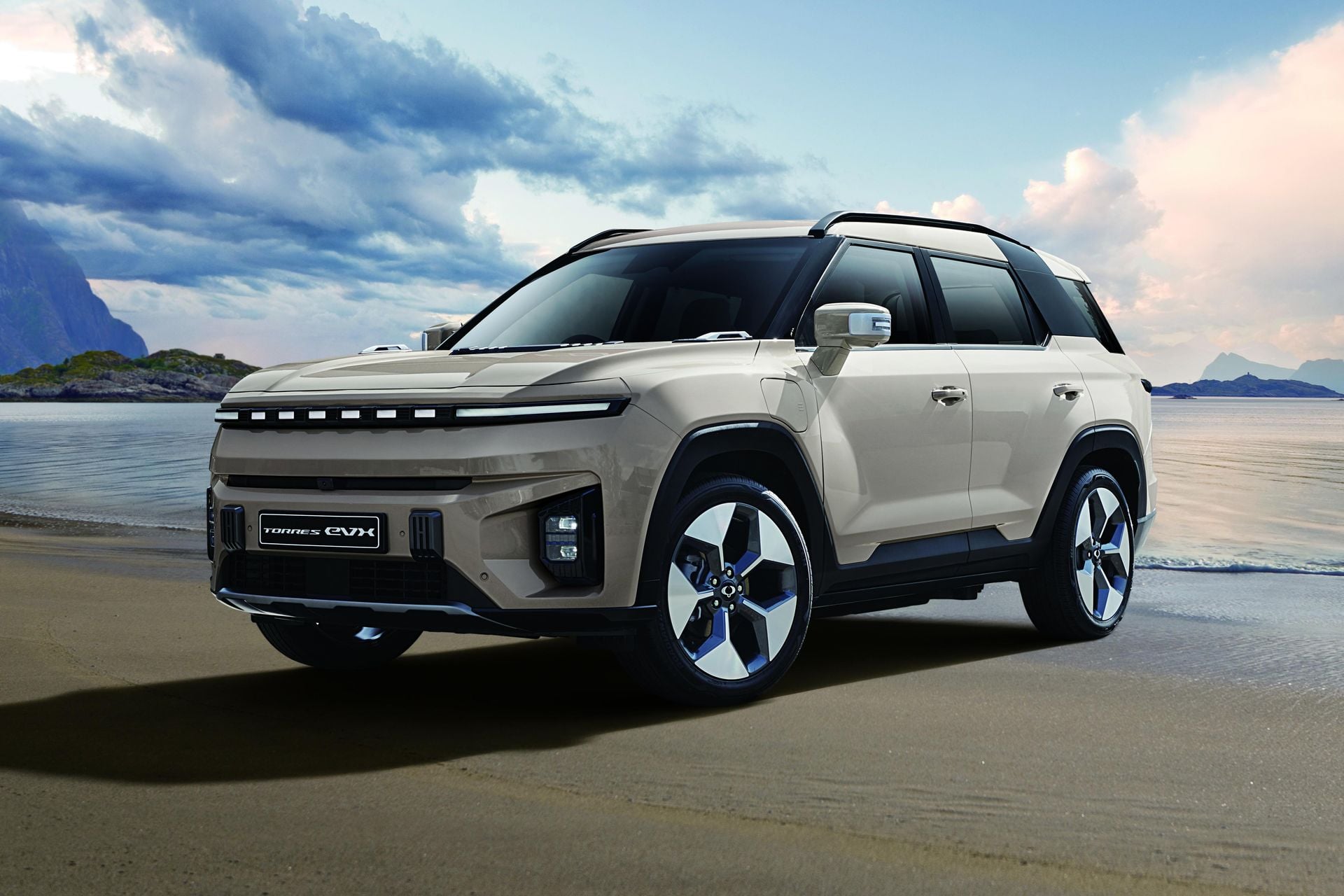
Now, however, the calculus has shifted. The partnership between KGM and Chery arrives at a moment when the global SUV market has matured in ways that favor SsangYong's core competencies. Buyers have grown weary of homogenized crossovers and increasingly seek vehicles with genuine character. The Torres, with its deliberately retro-inspired design, demonstrates that KGM understands this appetite for differentiation. A Chery collaboration could provide the platform-sharing efficiencies and electrification expertise necessary to bring such designs to market at competitive prices—something the company has historically struggled to achieve independently.
The Technology Infusion
The strategic logic extends beyond mere cost-sharing. Chery has spent the past decade transforming itself from a purveyor of budget transportation into a legitimate engineering force, particularly in hybrid and electric powertrains. Access to that technology could accelerate KGM's transition away from the aging architectures that have constrained its products. Imagine a next-generation Rexton built on a modern, electrified platform, or a Musso pickup that competes on efficiency as well as capability. The partnership offers precisely the technological infusion that SsangYong has needed for years but could never afford to develop in-house.
Reasons for Caution
There are, of course, reasons for skepticism. The history of Chinese-Korean automotive collaborations is littered with missteps, and the cultural and corporate distance between the two partners is not insignificant. The 36Kr report noting that SsangYong once "embarrassed" SAIC—a previous Chinese partner—serves as a cautionary reminder that these relationships have not always ended well. Integration challenges, brand positioning conflicts, and the ever-present tension between cost-cutting and quality improvement will all test the partnership's durability.
Yet the alternative—continued isolation and incremental decline—offers no viable path forward. KGM has already demonstrated its willingness to evolve, rebranding itself and repositioning its lineup for a new era. The Torres and the refreshed Korando represent genuine progress, but they cannot sustain the company indefinitely without broader platform and powertrain support. The Chery partnership provides that support, along with access to markets and technologies that would otherwise remain out of reach.
For enthusiasts who have long championed SsangYong's quirky appeal—those who appreciate the Rexton's old-school capability or the Musso's honest utility—the partnership represents something approaching hope. The brand's forgotten SUV lineage, from the original Korando to the current Torres, deserves more than a niche existence. With Chery's backing and KGM's renewed commitment, SsangYong's second act may finally give these vehicles the platform, the technology, and the credibility they have always deserved.