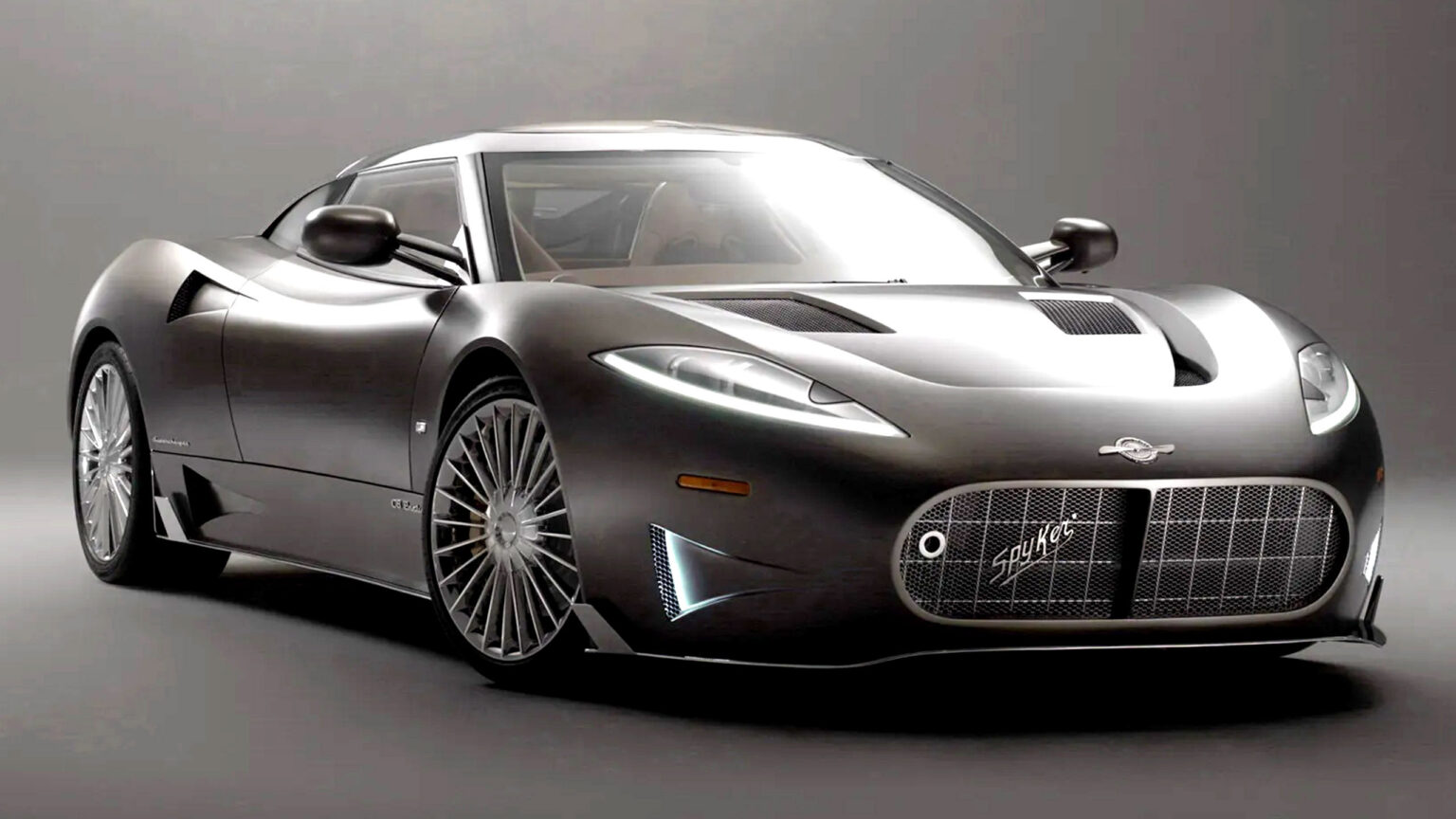
In an era where the hypercar establishment has collectively decided that the future is silent, battery-powered, and algorithmically managed, a small Dutch company has just done something gloriously anachronistic. Spyker has returned with the C8 Preliator XXV, an 800-horsepower machine that sends its power to the rear wheels through a manual gearbox, and it makes absolutely no apologies for refusing to read the room.
The automotive industry has spent the better part of a decade telling us that the manual transmission is dead, that the naturally aspirated engine is a relic, and that hybrid assistance is the only responsible path forward for anything with more than 500 horsepower. Every major manufacturer has dutifully fallen in line, churning out dual-clutch, electrified, torque-vectored masterpieces that are undeniably fast and undeniably sanitised. Spyker, a company that has been declared dead more times than a comic book villain, has looked at this landscape and responded with three pedals and a supercharged Audi-sourced V8.
Three Pedals and a Supercharged V8
There is something almost subversive about it. The Preliator XXV — the name references Spyker’s 25th anniversary — takes the bones of the company’s existing C8 architecture and injects it with a level of performance that would have seemed absurd when the original car debuted. The 789-hp figure reported by some outlets and the 800-hp claim from others likely reflect different measurement standards, but the headline is the same: this is a genuinely potent machine, and it arrives with a stick shift. In 2024, that combination is not just rare; it is practically extinct.
What makes Spyker’s defiance so compelling is that it comes from a company with nothing to lose and everything to prove. Spyker has never been a volume manufacturer. It has always been a boutique operation building cars for people who wanted something stranger, more ornate, and more wilfully idiosyncratic than anything from Maranello or Sant’Agata.
Aviation Cues and Rose Gold
The C8 Preliator has always been a curious blend of aviation-inspired design cues, exposed mechanical details, and an interior that looks like it was furnished by a particularly flamboyant jeweller. The XXV continues that tradition, reportedly featuring lashings of rose gold and the kind of attention to detail that makes a Ferrari look almost mass-produced.
But the real story here is philosophical. Spyker’s CEO has been refreshingly candid about the company’s position: there are no plans for a hybrid variant, and certainly no plans for an EV. While everyone else is racing to electrify, Spyker is doubling down on the visceral, the analogue, and the mechanical. This is not a company chasing regulatory compliance or fleet emissions targets. This is a company building perhaps a few dozen cars a year for people who genuinely believe that the interaction between driver and machine matters more than a 0-60 time measured in tenths of a second.
Rebellion, Not Nostalgia
There is a temptation to dismiss this as nostalgia, as a cynical play for the attention of purists who lament the good old days. But that reading misses the point. Spyker is not building a retro car. The Preliator XXV is not a pastiche of a 1960s GT. It is a thoroughly modern machine that simply refuses to accept that modernity requires the elimination of driver engagement. The manual gearbox is not there because Spyker couldn’t source a dual-clutch; it is there because Spyker believes that the act of changing gear is part of the pleasure of driving. The V8 is not there because electrification is impossible; it is there because the noise and character of a combustion engine have value that cannot be measured in efficiency figures.
This is rebellion, but it is rebellion of a very specific kind. Spyker is not trying to overthrow the established order or convince the world that everyone should be driving manual V8 supercars. The company is simply asserting that there is room in the market for something different, something that prioritises sensation over specification. In a world where every new hypercar feels compelled to justify itself with Nürburgring lap times and electric-only range figures, Spyker’s refusal to play that game is quietly radical.
Whether the C8 Preliator XXV succeeds commercially is almost beside the point. Spyker has never been about volume. It has been about building cars that feel special, that look like nothing else on the road, and that remind us that the automobile is not merely a transportation appliance. The fact that the company has returned from the brink yet again, this time with an 800-hp manual V8 and a defiantly old-school philosophy, is cause for celebration. In a conformist era, Spyker is the glorious exception.