No marque in the automotive world has spent more of its existence unsure of what it wants to be than Spyker. The Dutch company traces its lineage to 1880, when Jacobus and Hendrik-Jan Spijker opened a carriage works in Hilversum, and since then it has built coaches, automobiles, aircraft, aero engines, and—most improbably—some of the strangest supercars ever to leave a European workshop. The through-line has never been a product. It has been an obsession with craft so intense that it periodically overwhelms the business of actually selling cars.
The founding generation set the template. The brothers' Golden Coach, built for Queen Wilhelmina, remains one of the most ornate vehicles ever constructed in the Netherlands, and their 1903 Spyker 60 HP was the first car in the world with permanent four-wheel drive and a six-cylinder engine. Then came the pivot that still defines the brand's mythology: during the First World War, Spyker built fighter planes and the 200-hp aero engines that powered them, a heritage the modern company has never stopped invoking. After the Second World War, the original firm dissolved entirely. For decades, Spyker was a memory and a logo on old photographs.
A Resurrection Built on Instinct
Its resurrection in 1999 under Victor Muller was, in effect, a bet that the Golden Coach instinct could be transferred to a road car. The C8 that followed was unlike anything else on sale: an aluminium spaceframe, a mid-mounted Audi V-8, a manual gearbox with an exposed shift linkage so beautiful that owners photographed it like jewellery, and an interior of quilted leather and turned aluminium. It was slow to sell, frequently troubled, and utterly distinctive.
Spyker's detour into Formula 1 and its acquisition of Saab—a decade-long misadventure that ended in bankruptcy—nearly finished the company. By the early 2020s, Spyker was, in Muller's own framing, in a coma.
The Preliator XXV Arrives
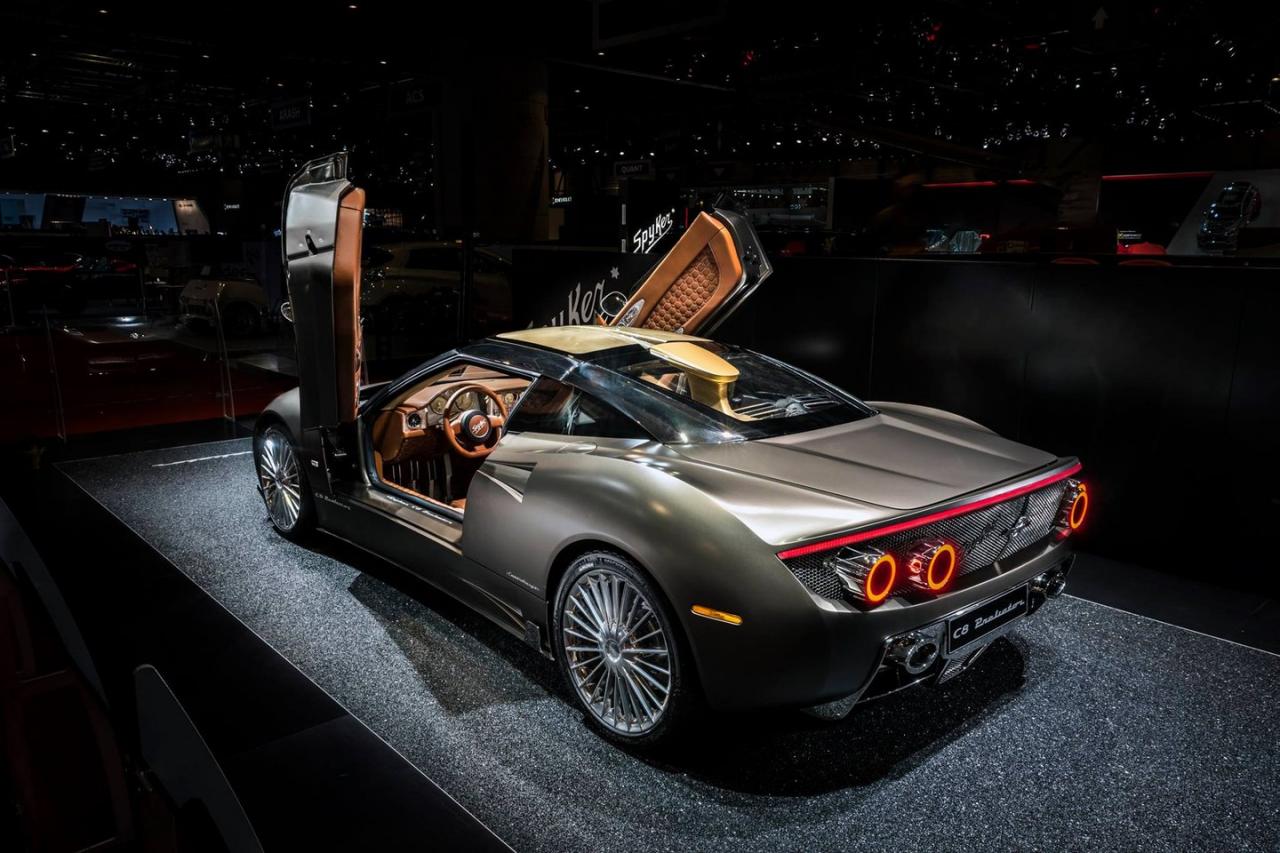
The car that has brought it back is the C8 Preliator XXV, and its timing is not accidental. Debuting at Pebble Beach with a 789-hp Audi-sourced V-8, a six-speed manual, and a production run limited to 25 units, it arrives exactly as the rest of the hypercar world goes silent, automatic, and electric.
The XXV's detailing—quail green paint, rose gold accents, gold inlay inside and out—has drawn comparisons to a Fabergé egg, and the comparison is apt, though perhaps double-edged. It signals a machine built as an object of devotion rather than a tool of speed. That is Spyker's oldest problem restated in new materials: the company has always known how to make something precious, and never quite how to make it a business.
Substance Beneath the Ornament
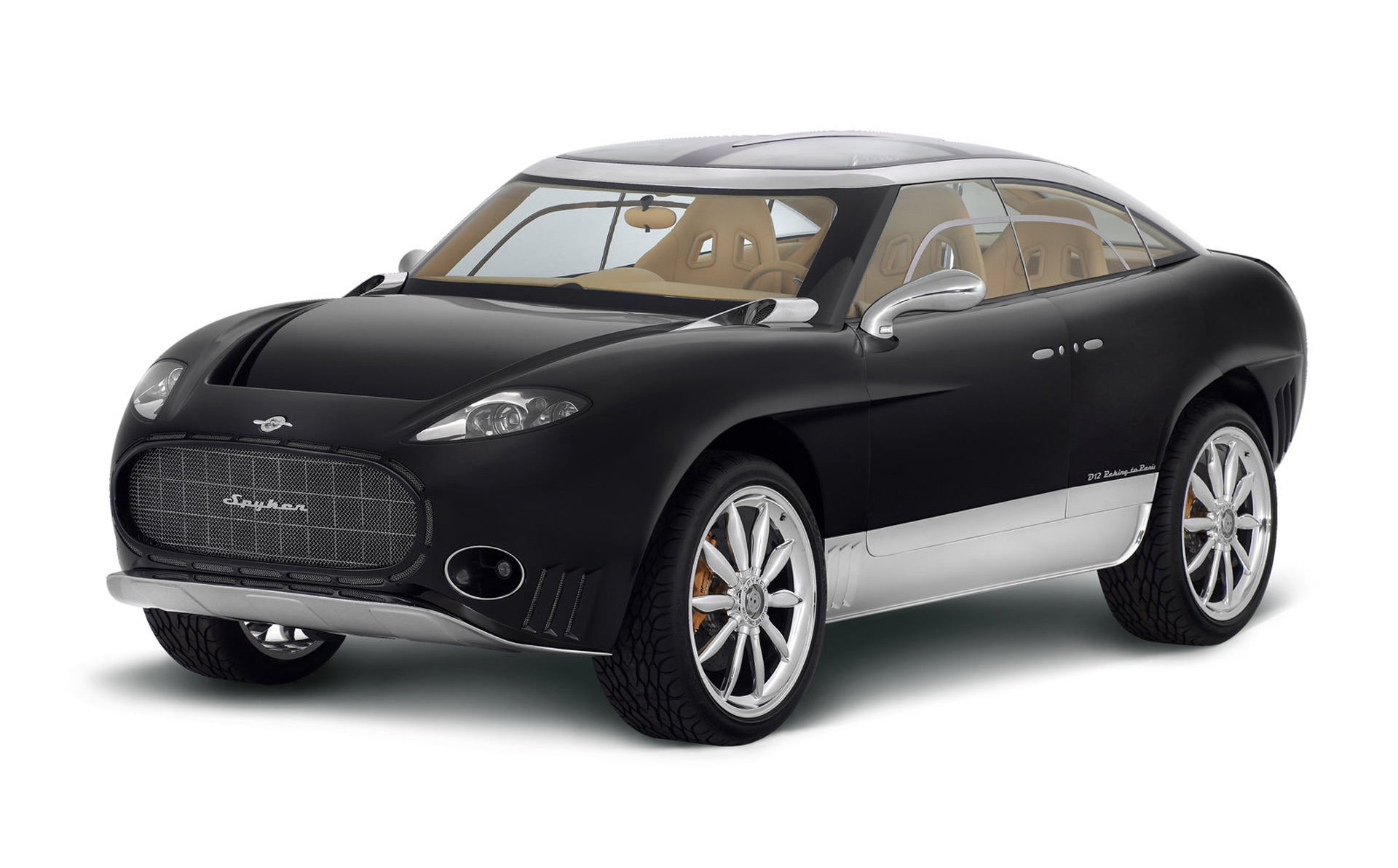
There is real substance underneath the ornament. The Preliator XXV is genuinely fast, genuinely manual, and genuinely rare—the D12 Peking-to-Paris, Spyker's super-SUV concept from 2006, looked absurd at the time and prophetic in hindsight, which suggests the company's instincts about the market have often been right even when its execution has not.
But the same pattern repeats: a spectacular debut, a wave of press, and then the long, quiet question of whether anyone will take delivery. Debuting a car at Monterey Car Week, as Muller has noted, costs a fortune—and Spyker has never been a company with fortunes to spare.
The Most Interesting Thing About Spyker
What makes Spyker worth watching, even now, is that its identity crisis is the most interesting thing about it. Every other low-volume manufacturer has resolved the tension between craft and commerce in one direction or the other. Spyker has refused, for 146 years, to choose. It builds fighter-plane-named cars with aircraft-inspired cockpits, sells them as jewellery, and survives on the conviction that a handful of people still want a machine that feels made rather than manufactured.
Whether the Preliator XXV is the beginning of a genuine second act or another beautiful false start, it is at least unmistakably a Spyker—and after everything this marque has been, that is no small achievement.