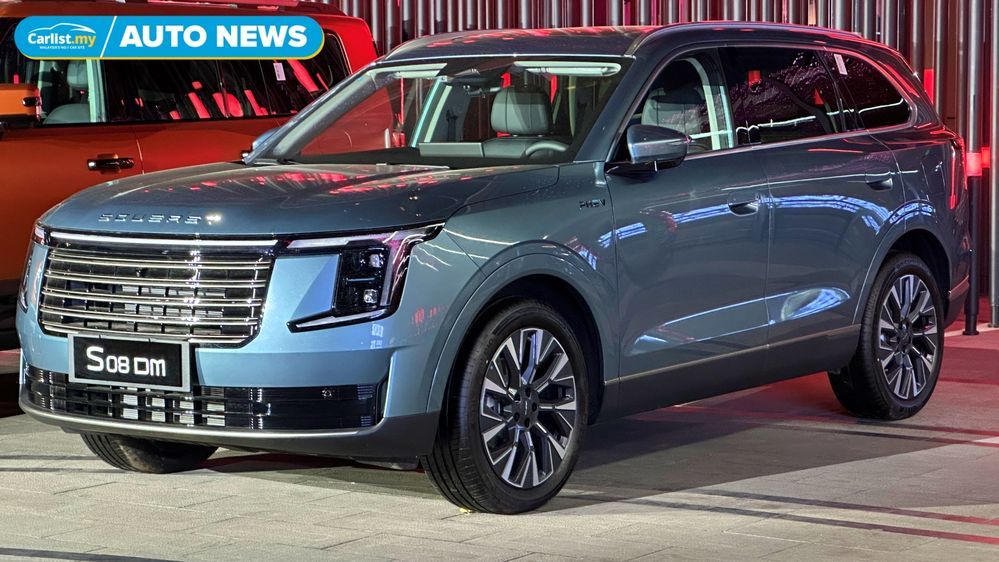
There’s a certain kind of motorsport victory that never makes the highlight reel: the one won not with a spectacular last-lap pass, but with a perfectly judged strategy, a disciplined pit wall, and a car that simply refuses to falter. The same is true in the showroom wars. The news that the Soueast S08 DM topped Egypt’s plug-in hybrid rankings in September — a result confirmed across Automotive World, Yahoo Finance, and other outlets — is exactly that kind of win. Unglamorous, hard-fought, and far more instructive than a splashy European launch.
Consider the circuit. Egypt is not the market legacy automakers build their PHEV strategies around. It is a country of acute currency pressure, import restrictions, and a charging infrastructure still finding its feet — the sort of environment where Western and Japanese brands tend to tread cautiously, if at all, prioritising the comfortable margins of Europe and North America. That caution has left a vacuum. And into that vacuum has driven Soueast, a brand most European buyers would struggle to place on a map, with a plug-in hybrid SUV that has evidently found its moment.
A Powertrain Built for the Real World
The S08 DM is no novelty act. Underneath the sheet metal sits the C-DM hybrid system, a powertrain the company has explicitly engineered around the dual demands of urban commuting and intercity range. That calibration maps almost perfectly onto the realities of Egyptian ownership, where a driver may spend the week crawling through Cairo traffic and the weekend covering long desert highways. This is not a coincidence. It is the product of a brand reading a market that others had written off. Where legacy manufacturers tend to export a globally homogenised PHEV and hope for the best, Soueast appears to have built for the conditions — prioritising the kind of everyday usability and long-haul stamina that matter when the road network and the charging grid are both works in progress.
The Pattern Behind the Crown
What makes the Egyptian result more than a statistical curiosity is the wider pattern it reveals. In recent months the brand has launched the S08 DM in Mexico, opened a corporate headquarters in Mexico City, expanded into Brazil alongside JETOUR, and conducted first test drives in Iraq. It has been building user trust in the Middle East through deliberate localisation rather than a one-size-fits-all export play. The Egypt PHEV crown, in other words, is not an isolated fluke. It is the leading edge of a strategy that is quietly assembling a global footprint in the very markets where the established order has been slowest to commit — a reminder that market leadership is often claimed not where the spotlight shines, but where the groundwork is laid.
Timing Is Everything
The timing is instructive, too. The brand has been staging its 2026 Global Technology Experience Day, an event framed around the idea of “driving the future through technology” and used to showcase the S08 DM to an international audience. There is a certain narrative elegance to a company convening a technology showcase in the same season that its product claims a market leadership position thousands of miles from its headquarters. It is the kind of proof-point that marketing budgets cannot manufacture — the automotive equivalent of a podium finish that validates every hour spent in the simulator.
The Lesson of Egypt
None of this is to suggest that Soueast is about to unsettle the giants of the industry in their core territories. It is not. But the lesson of Egypt is that the PHEV transition will not be won solely in the well-lit showrooms of Western Europe. It will be won in the markets that legacy brands have treated as afterthoughts — places where affordability, durability, and genuine localisation matter more than badge prestige. The S08 DM’s September result is a small headline now. Give it a few years, and it may read as an early signal of where the plug-in hybrid era was actually decided.
In the end, that is the most compelling thing about Soueast’s approach: it treats every market as a home circuit. The brand’s automotive philosophy — build for the road that’s actually there, not the one on the brochure — is old-school engineering discipline dressed in modern technology. And on the evidence of Egypt, it’s a philosophy with real pace.