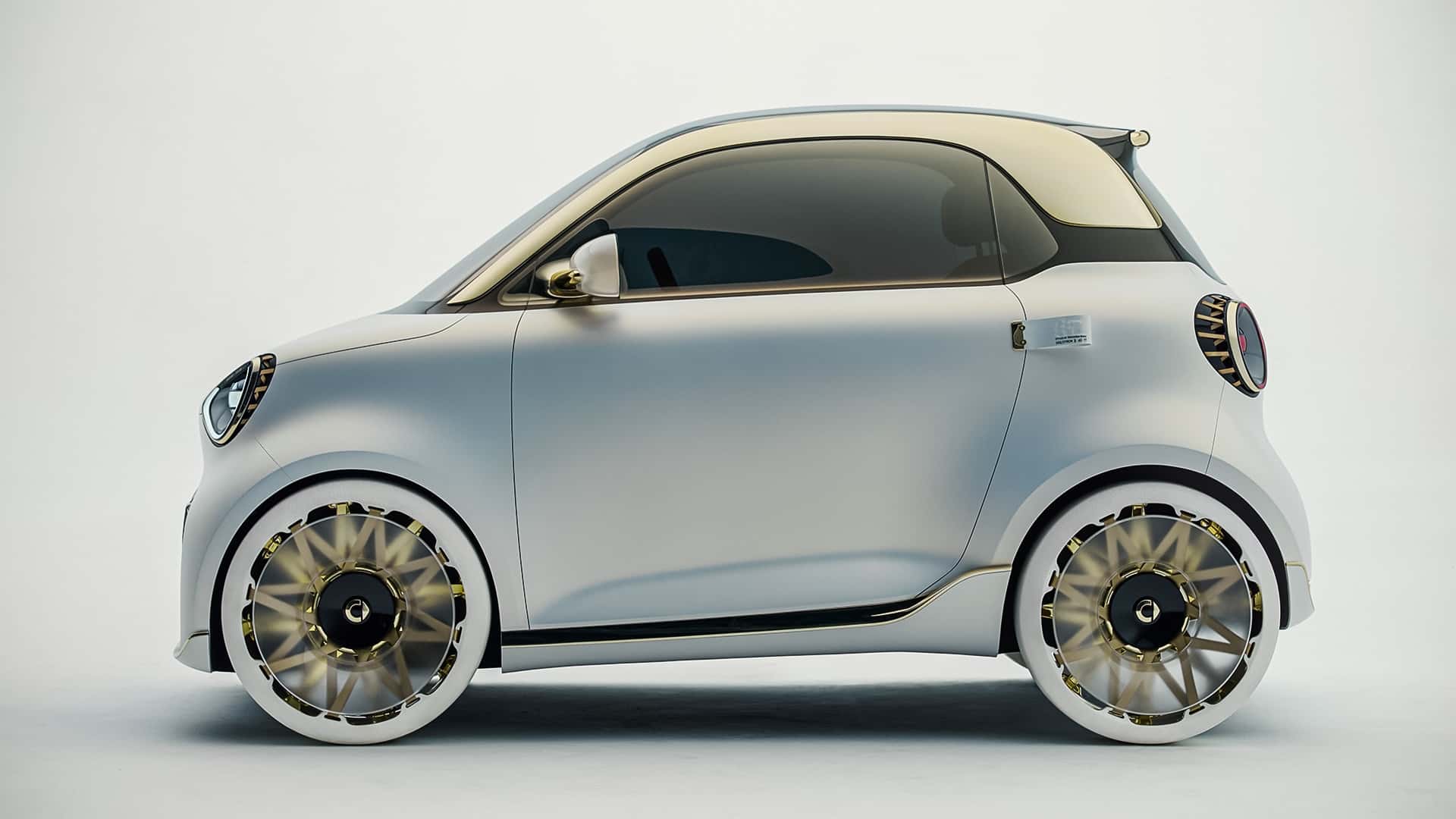
There's a particular kind of absurdity waiting in the American suburban parking lot. A Ford F-150 Lightning looms beside a Rivian R1T, each truck stretching past sixteen feet of battery-laden real estate, each hauling a single occupant who stopped for a coffee. The average new electric vehicle sold in the United States now weighs more than 4,500 pounds, and the fastest-growing slice of the EV market is, stubbornly, the full-size truck and the three-row crossover. Into this landscape rolls a proposition so contrarian it borders on radical: a car smaller than a parking space, lighter than a golf cart's ego, and utterly unbothered by the arms race of range and brawn.
The brand is Smart, and its electric fortwo remains the most honest answer to a question American automakers refuse to ask. Why are we building two-and-a-half-ton machines to move one person twelve miles to an office?
A Cautionary Tale, and a Revealing One
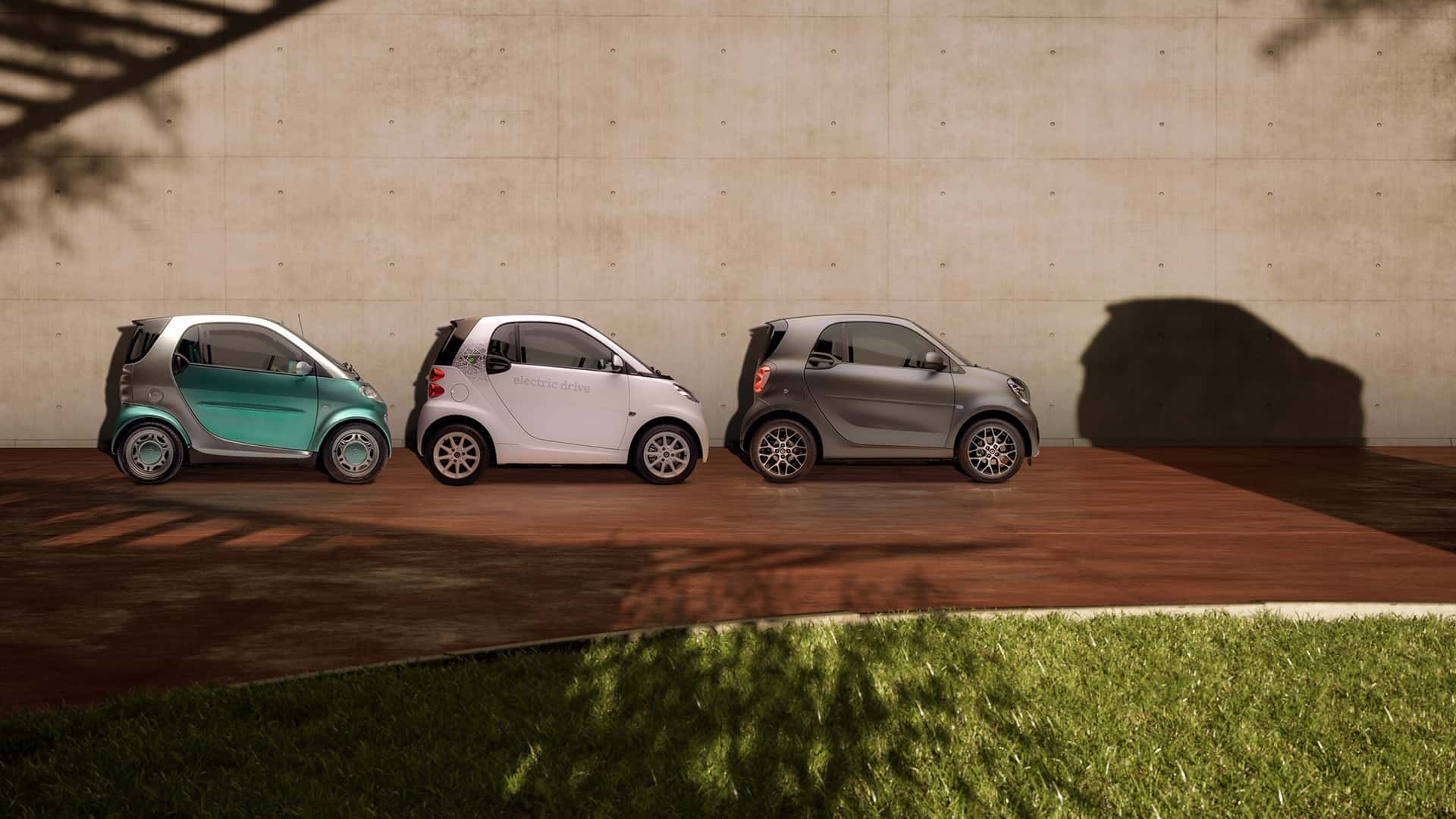
Smart's history in the United States reads like a warning label. The original fortwo — a 106-inch city car engineered in partnership with Swatch and Mercedes-Benz — sold poorly here for years before Smart retreated from the market in 2019. Americans, the conventional wisdom went, wanted space. They wanted presence. They wanted to sit high and command the road.
Yet the same years that killed Smart's American ambitions also produced a quiet crisis of congestion, curb weight, and pedestrian fatality rates climbing in lockstep with hood heights. The anti-SUV argument was never really about taste. It was about physics.
The Numbers Are Unkind to the Oversized
A Smart EQ fortwo tips the scales at roughly 2,400 pounds, carries a 17.6 kWh battery, and returns around 60 miles of range. Set those figures beside a Hummer EV and its 200 kWh pack and they read as laughable — but they describe a different philosophy entirely.
Sixty miles covers the overwhelming majority of daily American trips. The average commuter drives under 40 miles round trip. The fortwo's battery is small enough to charge overnight on a standard household outlet, small enough to require a fraction of the lithium, cobalt, and nickel a long-range SUV demands, and small enough that its entire lifecycle carbon footprint begins to approach something defensible. Efficiency, in this framing, is not a compromise. It is the point.
Electrification and Miniaturization Are Natural Allies
What Smart understood before the rest of the industry is that an electric drivetrain is compact, modular, and torque-rich — precisely the qualities that make a tiny car feel brisk rather than pitiful. The fortwo's rear-mounted motor and rear-wheel drive give it a scrappy, almost playful character no crossover can replicate, because no crossover is this light. The car is a rebuke to the idea that EVs must be heavy to be serious.
It is also a rebuke to the idea that they must be expensive. The fortwo was never cheap by city-car standards, but its battery costs a fraction of a long-range pack, and its maintenance profile is nearly nonexistent. For a second car, a commuter, a city dweller, or a household weary of paying for capability it never uses, the math is quietly compelling.
The Obstacle Is Cultural
America has spent three decades equating size with safety, size with status, size with freedom. The Smart fortwo punctures that equation. It is genuinely safe for its class, with a Tridion safety cell that functions like a racing roll cage, but it cannot pretend to match the crash physics of a vehicle twice its mass. That is not a failure of the fortwo. It is a failure of a regulatory and cultural environment that allows mass to substitute for design. Every pound added to one vehicle is a pound that must be defended against in the next.
Smart's American absence is not permanent, and the brand's European electric lineup continues to evolve under a joint venture between Mercedes-Benz and Geely. Whether it returns to these shores is an open question. But the argument it represents does not require a showroom. It requires only the willingness to imagine an electric future that is smaller, lighter, and smarter than the one currently being built. The anti-SUV answer has a name, and it has been sitting in the corner of the lot for years, waiting for the rest of us to catch up.