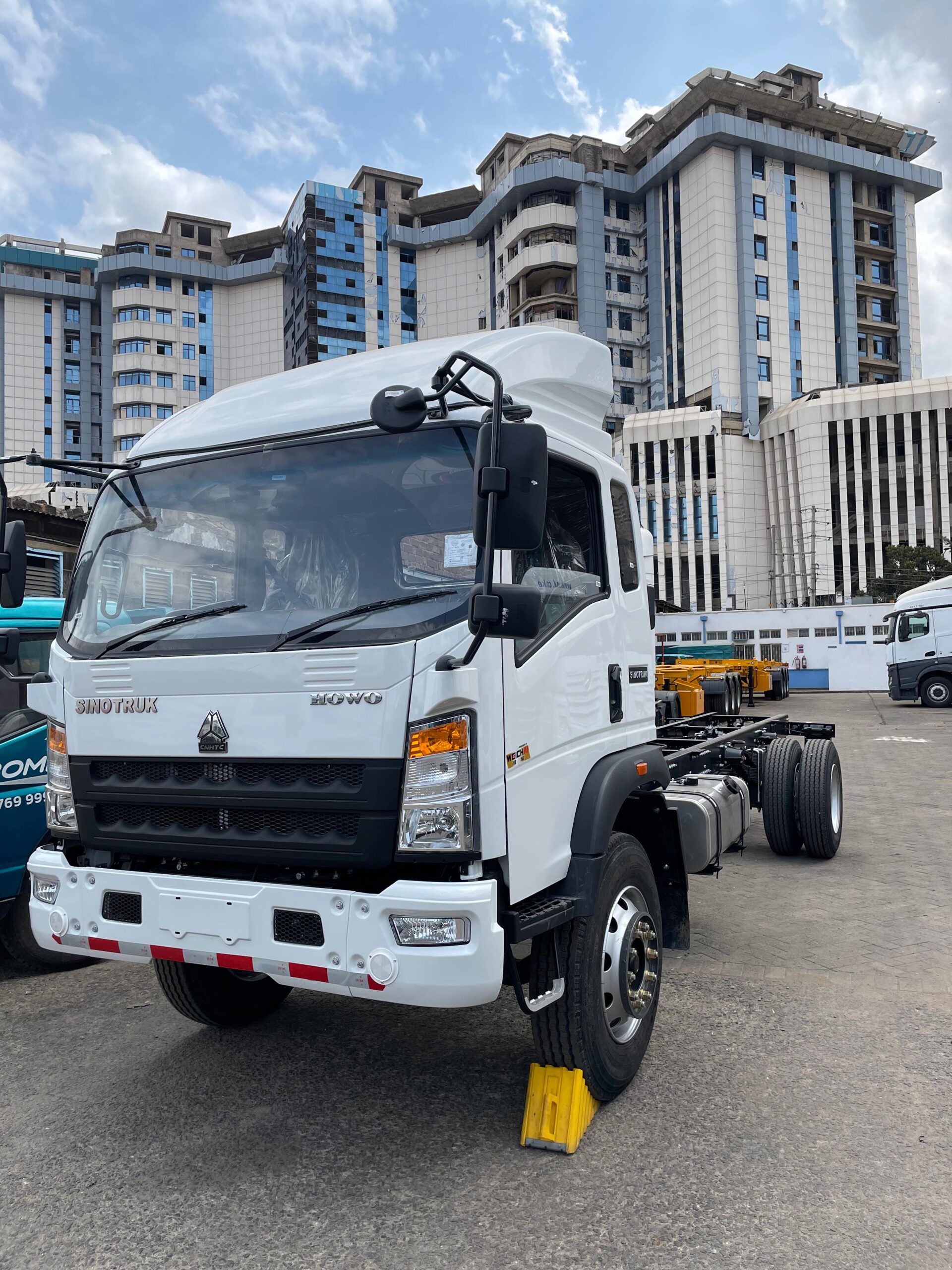
Sinotruk has a balance sheet built for conquest and a reputation that needs rebuilding. The Chinese heavy-truck giant will enter the UK and Irish markets from 2027 under a distribution agreement with the Harris Group, bringing its full range—diesel and electric, tractor units and rigids—to one of the most brand-loyal, operator-conservative commercial vehicle markets on earth. The timing carries an uncomfortable irony. Just as the company prepares its first serious assault on British fleets, the shadow of a product recall hangs over its name, and how Sinotruk answers for it will decide whether UK operators ever grant the brand a second look.
The recall concerned 79 prime movers—a modest number by global standards, a significant one for a manufacturer still building trust in Western markets. Recalls are an ordinary fact of automotive life; every major truck maker has issued them. What matters is the response: the speed of communication, the transparency of the remedy, the willingness to submit to independent scrutiny. For Sinotruk, a company whose export narrative has long emphasised scale and value, this is the first real test of whether its Western ambitions are matched by Western-standard accountability. British fleet engineers read recall notices the way underwriters read actuarial tables—not as isolated events, but as indicators of systemic discipline.
The Scale of the Ambition
That scrutiny will be sharpened by the sheer pace of Sinotruk's global expansion. Traton's third-quarter earnings leaned heavily on its Sinotruk stake, a reminder that the Chinese manufacturer is now embedded in the financial architecture of European trucking. Steyr Automotive has begun assembling electric and diesel trucks for Sinotruk in Austria—a canny move that buys the brand a European manufacturing footprint and, with it, a measure of European quality-assurance credibility. The SITRAK electric range has already drawn favourable first-drive coverage from the British trade press, and the company used IAA Transportation to showcase new-energy commercial vehicles aimed squarely at European sensibilities. Distribution deals in Thailand, the Philippines and Rwanda, plus assembly plans in Nigeria, sketch the outline of a genuinely global operation.
The Question a Fleet Manager Will Ask
None of this answers the question a Yorkshire fleet manager will ask: why should I stake a five-year total-cost-of-ownership calculation on a brand with no UK service heritage and a recall on its recent record? The Harris Group's involvement is the strongest counterargument. Harris has deep roots in Irish and British vehicle distribution and understands that fleets buy downtime avoidance, not badges. If the UK entry is to succeed, Harris must deliver a dealer network, parts availability and residual-value confidence that stand comparison with established European incumbents—and it must do so while the parent company demonstrates that its recall was an aberration handled with rigour, not a warning sign.
From Price to Capability
There is a broader reputational dynamic at work. Chinese commercial vehicle makers have spent a decade shifting the conversation from price to capability, and Sinotruk's electric offensive is central to that repositioning. The SITRAK and the new-energy line-up shown at IAA are credible products aimed at operators who increasingly care about emissions compliance and energy costs. But credibility in the heavy-truck sector is cumulative and unforgiving. One recall, handled well, is forgotten. One recall, handled defensively, becomes the first line of every sceptical procurement memo for a decade. The UK launch will be judged less on spec sheets than on whether Sinotruk treats the British market as a serious regulatory partner or merely a new sales territory.
The company's own executives speak of cooperation built on trust—a phrase deployed in the context of African trade but equally applicable to Lancashire. Trust, in the UK truck market, is earned through transparency when things go wrong. Sinotruk has the capital, the product range and the distribution partner to make a genuine impression from 2027. Whether it has the institutional reflex to confront its recall record head-on, rather than let it fester in trade-press archives, is the open question. The first UK off-road trucks will carry the Sinotruk badge into hostile territory. The badge itself is not the problem. The story attached to it is—and only Sinotruk can rewrite it.