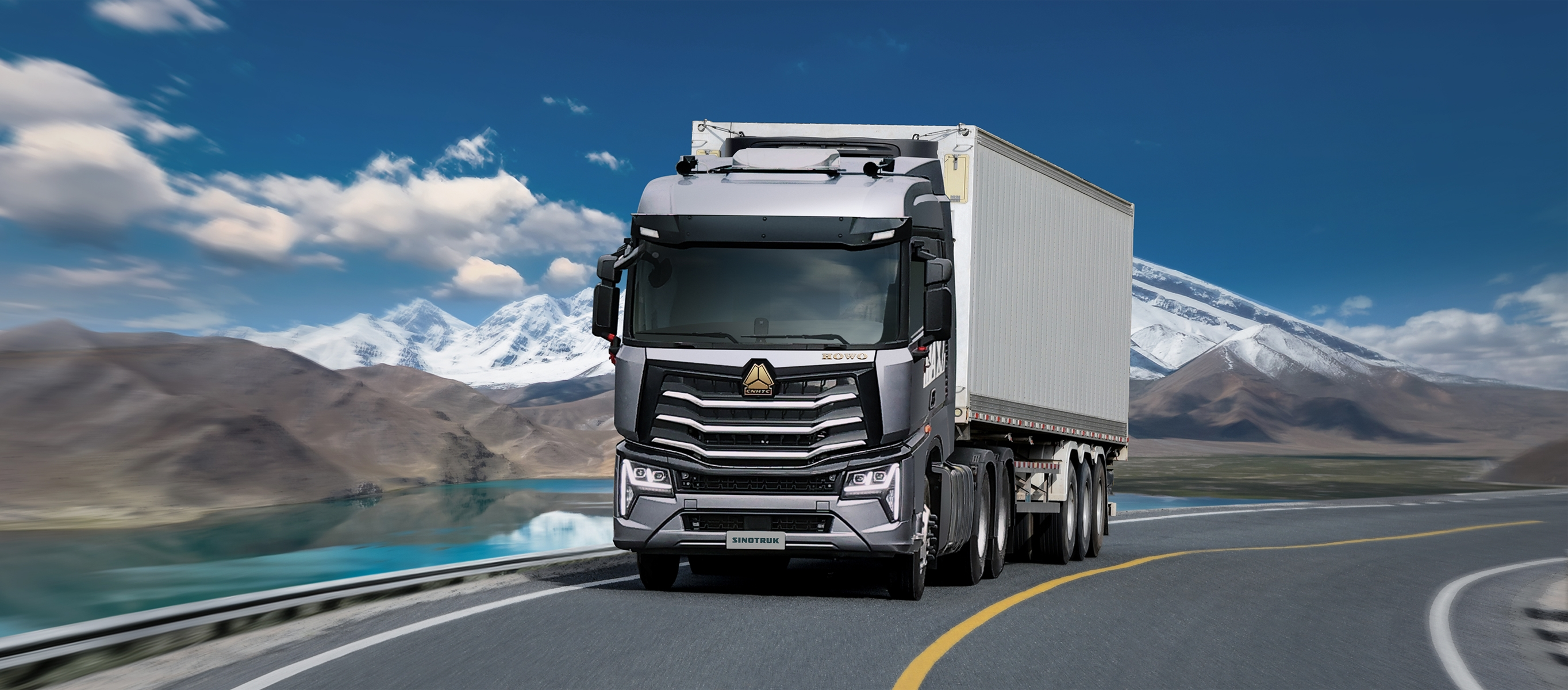
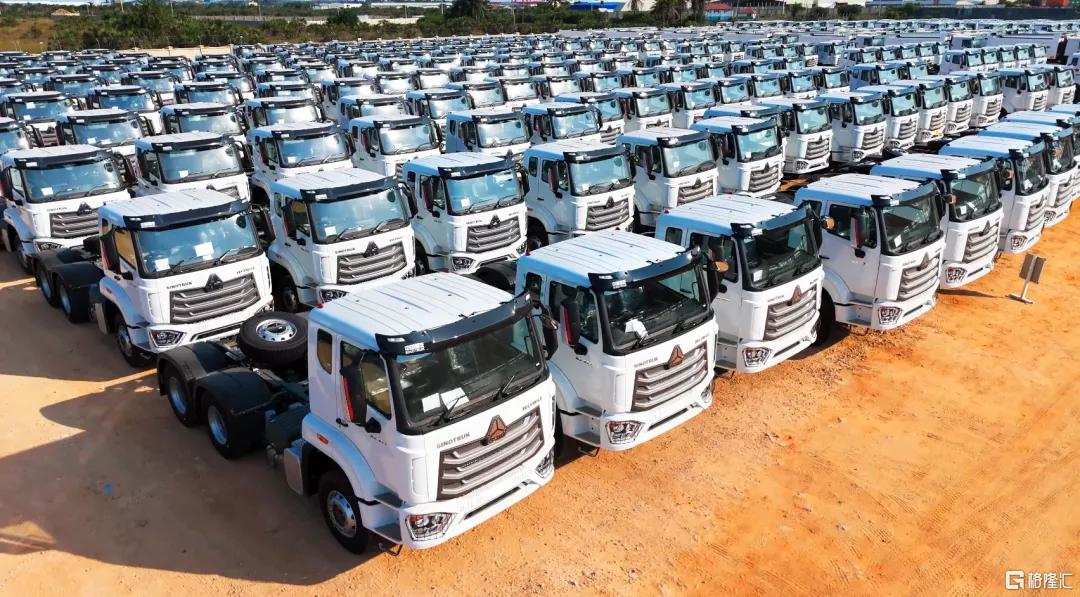
Europe's defence establishment has never been especially welcoming to Chinese heavy metal. The continent's truck market is the most fiercely defended territory in the global commercial vehicle industry, ring-fenced by entrenched incumbents, punishing homologation regimes, and fleets that judge a vehicle on residual values and service networks long before they look at the sticker price. So when reports surface that Sinotruk has signalled its readiness to help Serbia advance its domestic army vehicle production, it is worth paying attention. This is not a truck sales pitch. It is an attempt to embed Chinese heavy-duty engineering inside a European state's defence-industrial base.
The logic is straightforward on paper. Serbia maintains a genuine indigenous defence industry, most visibly through the arms and vehicle works at Kragujevac, and has spent years looking to modernise its ground forces without taking on the political and financial entanglements that come with Western platforms. Sinotruk brings precisely what such a programme demands: mature heavy-duty chassis architecture, high-torque diesel powertrains proven across gruelling Chinese and export duty cycles, and the manufacturing capacity to deliver at scale. A military off-road truck programme built around HOWO-derived platforms would hand Belgrade a cost-effective route to fleet renewal — and hand Sinotruk a foothold in a European defence supply chain that has proven stubbornly elusive for Chinese OEMs.
Building Inside the Perimeter
That elusiveness deserves scrutiny. For years, Sinotruk's approach to Europe has been characteristically patient — and quietly clever. Its arrangement with Steyr Automotive in Austria, under which the former Steyr-Daimler-Puch works assembles both diesel and electric trucks for the Chinese brand, represents a deliberate strategy of manufacturing inside the European perimeter rather than exporting into it. Rather than fight the homologation battle from Jinan, Sinotruk bought itself a European address.
The Serbia initiative extends that logic into the defence segment, where local content requirements and political sensitivity make direct importation even less viable. Defence procurement is never a purely commercial exercise. It is tangled up with interoperability standards, NATO-adjacent supply chain security, and the political weather in Brussels. Assembling vehicles on Serbian soil, with Serbian industrial partners, is the only realistic way through that thicket.
The Financial Case for Diversification
The timing is instructive. Sinotruk's financial disclosures reveal a company with both the resources and the motivation to pursue ventures like this. Revenue and net profit have risen sharply on the back of robust heavy-duty truck sales, with Sinotruk Ji'Nan Truck alone posting net profit of RMB 1.49 billion in a recent half-year period. Margins, however, have narrowed — a familiar consequence of ferocious domestic price competition and the capital intensity of electrification. Diversifying into higher-value, lower-volume segments such as military mobility and European assembly is a rational response to that squeeze.
Nor is the defence angle entirely novel for Chinese heavy vehicle makers, though it rarely gets discussed in European trade press. Military logistics vehicles occupy a segment where performance requirements are exacting but volumes are modest, where political considerations can override brand prestige, and where a supplier willing to transfer technology and accept local assembly can outmanoeuvre established players. Serbia, which maintains military neutrality and has cultivated defence ties with both Eastern and Western partners, is precisely the kind of market where Sinotruk's offer — capability without conditionality — carries real weight.
The Obstacles Are Real
Sceptics will point to genuine obstacles, and they are right to. Sinotruk's export record has not been spotless. Recalls affecting SITRAK prime movers in Australia serve as a reminder that rapid expansion can outpace quality assurance. A military customer, whose vehicles may be expected to operate in combat-adjacent conditions, will scrutinise durability and support arrangements far more harshly than a haulage fleet comparing fuel returns.
Then there is the question of scale. A single Serbian army programme, however symbolically significant, will not move Sinotruk's bottom line. The prize is the template: proof that a Chinese OEM can integrate into a European defence supply chain at all. Get that right, and the addressable market extends well beyond the Balkans.
Technology, Not Just Price
What makes this moment different from Sinotruk's earlier export pushes is the technology story. Its new-energy portfolio, showcased at IAA Transportation and now reaching series production through partners like Steyr, demonstrates that the company intends to compete on engineering as well as cost. Electric and diesel platforms rolling off the same Austrian lines that once built Steyr-Puch military vehicles is a powerful narrative — and one that speaks directly to European procurement officials under pressure to decarbonise their fleets without sacrificing capability.
For a manufacturer built on relentless domestic scale and aggressive export pricing, the Serbian play represents something more ambitious: a bid to be judged on chassis architecture, powertrain durability, and industrial partnership rather than on the lowest bid. Whether Serbia becomes the template or the exception will depend on how deftly Sinotruk navigates the politics of European defence. But the fact that a Chinese truck maker is even at the table tells you how much the ground has shifted.