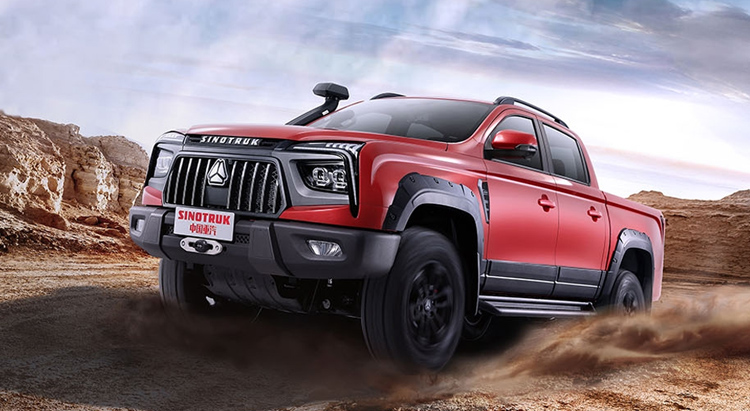
There is a certain poetry in the sight of a Chinese heavy-duty truck rolling off an Austrian assembly line, and it is not merely the poetry of logistics. When Sinotruk announced that it had commenced production at the Steyr Automotive plant in Austria, the news sent a clear signal across the global commercial vehicle industry: the tectonic plates of truck manufacturing have shifted, and the epicenter is no longer exclusively in Stuttgart, Gothenburg, or Turin. For decades, the name Steyr has been synonymous with Austrian engineering rigor, a heritage brand that once built some of the most formidable off-road military vehicles and agricultural machinery in Europe. Now, that same hallowed ground will host the assembly of Sinotruk’s diesel and electric trucks—a partnership that represents far more than a simple contract manufacturing deal. This is a strategic invasion of the European market by a Chinese giant that has been quietly amassing global dominance.
The Brand Alchemy of Austrian Assembly
The move is a masterstroke of geopolitical and industrial positioning. Sinotruk, already the largest heavy-duty truck manufacturer in China and a top-five player globally, has long understood that to truly conquer export markets, it must overcome the perception of Chinese trucks as cheap, disposable workhorses. By leveraging the Steyr name and its European workforce, Sinotruk gains something invaluable: local legitimacy. European fleet operators, notoriously conservative in their purchasing habits, are far more likely to spec a truck that carries the provenance of Austrian assembly than one shipped directly from Jinan. This is not merely about tariffs or logistics costs, though those certainly play a role in avoiding punitive import duties. It is about brand alchemy—transmuting the base metal of Chinese manufacturing efficiency into the gold standard of European acceptance. The decision to assemble both electric and diesel models at the Steyr facility shows a nuanced understanding of the transitionary market, where the internal combustion engine still dominates long-haul routes while battery-electric urban and regional distribution is gaining traction.
The Margin Play Behind the Muscle
Financially, Sinotruk’s aggressive European push comes at a moment of remarkable strength. The company’s first-half net profit jumped an eye-watering 26 percent, with revenue surging on the back of robust heavy-duty truck sales that have defied global economic headwinds. Yet, as analysts have pointed out, this growth story is not without its fissures—gross margins have narrowed, squeezed by intense price competition in the domestic Chinese market and rising raw material costs. The Steyr assembly deal, therefore, is not just a vanity project; it is a margin-preservation strategy. By assembling vehicles closer to the end customer, Sinotruk can command premium pricing in Europe, a market where the average selling price for a heavy truck is significantly higher than in emerging markets. The company’s ambitious 2030 export goals, which target a dramatic increase in overseas sales volume, are now backed by physical infrastructure on foreign soil—a commitment that goes far beyond the mere signing of distribution agreements.
A Lifeline for Austrian Craft
For the Austrian plant itself, the deal is a lifeline. Steyr Automotive has weathered a turbulent decade, with ownership changes and production halts threatening its very existence. The Sinotruk partnership breathes new life into a facility that retains a skilled workforce and a proud manufacturing tradition. There is a bittersweet irony here: the same European engineering culture that once viewed Chinese manufacturing with suspicion is now dependent on Chinese capital and order books for survival. The trucks that emerge from Steyr will not be rebadged Chinese models; they will be adapted, refined, and configured to meet stringent European safety and emissions standards. This is not a simple CKD (completely knocked down) operation. It is a genuine technology transfer, a two-way street where Chinese scale meets Austrian craftsmanship. The result could be a hybrid beast—the brute-force capability of a Sinotruk chassis married to the precision-fit finish of European assembly.
Cracking the European Fortress
The implications for the broader industry are profound. European OEMs like Volvo, Daimler Truck, and MAN have long enjoyed a quasi-monopoly on premium heavy truck sales in their home markets. Sinotruk’s arrival, backed by the Steyr badge, cracks that edifice. It signals that the Chinese commercial vehicle industry has moved beyond simply flooding emerging markets with inexpensive dump trucks and tractors. It is now setting its sights on the fortress of European trucking, armed not with inferior products, but with a sophisticated understanding of local market dynamics and the willingness to manufacture on European soil. The off-road heritage of Steyr, with its legendary Puch and Pinzgauer military vehicles, adds a rugged credibility that dovetails perfectly with Sinotruk’s reputation for building uncompromisingly tough machines.
As the first trucks roll off the line in Austria, the message is unmistakable: the Chinese lion has not just knocked on Europe’s door—it has moved in, set up a workshop, and is ready to work. For Sinotruk, this is not an endgame but a beginning—a statement that the future of global trucking will be written not in a single language, but in the shared dialect of engineering ambition, wherever it finds a home.