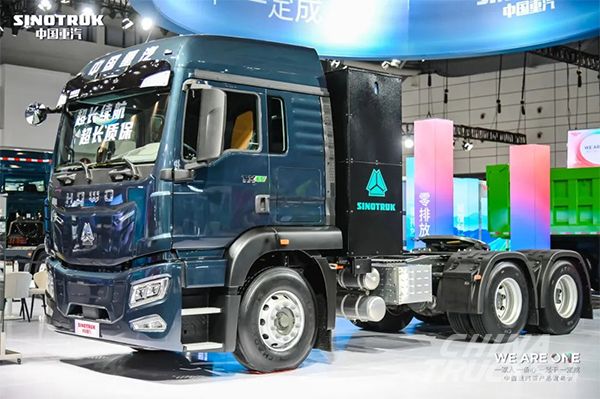
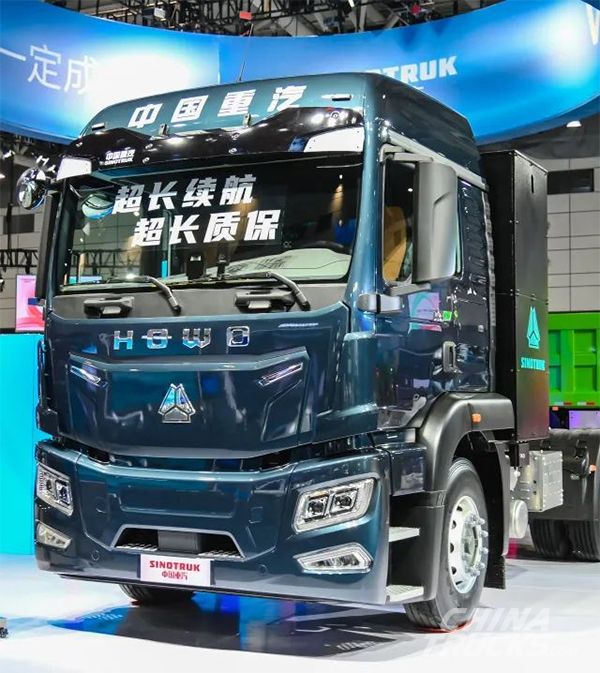
Electric trucks have a reputation problem, and it has nothing to do with range anxiety. It's the assumption that battery power belongs on smooth tarmac — shuttling cargo between warehouses, humming quietly through city centres, never straying far from a charging post. The moment the surface turns to mud, gravel, or a 12 percent quarry gradient, conventional wisdom says you need diesel.
Sinotruk disagrees. The Chinese manufacturer has spent years developing electric heavy trucks specifically for the conditions that break lesser machines: open-pit mines, construction sites, timber yards, and quarries, where loads are measured in tens of tonnes and the terrain doesn't care about your payload rating. And the engineering case for electricity in these environments is stronger than most fleet operators realise.
Torque Where It Matters
The fundamental argument for electric off-road haulage is physics. An electric motor delivers maximum torque from zero revolutions per minute. A laden Sinotruk tipper can creep up a steep quarry ramp without the clutch slip, gear hunting, or exhaust choking that plague diesel equivalents on the same gradient.
That instant, precise low-speed control transforms the driving experience in ways that matter on a working site. There's no torque converter searching for the right ratio, no turbo lag interrupting the power delivery just when you need it most. The truck simply pulls — smoothly, relentlessly, at walking pace or full tilt.
Fewer moving parts also mean fewer failure points when the chassis is twisting over uneven ground. And regenerative braking is genuinely transformative on descents. Instead of burning through brake linings to control a 40-tonne load, the truck recovers energy on the way down, extending range in precisely the conditions where range anxiety would otherwise be worst. In repetitive cycles — load at the face, haul to the crusher, return empty — that recovered energy compounds into meaningful operational savings.
Built for the Beating
Durability is the harder problem, and it's where Sinotruk's industrial heritage earns its keep. The company built its reputation on rugged, over-engineered commercial vehicles, and its electric models inherit that philosophy rather than treating it as a marketing line.
Battery packs are mounted low and protected within reinforced frames. Sealing against dust and water ingress is treated as a first-order requirement, not an afterthought. Thermal management systems are sized for the sustained high loads that off-road work imposes — the kind of relentless thermal cycling that would cook a passenger-car pack in a matter of months.
This is not a car battery dropped into a truck shell. It is a pack engineered for vibration, impact, and the daily punishment of a working site. The distinction matters, because off-road duty cycles are unforgiving in ways that highway haulage simply isn't.
The Commercial Arithmetic
The technical case is compelling. The commercial logic is even more so. Fuel is the single largest operating cost in heavy haulage, and analysts have noted that electric heavy trucks can save operators on the order of ¥200,000 per year in fuel alone on intensive duty cycles.
For a quarry or mining fleet running double shifts, that arithmetic changes procurement decisions quickly. It also explains why Sinotruk's financial results have strengthened on robust heavy-duty truck sales even as the company invests heavily in its new-energy line-up — and why its interim dividend has risen sharply alongside net profit.
The numbers tell a story that goes beyond environmental credentials. Electric off-road haulage isn't just cleaner. It's cheaper to run, and that reality is beginning to reshape fleet economics from the quarry floor up.
Exporting the Capability
Sinotruk is now taking this capability global. Production has begun at Steyr Automotive in Austria, assembling both electric and diesel trucks for European customers — a striking reversal of the traditional technology flow. In the Gulf, the chairman's recent visit to Dubai underscored the brand's ambitions in markets where heat, dust, and punishing terrain are everyday realities.
Distribution agreements in Thailand and renewed partnerships with the Harris Group for the UK and Ireland signal a deliberate, coordinated push into markets where off-road credibility is a prerequisite for acceptance. Even the company's share-price narratives now hinge on whether investors fully appreciate how quickly its electric heavy-duty portfolio is maturing.
What Sinotruk appears to understand is that the electric truck conversation has been too narrowly focused on the motorway. The real proving ground is the quarry floor, the mud track, and the gradient that makes diesel drivers reach for a lower gear. Master those, and the highway becomes easy. That's not just a product strategy. It's an automotive philosophy — one that treats the hardest conditions as the only ones worth designing for.