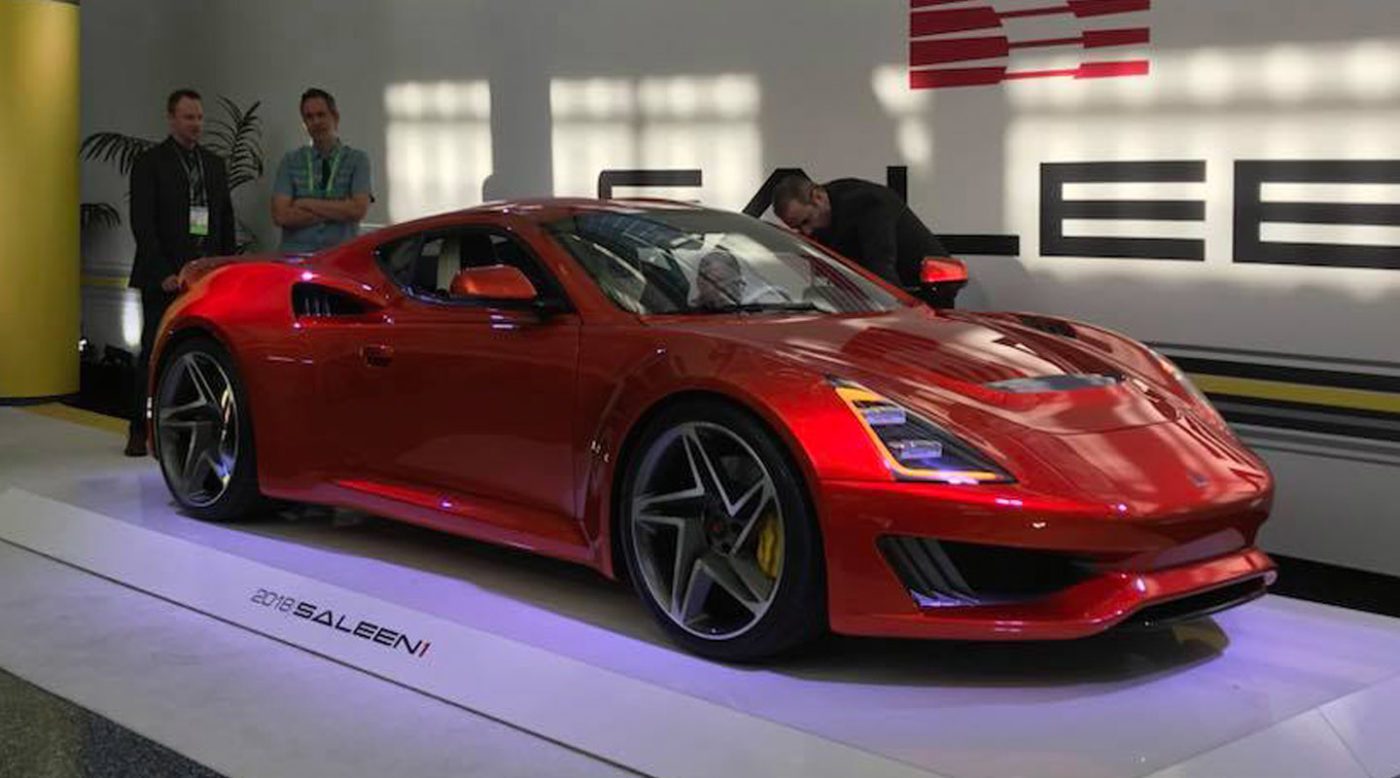
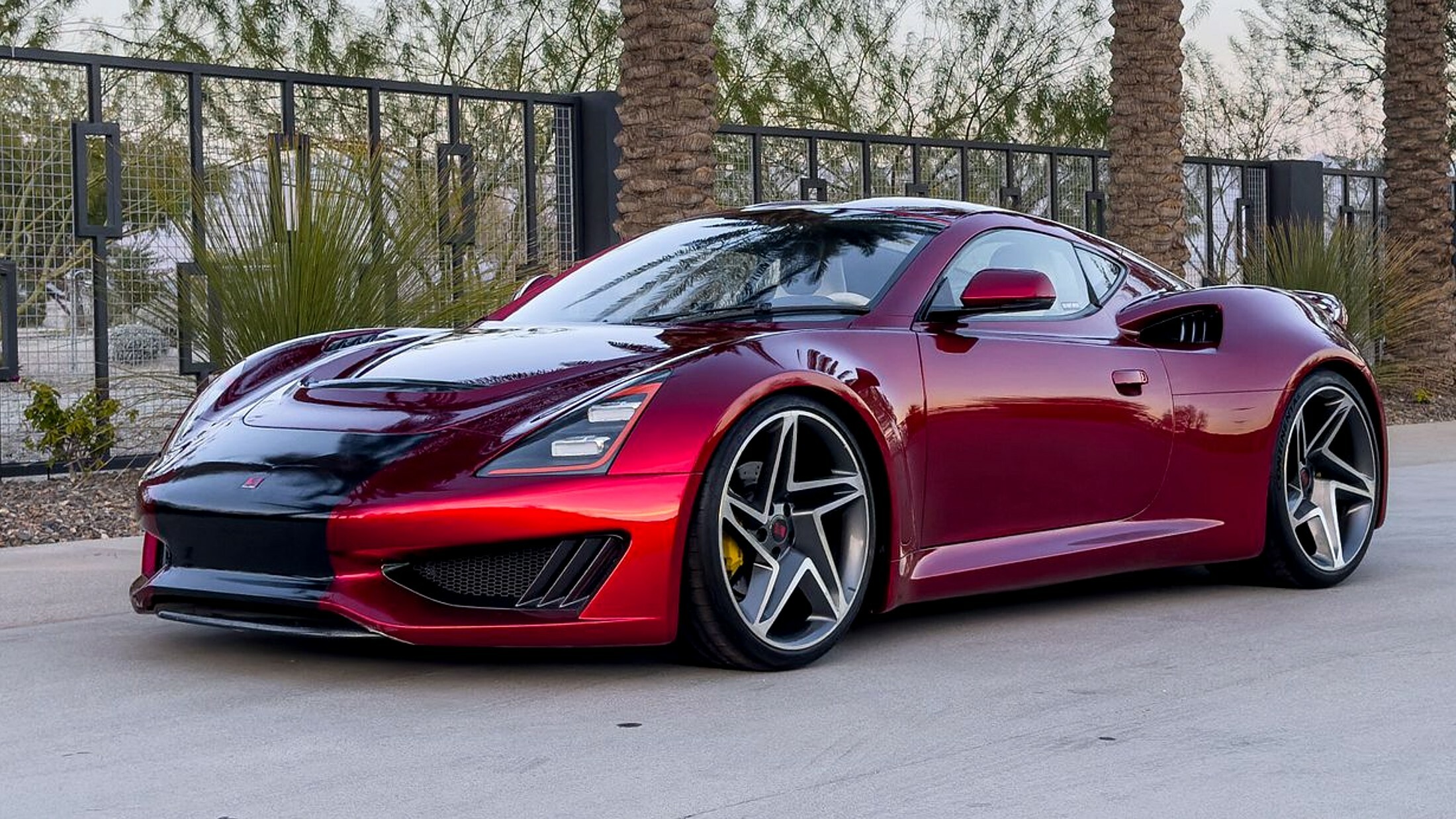
After eight years of concept-car theatre, revised timelines, and the kind of corporate suspense that has long defined Steve Saleen's ventures, the Saleen S1 has finally opened its order books. The headline figures read like a familiar promise: 450 horsepower, a carbon-fiber tub, a mid-mounted turbocharged four-cylinder, and a six-figure sticker. But there's a less glamorous number lurking beneath the spec sheet, and it's the one that matters most. At roughly $150,000, the S1 isn't squaring off against the Porsche Cayman or the Lotus Emira anymore. It's standing squarely in the driveway of the Chevrolet Corvette Z06—and that comparison is far less flattering than the marketing materials would have you believe.
For years, Saleen pitched the S1 as a boutique alternative: a sharper, rarer, more exclusive take on the lightweight sports coupe. That framing worked beautifully when the car was a promise. Now that it's a purchasable object, the market applies a different kind of arithmetic—the cold, unforgiving math of what else your money could buy.
The Spec-Sheet Reality Check
The Z06 answers with a mid-mounted 5.5-liter flat-plane V8 producing 670 horsepower, a dual-clutch transmission, GM's warranty network, and a dealer on nearly every commercial corridor in America. The S1 counters with 450 horsepower, a hand-built ethos, and the cachet of a nameplate that has spent decades tuning Mustangs rather than building supercars from scratch. Enthusiasm is not a spec sheet—and at this price, buyers read spec sheets.
The coverage surrounding the launch has been unusually candid about this tension. Outlets have noted that the S1 now costs roughly $47,000 more than a Lotus Emira, itself no bargain, and framed the car explicitly as a Corvette rival—a comparison Saleen surely did not choose but cannot avoid. That's the trap of the $150K bracket. Above $100,000, the customer isn't merely buying performance; they're buying a proven engineering culture. Chevrolet has spent seven decades refining the Corvette into a weapon that humiliates cars costing three times as much. Saleen has spent that same period building credibility through modified Fords. The S1 asks buyers to trust that the transition from tuner to manufacturer is complete.
The Purist's Case—and Its Limits
There is a legitimate case for the S1, and it deserves a fair hearing. The mid-engine layout, a lightweight carbon structure, and a power figure that prioritizes balance over brute force place it philosophically closer to the Alfa Romeo 4C than to the Z06—a purist's machine rather than a horsepower monument. Rarity has value, and a Saleen will never be mistaken for the fifth Corvette on a given block.
But rarity cuts both ways. It means parts scarcity, a thin service network, and resale uncertainty that a Z06 owner never contemplates. The S1's eight-year gestation is itself a data point about execution risk, and buyers at this price are entitled to weigh it. Driving feel may well favor the lighter, more delicate machine—but feel is a claim that needs road tests to back it up, and those don't yet exist.
The Investor Question
What complicates the picture further is Saleen's own recent behavior. The company has simultaneously teased a widebody Mustang while openly soliciting investors—"investors like you," as one report put it—to fund it. That's not the posture of a manufacturer confidently shipping a flagship. It's the posture of a company still searching for capital while asking customers to commit six figures to its halo car. The contrast with Chevrolet, which builds Z06s by the thousands with institutional certainty, is stark.
None of this makes the S1 a bad car. It makes it an unproven one at a price where proof is mandatory. The $150,000 ask doesn't place the Saleen in a rarefied tier above the Corvette; it drags it into direct comparison with the most capable performance value on earth.
Saleen may believe it's selling exclusivity. The market will answer with a simpler question: for the same money, why not the Z06? Until the S1 has road tests, reliability data, and a dealer network to its name, that question has only one honest answer—and it's not the one Saleen is hoping for.