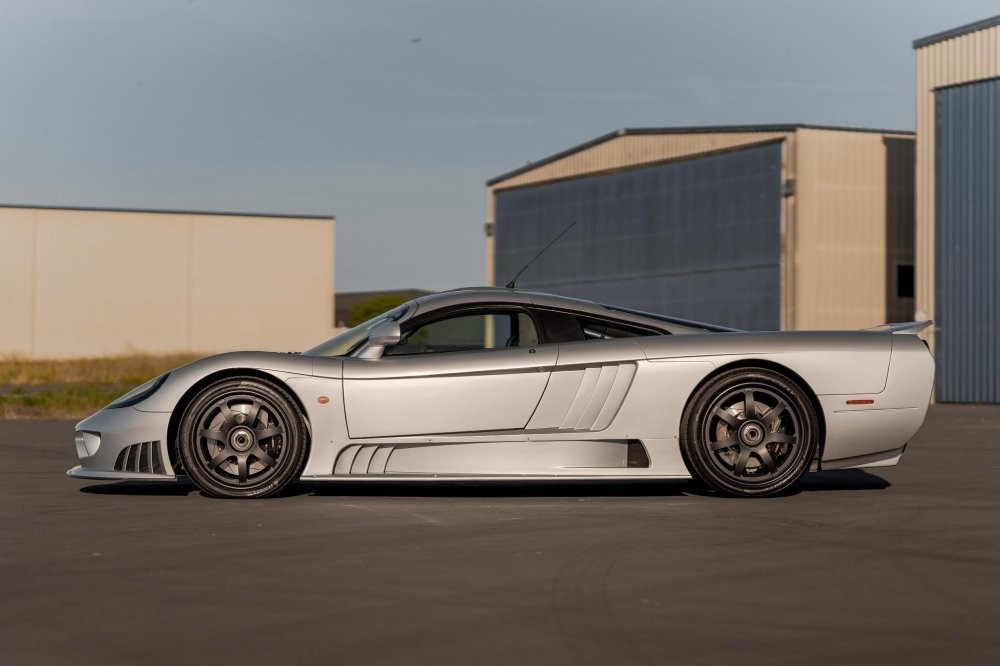
When the Saleen S7 stormed onto the scene in 2000, it wasn't just another American exotic—it was a declaration. A mid-engine, carbon-fiber missile that could scratch 240 mph, it proved a Southern California tuner could hang with Ferrari and Lamborghini on their own tarmac. Now, over two decades later, the company synonymous with that audacity is asking the public to chip in as little as $500 for an ownership stake in its next supercar project. The move has split the automotive world between eye-rolls at a cash-strapped brand and applause for a radical democratization of exotic car development. The truth, as ever, is more nuanced than either camp suggests, and it reveals as much about the fragile economics of low-volume manufacturing as it does about Saleen's survival instincts.
The Case for Skepticism
Let's first dispense with the obvious skepticism. A $500 stake does not buy you a car, nor does it buy you meaningful governance. It buys a symbolic piece of the enterprise, perhaps a say in aesthetic choices like livery or interior stitching, and a front-row seat to the development circus. To the cynical observer, this reeks of a brand that has struggled to launch its long-promised S1 sports car with the volume and velocity originally pitched, now pivoting to retail investors because traditional capital has dried up.
The supercar graveyard is littered with names—Vector, Dauer, even the original Saleen's own fits and starts—that ran out of runway before the production line hummed. Asking fans to fund the dream feels less like innovation and more like the final act of a passion project that outlived its financial backing. Indeed, the news cycle surrounding the brand this week is a mixed bag of nostalgia (a pristine 2004 S7 Twin Turbo hitting auctions, a lovingly restored Fox-body Saleen track star) and forward-looking desperation. The contrast is stark: the legacy is bulletproof, but the roadmap is written in pencil.
The Quiet Genius of the Model
Yet dismiss the model outright, and you miss the quiet genius of the approach. Saleen is not a startup with a PowerPoint; it is a certified manufacturer with a production facility in Corona, California, and a heritage of building road-legal monsters. Unlike crowdfunding a vaporware hypercar from a garage, this stake offers entry into an operational entity. The strategy cleverly monetizes the one asset that cannot be copied: the emotional equity of the brand.
The same enthusiasts who scoured eBay for a Saleen Mustang or saved posters of the S7 now have a chance to own a literal sliver of the story. For less than the price of a set of high-performance tires, they buy into a narrative—and Saleen buys the data, the engagement, and the marketing buzz that no traditional VC firm could provide. In an era where Ford and Chevrolet spend billions on EV platforms, Saleen is leveraging its community to de-risk a niche product. It is micro-private equity for the petrolhead class, and it transforms customers into apostles who will defend the project with religious fervor because their own name is on the dotted line.
The Critical Question: Institutional Confidence
The critical question, however, is not whether the funding model is novel—it is—but whether it signals a lack of institutional confidence. The 2026 Saleen 302 White Label Mustang continues to roll out, proving the tuning arm is alive. But a ground-up supercar is a different beast, requiring crash testing, emissions certification, and a supply chain that eats cash by the truckload. If a $500 stake is the best Saleen can muster, it suggests the banks have said no, and that the S1's delays have spooked deeper-pocketed investors.
The brilliance of the crowdfunding pivot is that it masks this weakness as a feature: "You're not just buying a car; you're building it with us." It is a masterclass in narrative control, turning a capital shortfall into a community-building exercise. Yet the automotive press must ask whether this is a sustainable bridge to production or a bridge to nowhere, padded with small checks that cannot possibly cover the tooling costs of a modern supercar. Gordon Murray and others have flirted with fractional ownership models, but this is the most high-profile American brand to do so—and the stakes are correspondingly higher.
Patronage or Gamble?
The middle ground is where reality sits. The success hinges entirely on execution. If the new supercar, rumored to be a successor to the S7's ethos, arrives with credible specs and a track-proven chassis, the $500 stakeholders will become the greatest unpaid sales force in automotive history. If it stalls, the brand risks tarnishing the very legacy that made the campaign possible. History is littered with enthusiasts who paid deposits on dreams that never materialized, and the scars on the community are deep. Saleen is gambling that its heritage—the S7's Le Mans ambitions, the Mustang glory days, the sheer audacity of the 2000s—outweighs the skepticism of a generation burned by unfulfilled promises.
In the end, labeling this move as sheer desperation or sheer genius misses the point. It is a survival mechanism, wrapped in the seductive language of inclusion. The $500 stake is less an investment and more a patronage badge, a modern twist on the Medici model where wealthy backers funded artists. Saleen is asking its faithful to become patrons of a new American speed icon. Whether that icon ever graces a road remains to be seen, but the strategy itself is a fascinating artifact of an industry where the gap between ambition and capital has never been wider. For the enthusiast with $500 burning a hole in their pocket, the pitch is simple: own a piece of the dream or watch it fade from the rearview mirror. The choice says as much about the buyer as it does about the brand.
