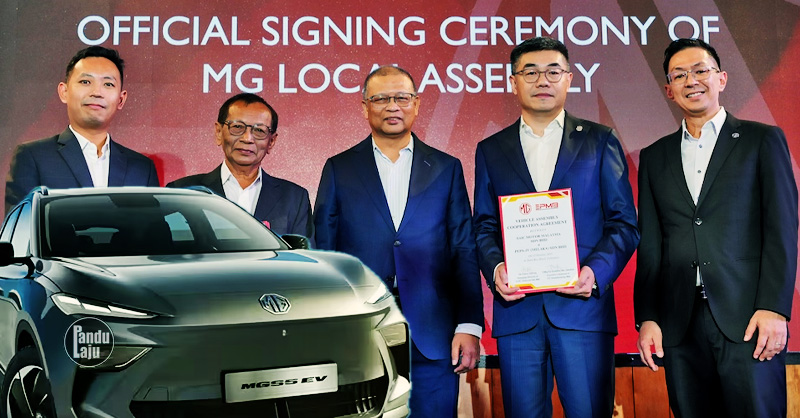
The most consequential news out of the auto industry this month wasn't a horsepower figure or a Nürburgring lap time. It was a contract extension. General Motors and SAIC Motor have renewed their joint venture partnership through 2047 — a twenty-year handshake that landed not in a moment of triumph, but in one of quiet recalibration. Read that timing carefully, because it tells you everything about the kind of company SAIC Motor has decided to be.
SAIC's September sales fell 7.67% year-on-year to 406,051 units, and the partnership's crown jewel, SAIC-GM, has spent the past several quarters navigating a market that has turned ferociously toward electrified upstarts. Yet the extension was signed anyway. That, more than any concept car or battery announcement, is the real statement of intent.
Built for Survival, Not Sentiment
This is a manufacturer that builds for survival, not sentiment. The twenty-year handshake is no love letter to the internal combustion sedan. It is a cold-eyed calculation that the sedan — and the joint-venture architecture that produces it — remains the most reliable cash engine in a portfolio being aggressively reshaped around it. While the industry chases the emotional pull of performance SUVs and Porsche-flavored halo models, SAIC keeps returning to the unglamorous center of the market, where volume, fleet economics, and manufacturing scale determine who survives the next cycle.
The sedans that roll out of this arrangement will not inspire magazine covers. They will be built to a price, engineered for durability, and sold to buyers who care about rear-seat legroom and resale value rather than lap times. That is not a weakness. It is a discipline — and it is the discipline that funds everything else.
The Reshaping Is Already Underway
The evidence of that reshaping is everywhere. SAIC is selling another 10% stake in its Indian venture to local partner JSW, a move that trades equity for political cover and local alignment. It has stood up an innovation hub with Audi for a China-exclusive brand — a quiet admission that the next generation of premium product will be co-developed rather than imported. And through its Huawei-backed Shangjie brand, it is readying a fourth model, the Z9 electric SUV, already surfacing in regulatory filings, signaling that SAIC intends to compete in the smart-EV tier without abandoning the mainstream sedan business that funds it.
That dual-track discipline is the point. The SAIC-GM renewal through 2047 — reported variously as extending to 2046 in some accounts, a discrepancy that itself speaks to the complexity of the arrangement — buys SAIC two more decades of manufacturing relationships, supplier networks, and platform-sharing that no startup can replicate overnight. It also buys GM a continued foothold in the world's largest auto market despite geopolitical headwinds that have made Western-Chinese partnerships increasingly awkward. Neither side is pretending this is a romance. It is infrastructure.
Hedging as a Design Language
Look at the portfolio and a philosophy emerges. SAIC's willingness to keep investing in the mainstream sedan — while simultaneously hedging through MG, through Shangjie, through equity sales in India and innovation hubs with German premium brands — is the mark of a company that understands something its flashier rivals often forget. The sedan is not dying. It is simply no longer fashionable, and fashion was never the business SAIC was in.
The Z9 will get the headlines. The joint-venture sedan will get the balance sheet. In a market that rewards quarterly spectacle, SAIC has chosen a horizon measured in decades, anchored by the least glamorous product line in the showroom.
Patience as a Performance Metric
What the twenty-year extension really signals is patience — and in the end, patience is what lets a carmaker still be standing when the sentiment has moved on. The balance sheet, not the showstand, is the true measure of a brand's engineering. SAIC Motor has bet two more decades on that conviction, and whether you find it thrilling or deeply unfashionable, it is the most honest automotive philosophy on the table.