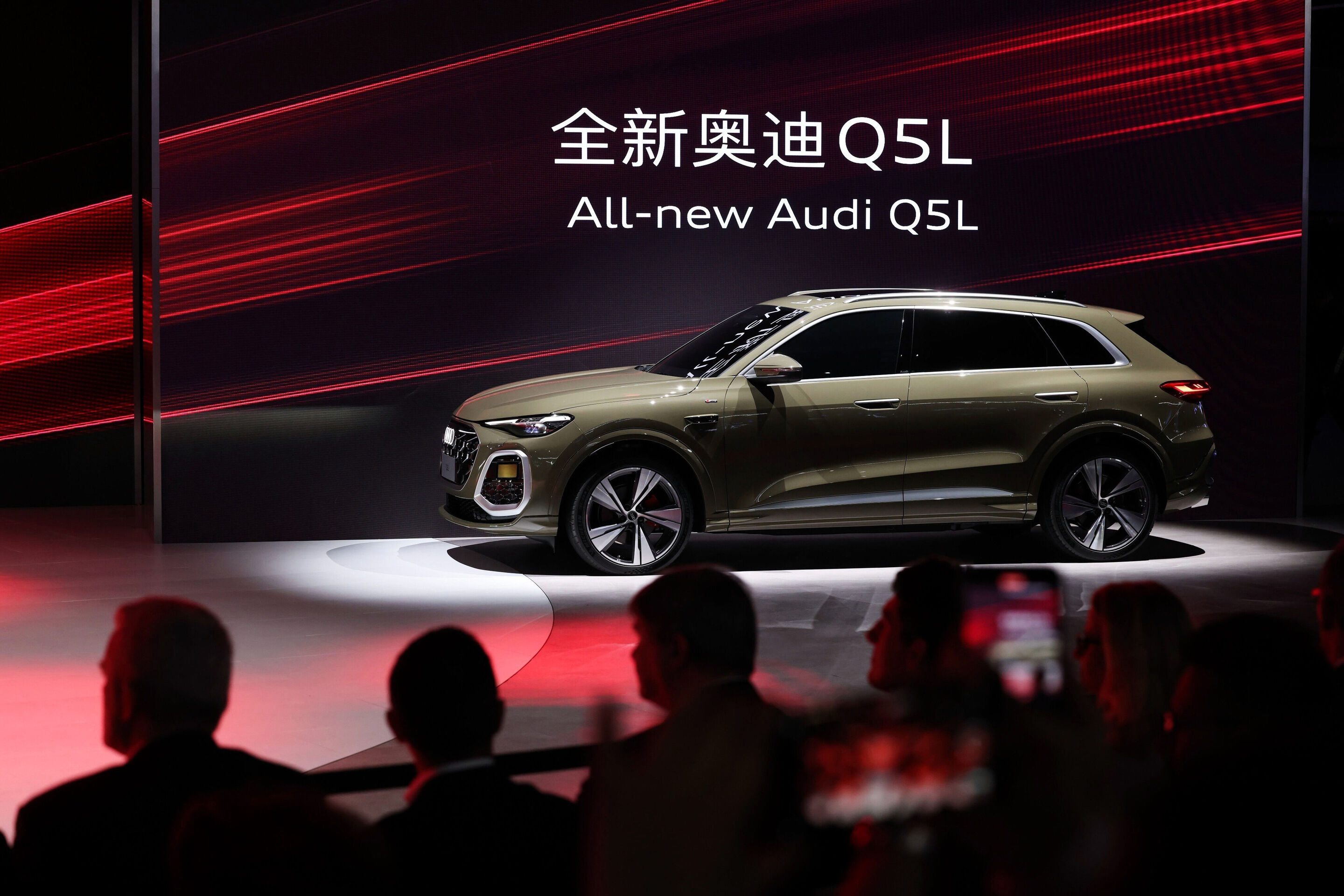
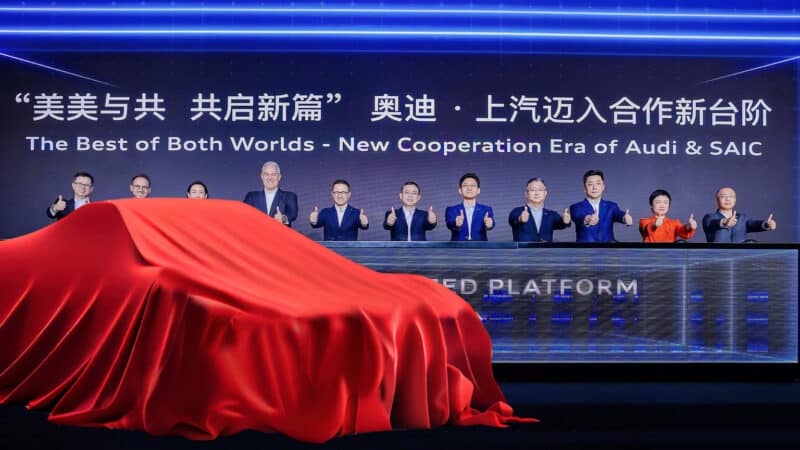
For thirty years, the recipe for winning in China barely changed. A global brand brought the engineering. A state-owned partner brought the factory. And the joint venture sold badge prestige by the million. It was a beautiful arrangement—right up until it wasn't.
The rise of BYD, Nio and a wave of software-obsessed domestic marques turned the world's largest car market into its most demanding. Chinese buyers now size up a sedan by its chipset and its voice assistant long before they notice the badge on the hood. Against that backdrop, Audi and SAIC Motor have done something no German premium brand has attempted at scale: created a dedicated innovation hub to build a China-exclusive brand, engineered in China, for Chinese buyers.
An Inversion of the Old Hierarchy
It's tempting to wave this off as another badge-engineering exercise. It isn't. Audi already has its long-standing FAW partnership—the arrangement behind the stretched A6Ls and A4Ls that defined executive transport in Beijing and Shanghai for a generation. Bringing SAIC in as a second partner was never simply about extra production capacity. It was an admission that the old playbook—take a European car, stretch the wheelbase, add chrome—no longer answers a market where a Nio ET5 or a Zeekr 007 offers faster charging, richer software and a more compelling cabin for less money.
So the new venture flips the traditional order on its head. Chinese platforms. Chinese battery and software supply chains. German design and chassis expertise layered on top. The hierarchy that built the original joint venture era has been inverted, and that inversion is the entire point.
Why the Innovation Hub Matters
Where the work happens matters as much as what gets built. Joint ventures of the past were manufacturing agreements dressed up as partnerships; engineering authority stayed in Ingolstadt or Wolfsburg. This time, development happens where the customers are, and that shortens cycles dramatically. In a market that refreshes models at roughly half the cadence of Europe, being able to design, validate and launch a car locally isn't a luxury. It's survival.
The two partners bring complementary strengths to the table. SAIC supplies its electric vehicle architecture, its battery partnerships and a supply chain already proven at extraordinary volume. Audi contributes chassis tuning, safety validation and the brand equity that still opens doors in China's tier-one cities—even if it no longer commands the automatic premium it once did. That's a genuinely interesting brief for anyone who cares about how a car drives: German chassis DNA, Chinese electrical architecture, and a development loop fast enough to keep pace with the market it's built for.
SAIC Is Not the Junior Partner Here
It's worth being clear about who's bringing what to this arrangement, because SAIC was not chosen from weakness. The group recently became the first Chinese automaker to sell 100 million vehicles cumulatively—a milestone that speaks to four decades of industrial scale—and it moved 1.65 million units in the first five months of the year alone. Shareholders have rewarded the momentum, with the stock climbing on improving margins.
Nor is SAIC confining its ambitions to its home market. It plans its first European car plant in Spain's Galicia region, a move that turns the old export flow on its head and has already drawn diplomatic commentary from Beijing. Meanwhile, General Motors has extended its own SAIC joint venture through 2047—a two-decade commitment that signals just how deeply Western automakers still depend on Chinese partners, geopolitical friction notwithstanding.
A Hedge and a Laboratory
For Audi, the China-exclusive brand is both at once. If Chinese-engineered Audis succeed, the lessons travel: faster software development, cheaper electrification, a template for other regions where the brand is losing ground to local challengers. If they fail, the cost is contained, and the FAW relationship continues undisturbed.
Either way, the message to the industry is unmistakable. The joint venture is no longer a concession extracted by regulation. It is the mechanism by which a German premium marque intends to relearn how cars are bought in the world's most competitive market. Audi has always sold itself on Vorsprung durch Technik—progress through technology. For most of its history, that progress was defined in Germany and exported. The next chapter is being written in Shanghai, and the rest of the industry would be wise to read it.