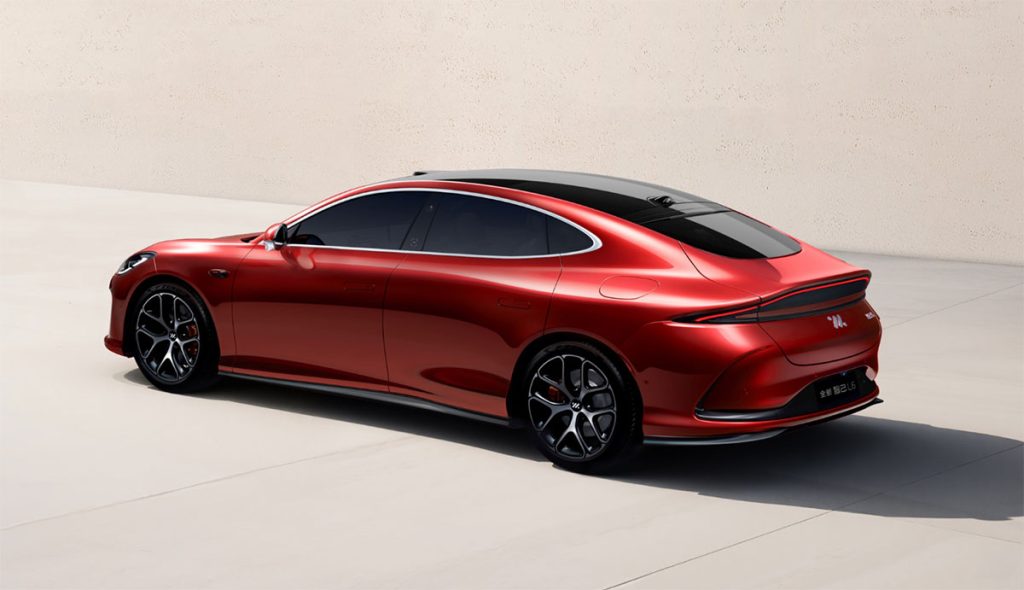
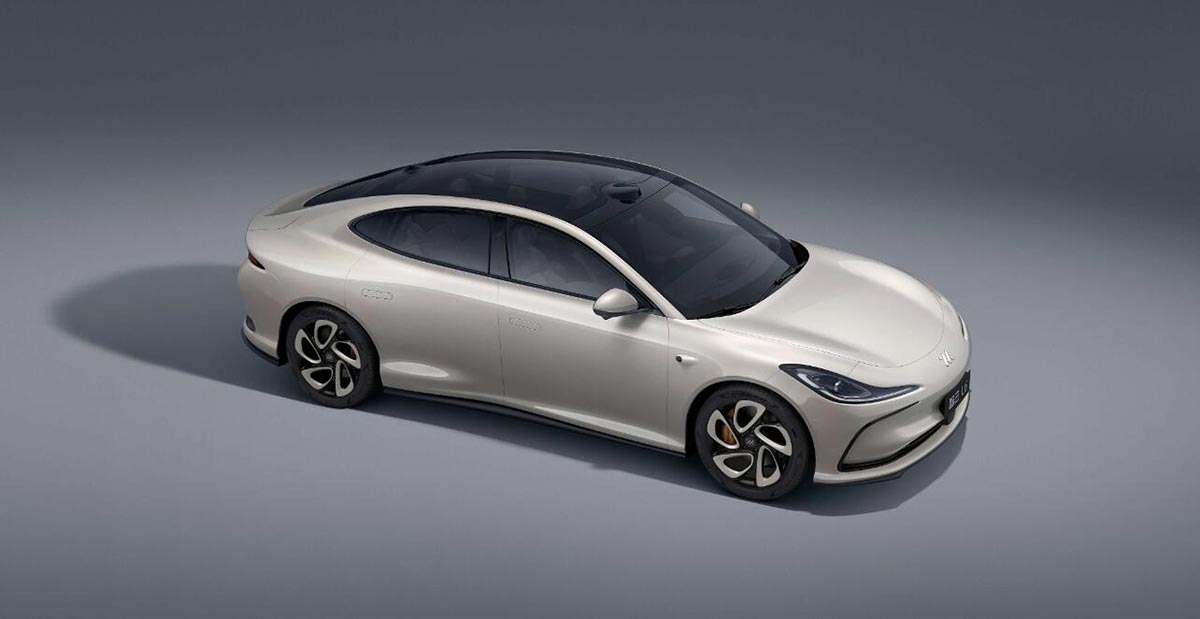
SAIC Motor does not often make noise for the sake of it. The state-owned giant, which recently celebrated producing its 100 millionth vehicle and posted 2.741 million units sold in the first eight months of the year, prefers scale to spectacle. Yet the launch of the all-new IM Motors L6 signals something louder: a deliberate, well-funded push into the heart of China's premium electric sedan market, where Tesla's Model 3 and Xiaomi's SU7 have dominated the conversation. IM Motors, SAIC's joint venture with Alibaba and Zhangjiang Hi-Tech, is betting that the L6 can convert engineering depth into showroom gravity.
The stakes are difficult to overstate. China's mid-size luxury EV segment has become the most competitive arena in the global auto industry, a place where brand loyalty is thin and specification sheets are dissected within hours of a launch. Tesla built its Chinese franchise on the Model 3's combination of range, software, and price discipline. Xiaomi arrived late but with an ecosystem halo that turned the SU7 into a cultural event. For SAIC, the L6 is not merely another product; it is a statement that a legacy manufacturer with decades of joint-venture experience can out-engineer the newcomers on their own terms.
Hardware First: An 800-Volt Statement
That confidence rests on hardware. The L6 debuts with an 800-volt architecture, a configuration that places it alongside the most advanced platforms in the segment and enables charging speeds that meaningfully reduce range anxiety. SAIC's engineering teams have paired this with a chassis developed in close consultation with the company's European partners, a reminder that the group's technical vocabulary was built over forty years of collaboration with Volkswagen and General Motors. The recent extension of the GM-SAIC joint venture through 2047 underscores how central that partnership remains to SAIC's long-term planning, even as its own brands step forward.
The Strategic Momentum Behind the Badge
The L6 also benefits from SAIC's broader strategic momentum. The company's overseas sales have topped one million units, and its plan to build a first EU car plant in Galicia, Spain, shows that its ambitions are not confined to the domestic market. Closer to home, the innovation hub established with Audi for a China-exclusive brand demonstrates that SAIC is now a partner of choice for foreign manufacturers seeking local relevance, not merely a junior collaborator. That reversal in status matters when positioning a flagship sedan against Tesla and Xiaomi.
The Ownership Proposition
Still, the L6 faces a market that rewards narrative as much as engineering. Xiaomi's advantage is its consumer electronics ecosystem; Tesla's is a decade of brand equity and Supercharger infrastructure. IM Motors must therefore persuade buyers that SAIC's manufacturing scale, supply chain discipline, and joint-venture pedigree translate into a superior ownership experience. The early indicators are encouraging. The L6 has been positioned with aggressive pricing and a specification list that undercuts its rivals on key metrics, a strategy that mirrors SAIC's broader approach of leveraging volume to win on value.
The Larger Industrial Play
What makes this launch particularly telling is its timing. SAIC's share price has climbed on the strength of its EV and export performance, and the group has been diversifying into adjacent businesses, including an insurance arm that recently received credit ratings and a partnership with Lockton to support Chinese brands going global. The L6 is the consumer-facing tip of a much larger industrial strategy, one that treats electrification not as a bet but as an operating reality.
Whether the L6 becomes a volume success or a halo statement, it marks a shift in how SAIC wants to be seen. For years, the company was China's quiet giant, content to build cars for others and let joint-venture badges carry prestige. The IM Motors L6 suggests that era is closing. Against Tesla's software and Xiaomi's charisma, SAIC is answering with scale, engineering, and the accumulated knowledge of the world's most experienced automotive partnerships. In the world's fiercest EV market, that may prove to be the most durable advantage of all.