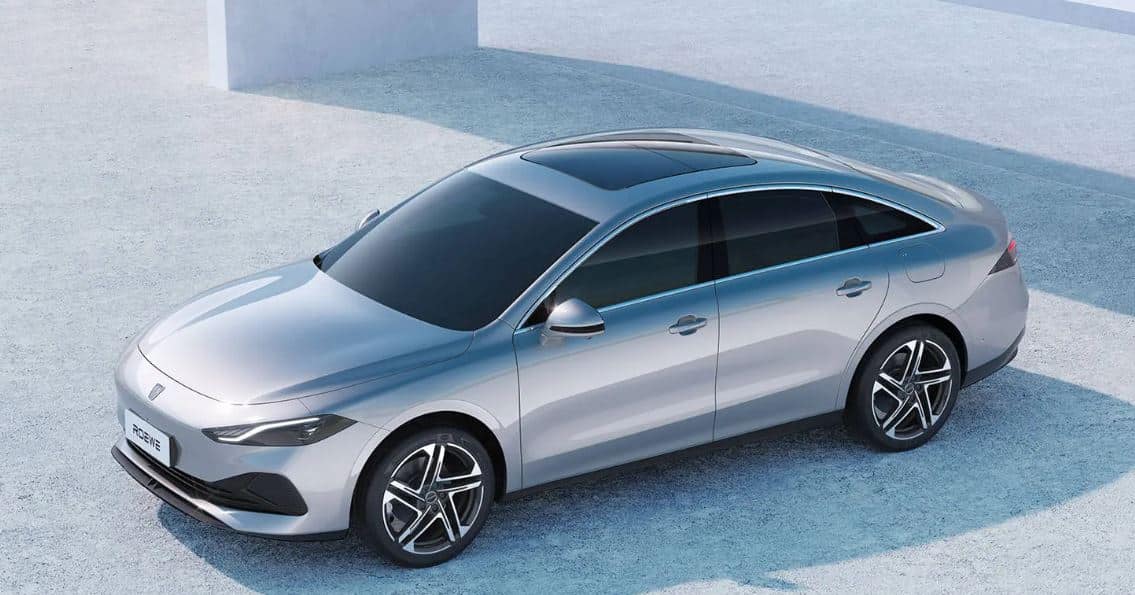
For years, the Chinese car in Europe was a story told in ships. Metal arrived at the docks, fanned out through hastily assembled dealer networks, and carried with it the faint, persistent suspicion of a visitor rather than a resident. That era is ending. When SAIC Motor confirmed plans to build its first European car plant in Spain's Galicia, it did not simply announce a factory. It announced that Chinese sedans intend to become European fixtures — assembled on European soil, by European hands, for European roads.
The choice of Galicia is anything but arbitrary. The region brings deep-water ports, an established supplier ecosystem, and a workforce already fluent in the rhythms of modern vehicle production. Just as telling, Spain has positioned itself as one of the continent's most pragmatic automotive economies, openly courting Chinese investment while other European capitals oscillate between protectionism and partnership. For SAIC, this is a foothold with strategic depth. Local production sidesteps the tariff arithmetic that has complicated Chinese imports — but it also does something subtler and more consequential. It converts an exporter into an employer.
From Exporter to Employer
That conversion matters because the European car market does not merely buy vehicles. It buys legitimacy. A brand with a factory in Galicia is a brand that pays Spanish taxes, hires Spanish engineers, and answers to Spanish regulators. The psychology of that shift should not be underestimated. The Chinese sedan, long marketed on value and technology, now gains something it could never ship across an ocean: rootedness.
SAIC arrives in Europe with balance-sheet momentum most rivals can only envy. The group sold 2.741 million units in the first eight months of the year, and its core net profit surged by over 70 percent year-on-year in the first half of 2026. Those are not the numbers of a company testing foreign waters tentatively. They are the numbers of a manufacturer with the capital, the scale, and the patience to build a European presence properly. The Galicia plant is not a pilot project. It is the foundation of a second home market.
The Sedan Is the Battleground
Yet the story extends well beyond one factory gate. SAIC's European ambitions are being sharpened by an increasingly sophisticated product offensive. IM Motors, the group's premium electric venture, has launched its all-new L6 sedan explicitly to challenge Tesla and Xiaomi — a signal that SAIC is not content to compete on price alone. The sedan, after all, remains the most culturally loaded body style in Europe. It is the shape of the executive car park, the company fleet, the autobahn cruiser. Winning Europe means winning the sedan, and SAIC knows it.
What makes this moment genuinely new is that SAIC is no longer arriving alone. Its partnerships have become a bridgehead of their own. The innovation hub established with Audi for a China-exclusive brand, and the extended joint venture with GM running through 2047, reveal a company that has learned to operate inside other manufacturers' ecosystems — and to let them operate inside its own. That fluency in collaboration is precisely what European manufacturing demands. The days of unilateral conquest are over; the future belongs to those who can co-produce.
Going Global, Going Deep
The rhetoric from within the company reflects this maturation. SAIC's Jia Jianxu has framed China's automotive export story as a shift from "going global" to "going deep" — a phrase that captures the difference between selling abroad and belonging abroad. A plant in Galicia is the physical embodiment of that philosophy. It is where volume becomes presence, and presence becomes permanence.
None of this guarantees success. Europe's regulatory environment remains demanding, its consumers loyal, and its incumbent brands resilient. But the terms of the contest have changed. When SAIC sedans begin rolling off a Spanish line, the question will no longer be whether Chinese cars can compete in Europe. It will be whether European manufacturers can compete with a Chinese company that has decided to stop visiting and start living here. The Spain plant is not the end of that journey. It is the moment the journey became irreversible.