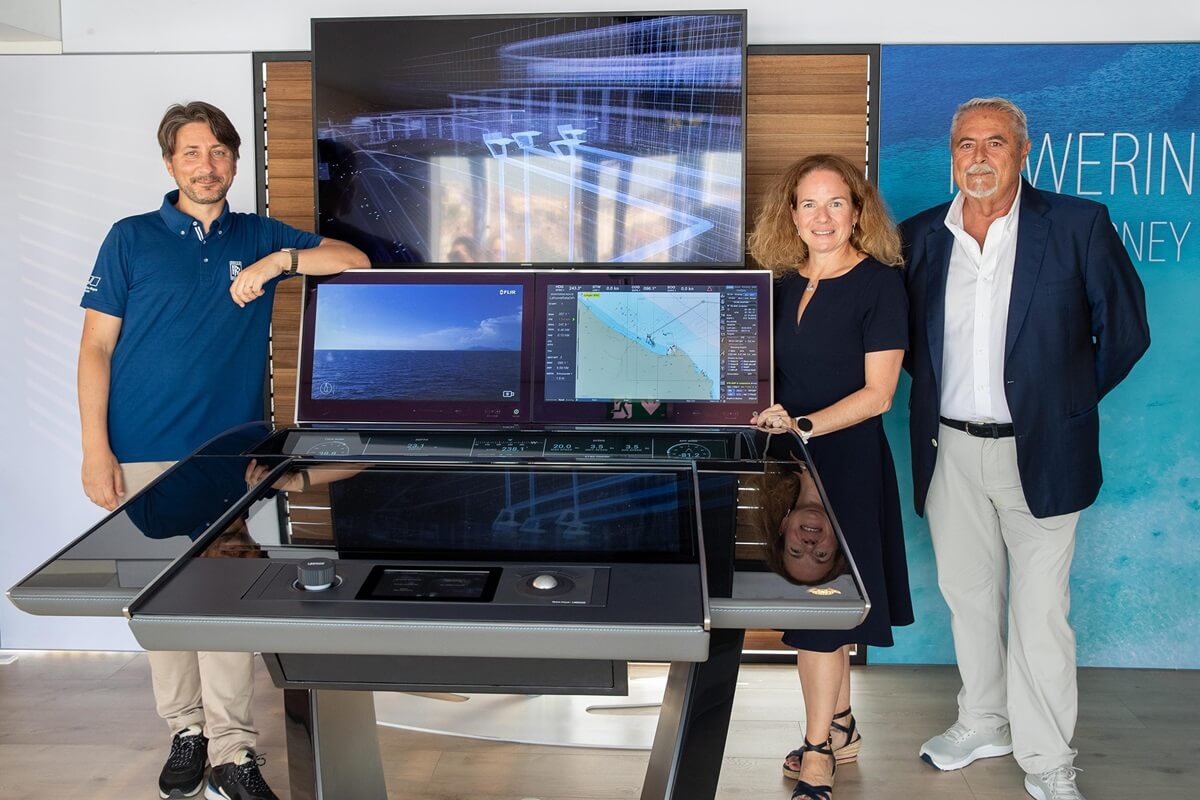
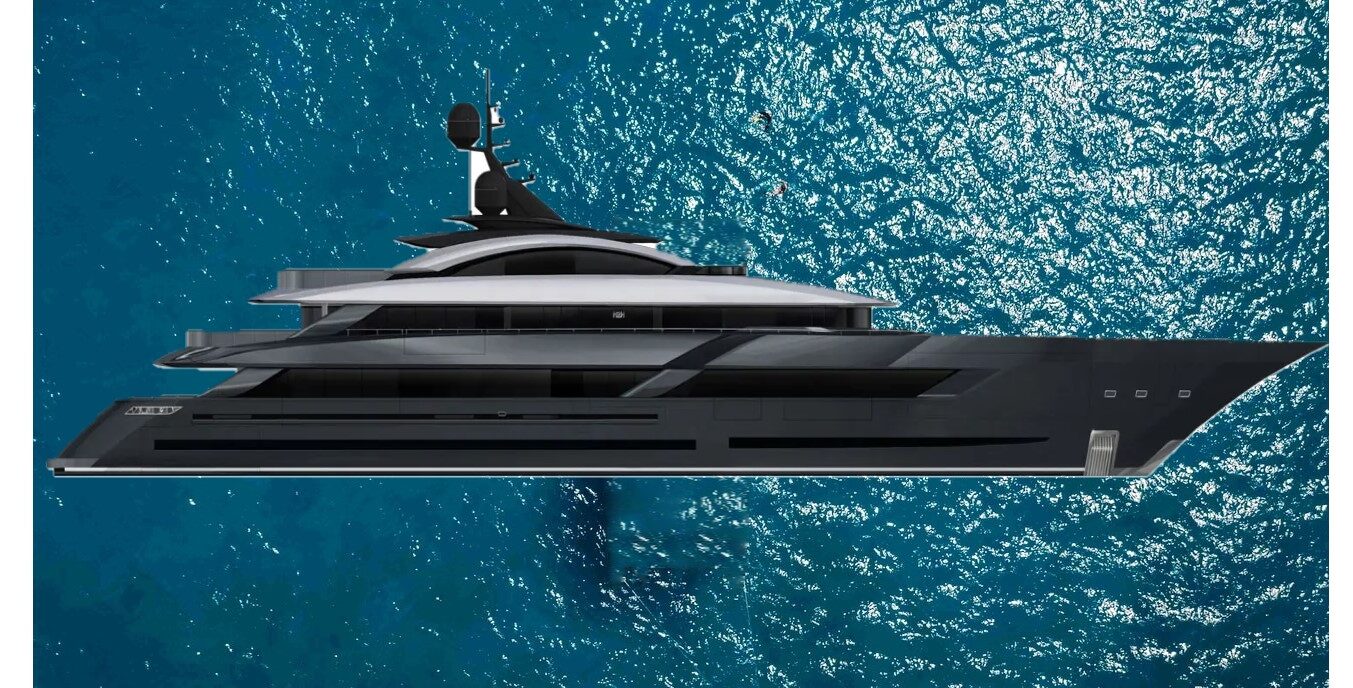
The bridge of a superyacht has always been a room built for the captain, not the guest — a darkened command centre of glowing screens, redundant switches, and the low hum of navigation systems holding a 164-foot vessel precisely at anchor. Rolls-Royce has just decided that tradition is negotiable. In a move that has startled even seasoned observers of nautical design, the marque has unveiled a helm that folds itself away entirely, dissolving the instruments of command so the space can be reborn as an ocean-view lounge the moment the anchor drops.
The concept, developed for a yacht known as 'Point Break', is the kind of gesture only Rolls-Royce would attempt. The dashboard doesn't merely hide behind a panel or retract into a bulkhead. It performs — a choreographed mechanical disappearance in which the helm, the displays, and the physical apparatus of piloting a large vessel simply cease to occupy the room. What remains is a clean, uninterrupted panorama of sea and sky, framed in the materials and craft that define the brand. The bridge becomes a salon. The captain's domain becomes the party's backdrop.
Theatre, Yes — But Not Decadence
It's tempting to read this as decadence for its own sake, and certainly there's an element of theatre that borders on the absurd — a solution to a problem only the extraordinarily wealthy could have. But that misreads what Rolls-Royce is actually doing here. The company has never sold transportation in the ordinary sense. It sells the removal of friction, the smoothing away of anything that intrudes upon the experience of being effortlessly, supremely served.
A dashboard that vanishes isn't a gimmick. It's the logical endpoint of a philosophy that treats every visible mechanism as an admission of failure. The best engineering, in this worldview, is the engineering you never have to see. Every seam, every switch, every reminder that a machine requires operating is a small tax on the owner's serenity — and Rolls-Royce has built an entire identity on paying that tax on the customer's behalf.
The Industrial Backdrop
There's a deeper resonance in the timing. Rolls-Royce has spent recent months announcing substantial investment in its terrestrial operations — a £300m commitment to its UK factories, a $398m injection into British manufacturing, and the beginning of construction on new £112m facilities at Sinfin. These are the unglamorous, capital-intensive moves of a company deepening its industrial roots.
Against that backdrop, the folding superyacht helm functions as something else entirely: a statement of imaginative reach. One hand builds the factory floor; the other imagines a bridge that erases itself. The brand is simultaneously more grounded and more fantastical than at any point in its recent history — and that tension is precisely what makes the moment worth watching.
Command Without a Console
What makes the 'Point Break' helm genuinely interesting, beyond its novelty, is the question it raises about the relationship between function and theatre in luxury design. A helm exists to steer. If it disappears, what remains of the act of command?
Rolls-Royce's answer, implicit in the design, is that command itself has become invisible — that the modern owner doesn't wish to be seen piloting, only to be seen enjoying. The machinery of control recedes; the performance of leisure advances. It's a small shift with large implications, and it echoes the way the brand's road cars have long hidden their complexity beneath surfaces of apparent simplicity. The driver is insulated from the drivetrain, the passenger insulated from the road, and now the yacht owner is insulated from the very act of navigation.
A Manifesto in Motion
Whether the folding helm ever reaches a production vessel in meaningful numbers is almost beside the point. Concepts like this function as manifestos. They declare what a brand believes about space, about service, and about the proper relationship between the human being and the machine.
Rolls-Royce has declared that even the instruments of navigation are, ultimately, furniture — and that when they're no longer needed, they should have the good manners to get out of the way. It's an audacious position, and it's entirely in character for a marque that has spent a century arguing that the highest form of engineering is the kind you never notice. The dashboard vanishes; the point does not.