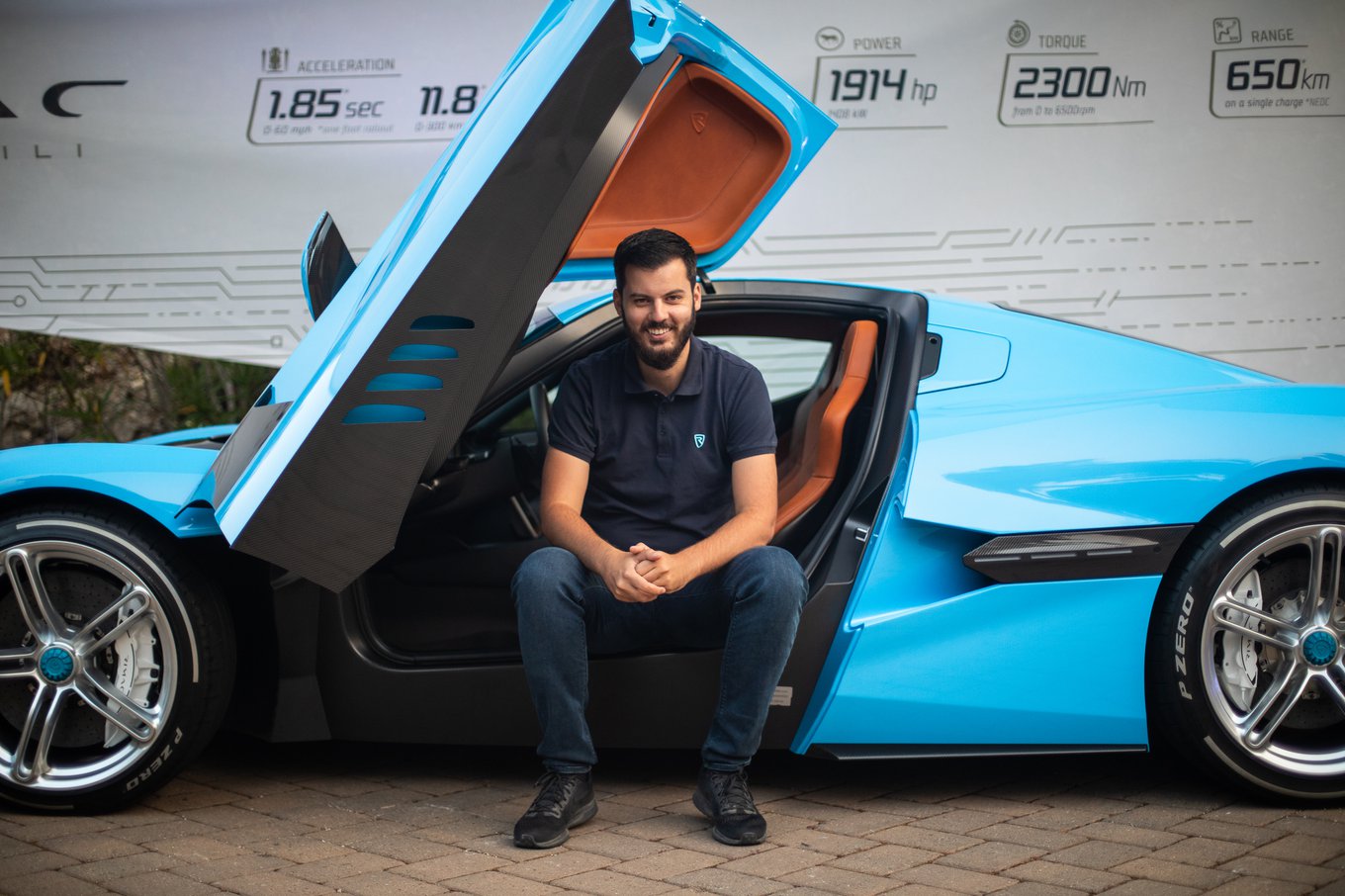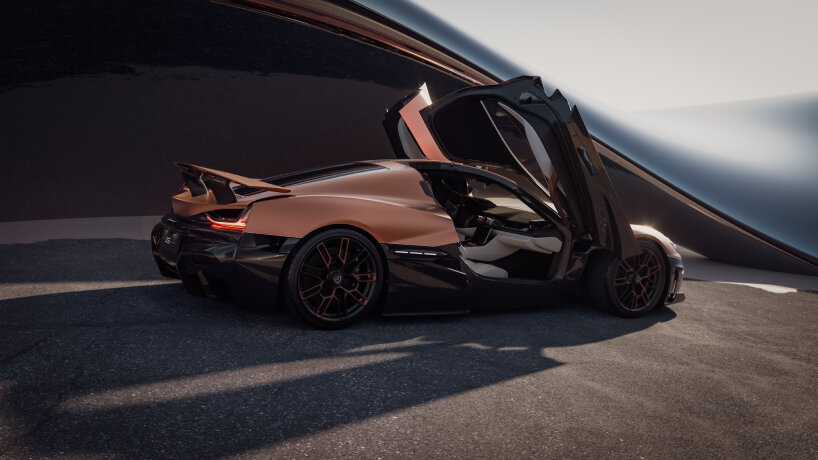
There is no greater irony in the modern automotive pantheon than watching Mate Rimac—the man who electrified the hypercar world with the Nevera—publicly declare that the internal combustion engine is the future. For over a decade, Rimac was the industry’s most persuasive evangelist for battery-electric performance, building a company from a converted garage in Croatia into a technological powerhouse that produced a 1,914-horsepower electric missile capable of embarrassing everything with a tailpipe. Yet today, as the CEO of Bugatti Rimac, he stands before the world with a straight face and a naturally aspirated V16 under the Tourbillon’s sculpted bodywork, insisting that the synthetic-fueled, combustion-powered supercar will outlive the very electric revolution he helped ignite. The pivot is so complete, so philosophically abrupt, that it demands a closer look at the financial pragmatism and engineering logic driving the industry’s most fascinating contradiction.
The Snow Doughnuts and the Confession
The recent headlines paint a portrait of a man gleefully performing doughnuts in the snow with the Tourbillon, its 8.3-liter V16 wailing like a racing thoroughbred rather than humming like a server farm. Rimac has been characteristically unapologetic, telling CNBC that the future of supercars lies in "old-school combustion engines"—a statement that would have been unthinkable from him just a few years ago. But this is not a betrayal of his electric ideals; it is a masterclass in market realism.
Rimac understands something that pure-play EV startups often miss: the ultra-wealthy buyer does not purchase a hypercar for efficiency metrics or charging curves. They purchase it for theatre, for emotion, for the visceral shiver that comes from a 9,000-rpm redline and the mechanical symphony of pistons doing their ancient work. The Nevera proved that electric powertrains can win the numbers game, but the Bugatti clientele, and increasingly the collector market at large, has voted with its wallet for the emotional resonance of combustion.
Hybridization as a Weapon, Not a Compromise
The deeper irony lies in how Rimac arrived at this conclusion. He did not abandon electric technology; he weaponized it in service of the combustion engine. The Tourbillon is a hybrid, but not in the apologetic, eco-conscious sense of a Prius. Rimac’s engineering team used the electric motors not as a compromise but as a scalpel, filling the torque gaps of the big V16 and providing instant response that no naturally aspirated engine could deliver alone.
This is the mature realization that the future is not a binary choice between battery and fuel, but a hybrid synthesis where each technology plays its optimal role. The electric motors handle the brutal launch, the low-speed crawling, and the reverse gear, while the V16 provides the soundtrack and the top-end rush. It is a powertrain philosophy that renders the old "EV vs. ICE" tribal warfare obsolete, and it is precisely because Rimac built one of the world’s greatest EVs that he has the credibility to champion this hybrid path.
The Business of Emotion
There is also a commercial dimension to this conversion that cannot be ignored, particularly in light of the recent restructuring that saw Porsche sell its stakes in Bugatti Rimac and the Rimac Group to an international consortium. The financial backing of sovereign wealth and private equity demands profitability, and Bugatti’s historical DNA is deeply rooted in the W16 and its predecessors.
Rimac is not a fool; he read the market data showing that resale values for combustion hypercars remain stratospheric while even the best EVs depreciate with alarming speed. The $6 million Chiron Pur Sport that Mat Armstrong famously rebuilt, whose owner recently met Rimac to share his unfiltered thoughts, represents a market segment that treats these cars as appreciating assets, not disposable electronics. Rimac recognizes that the combustion engine, in this rarefied air, is a store of value, and he is positioning Bugatti to serve that demand rather than fight it.
A Stick-Shift V16? The Provocation
Perhaps the most telling detail in the recent news cycle is Rimac’s coy suggestion, reported by Road & Track, that he wants to build a stick-shift V16 hypercar. This is not engineering nostalgia; it is a deliberate provocation aimed at the purist collector who mourns the death of the manual gearbox. Rimac knows that the ultimate expression of combustion-era luxury is not maximum efficiency but maximum involvement, and he is willing to sacrifice the electrified performance of a dual-clutch system for the tactile joy of rowing through gears by hand.
It is a bold, almost contrarian move that reinforces his new thesis: the supercar of the future will be defined not by its energy source but by its ability to make the driver feel alive. Mate Rimac has not turned his back on electricity; he has simply realized that the road to automotive immortality is paved with high-octane fuel, and he intends to be the one paving it.