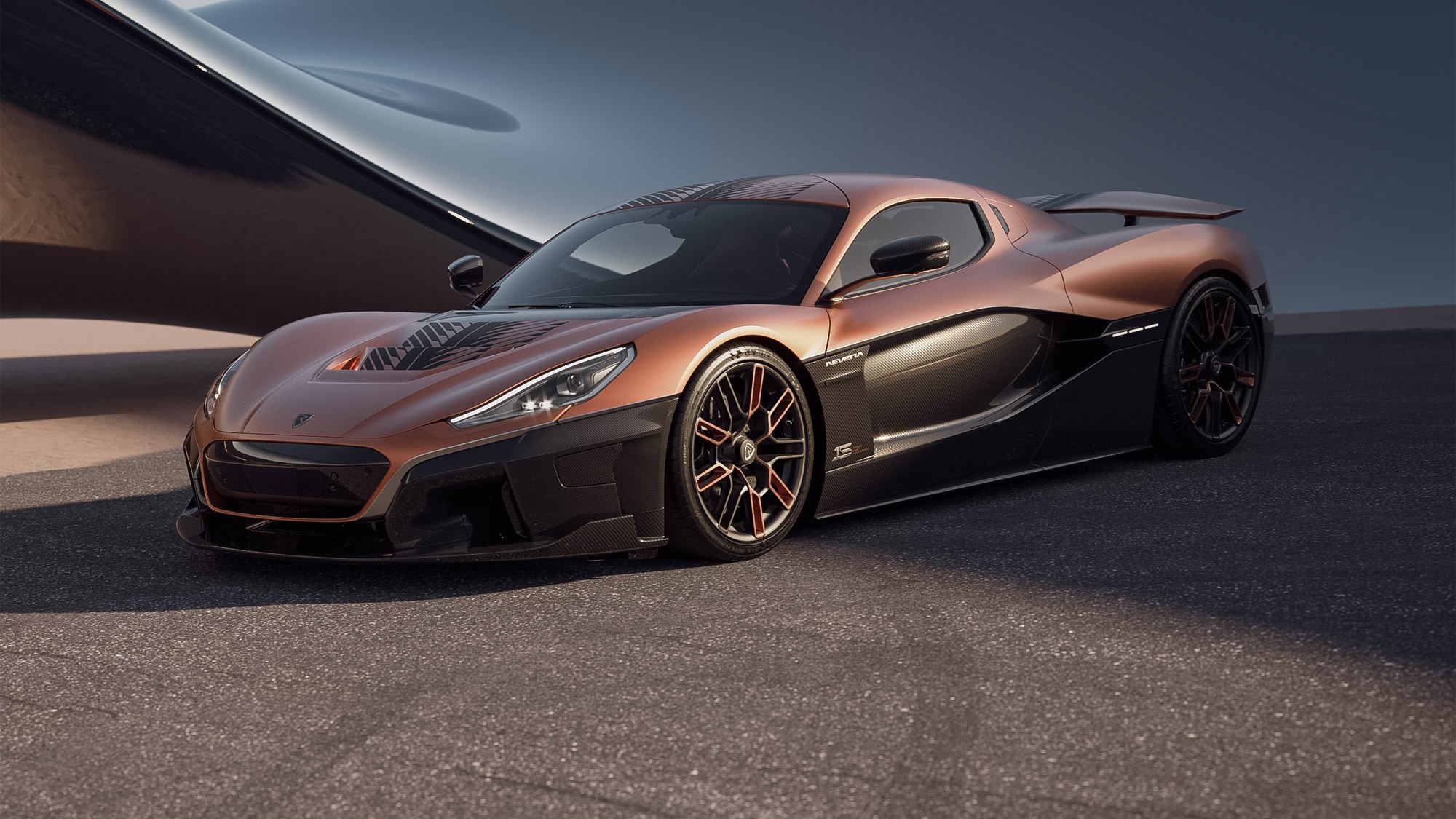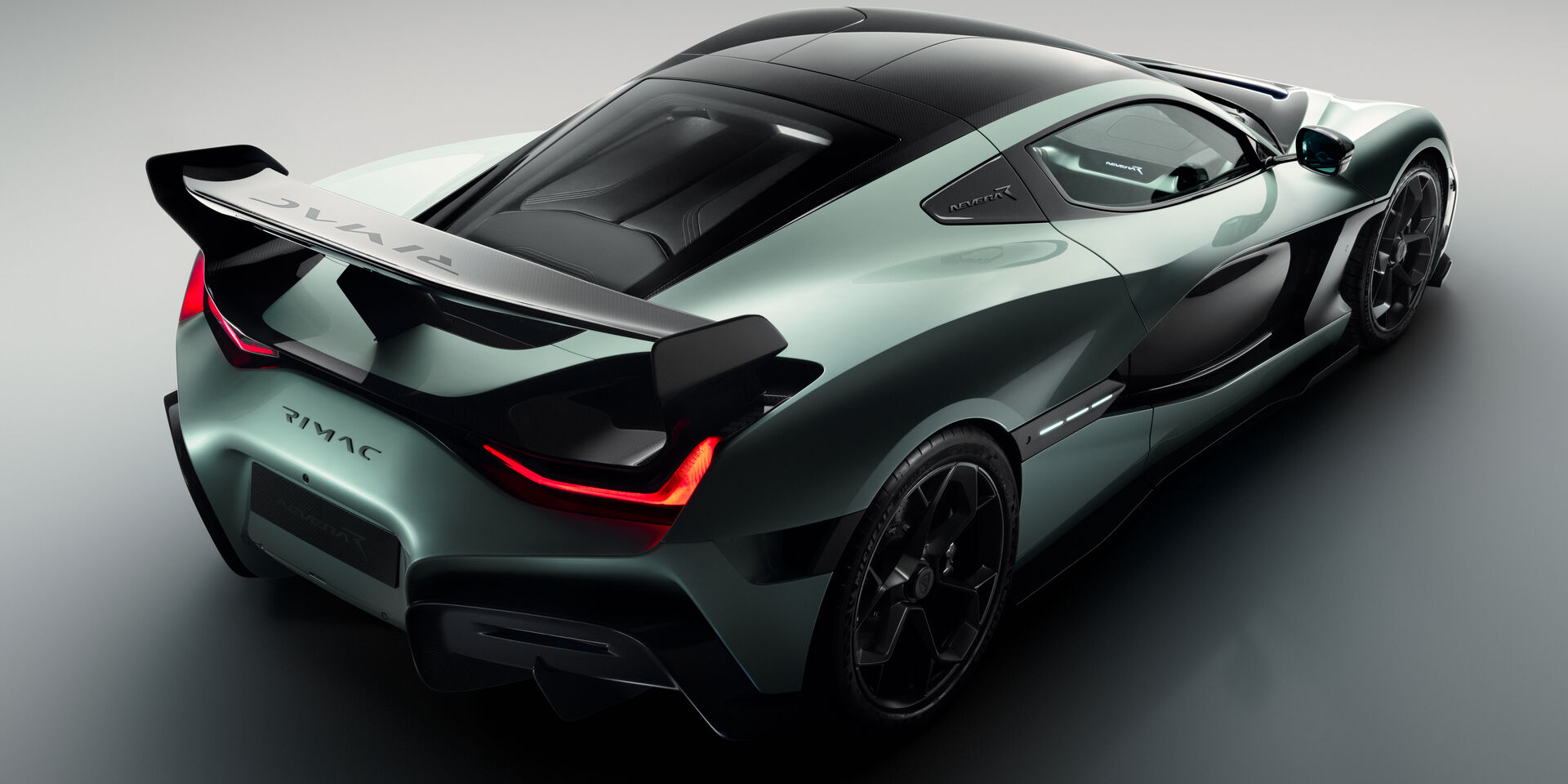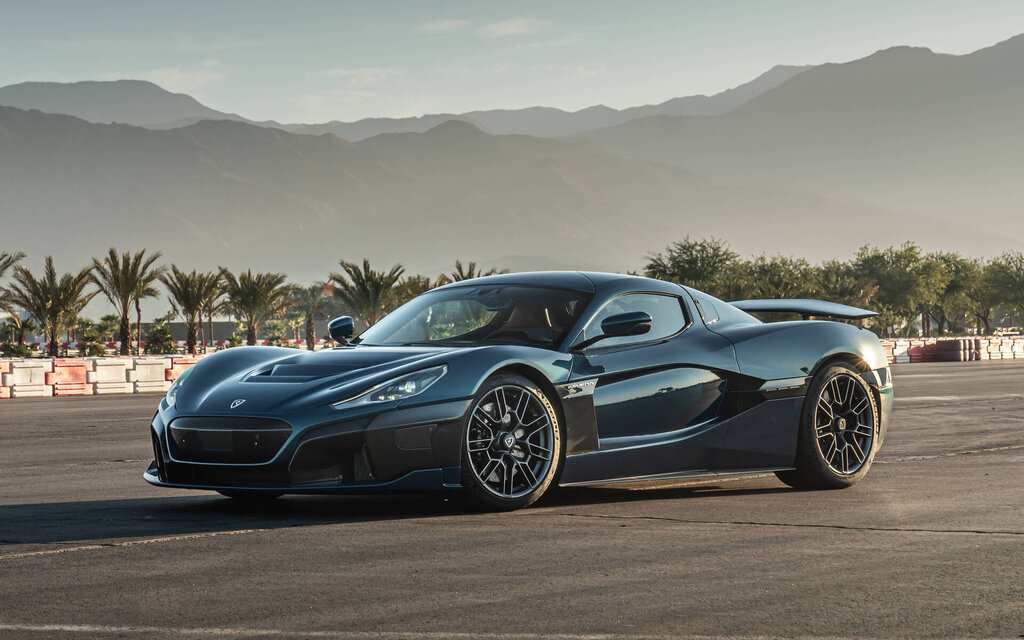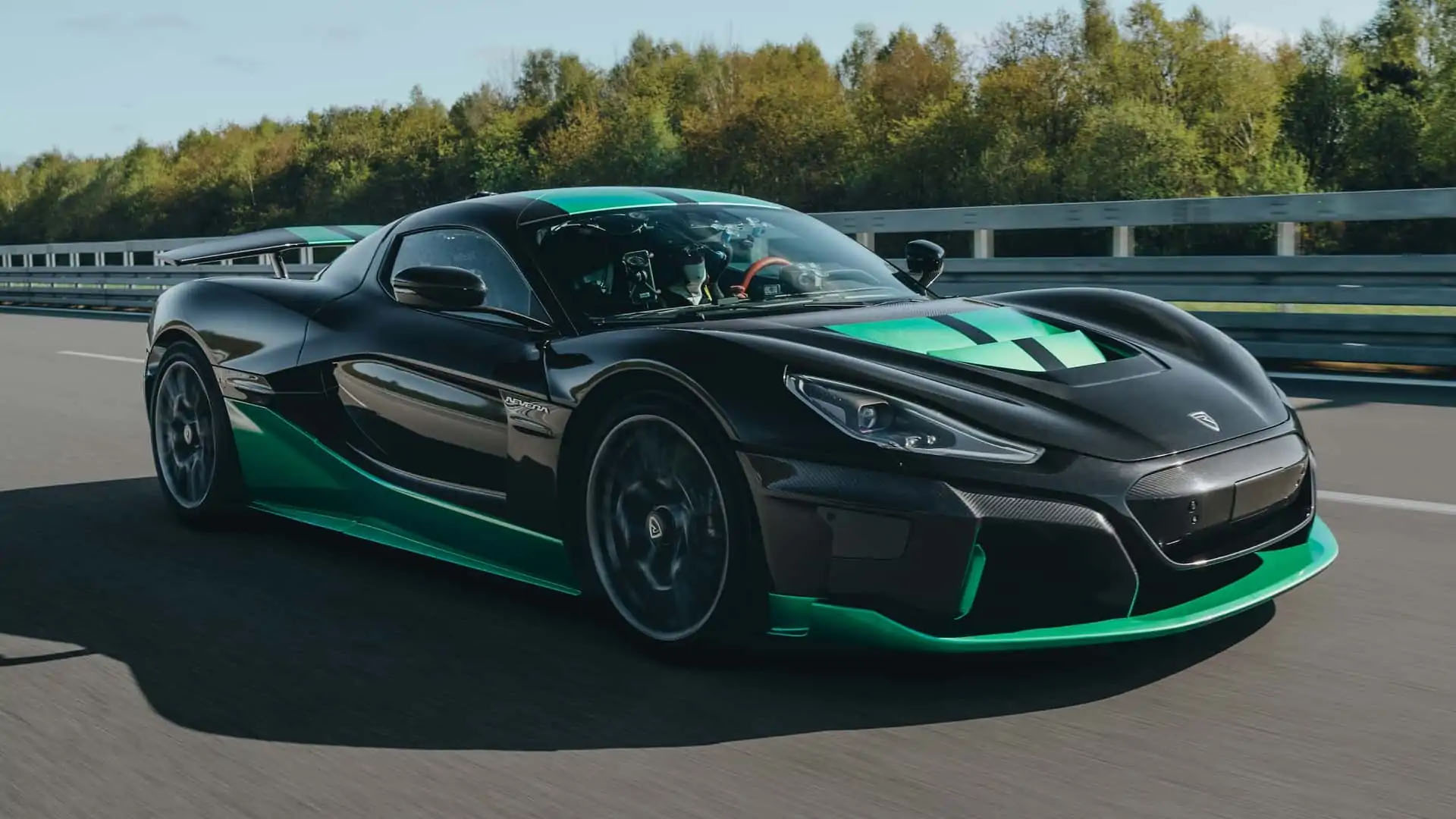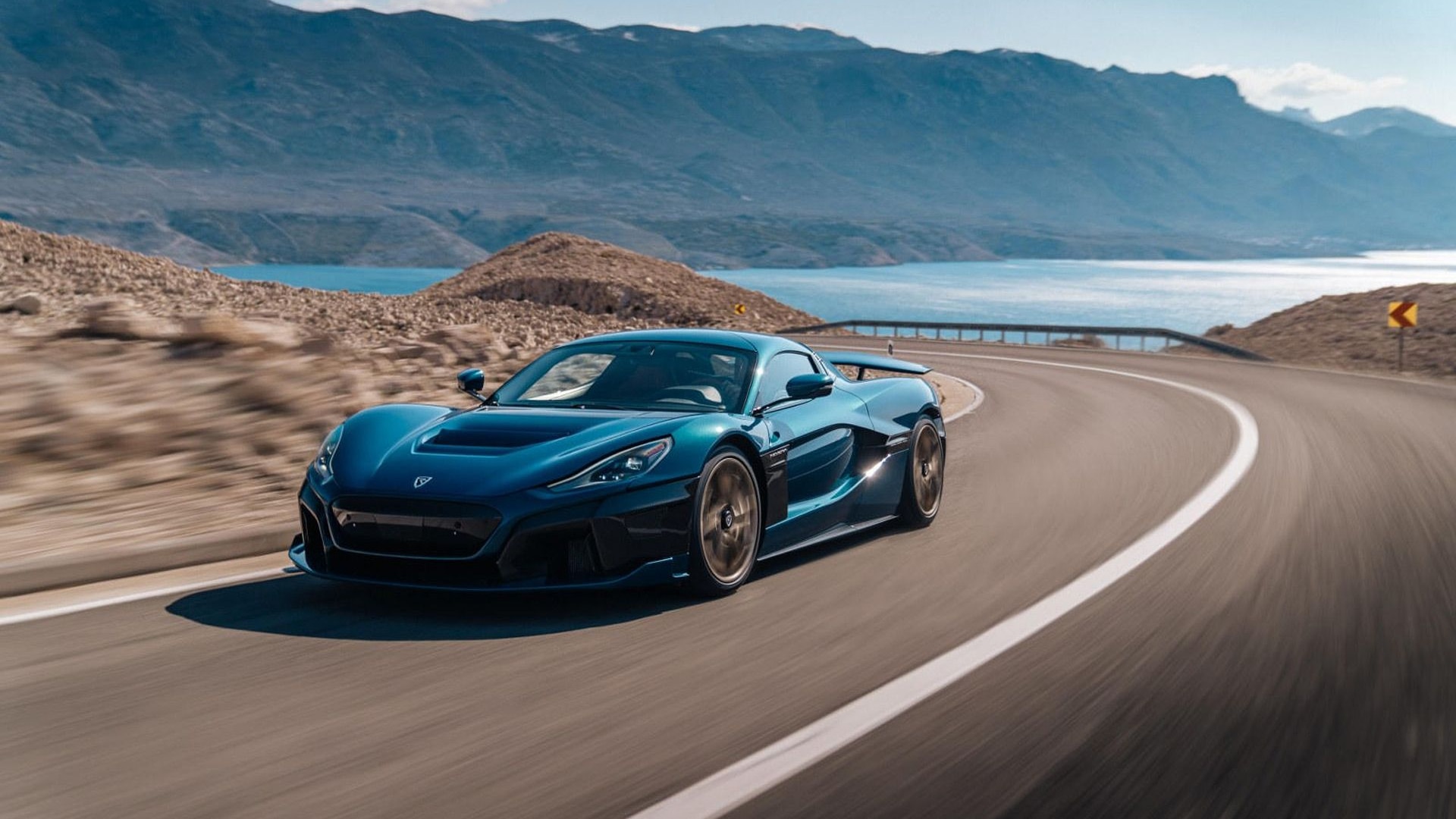
The Nevera rewrote the electric performance record book. The Nevera R has just begun customer deliveries with 2,107 hp on tap. And Mate Rimac's stewardship of Bugatti has kept the Croatian brand spoken of in the same breath as the most storied names in motoring. All of that is true — and none of it is the whole story anymore.
Because the most consequential thing Rimac will build in 2026 may not be the car on your poster. It may be the battery rack humming inside an AI data center.
From Full Throttle to Server Rack
That shift became explicit with the news that Rimac Technology has partnered with ECOBLOX to bring its battery and power electronics expertise to AI data centers. It reads strangely for anyone who still files Rimac under "hypercar manufacturer" — until you remember what the company actually built its reputation on.
It was never the shape of the bodywork. It was the management of enormous electrical loads: extracting brutal performance from a battery pack without letting it destroy itself, and doing it with software and power electronics that are genuinely world-class. A hypercar discharging at full throttle is, in engineering terms, a violent stress test of the same fundamentals that govern grid-scale energy storage and data center resilience.
Why AI Needs What Rimac Already Knows
The timing is not accidental. AI's expansion has created an infrastructure crisis in miniature: compute clusters demand vast, stable, rapidly responsive power, and the grid was not designed for it. Data center operators are hunting for storage and power management solutions that can absorb spikes, buffer supply, and keep operating through interruptions.
Rimac's battery and power electronics technology — refined under the most unforgiving conditions motorsport and hypercar engineering can impose — maps onto that problem with unusual precision. The ECOBLOX partnership is the clearest signal yet that Rimac views its addressable market as anything but automotive.
The Hypercar Still Points the Way
Meanwhile, the automotive side of the business continues to push the frontier that made all of this credible. Rimac's collaboration with ProLogium on next-generation solid-state battery development has advanced to a cell-to-pack concept, with vehicle testing targeted for 2028.
That program matters for the same reason the data center pivot does: both are downstream of the same obsession with energy density, thermal behavior, and charging speed. A solid-state pack that is lighter and charges faster is a hypercar advantage, an EV industry breakthrough, and a commercial asset — all at once. The engineering is not a side project. It is the through-line.
A Simpler Structure, a Broader Ambition
The corporate backdrop reinforces the ambition. Hendrik A. Malinowski has taken a new role as CCO of Bugatti Rimac, and Porsche has completed its exit from the Bugatti Rimac shareholding while lifting its 2026 cash flow outlook. Porsche's departure is not a retreat from Rimac's story; it is a simplification of a structure that had grown complicated, leaving Mate Rimac with clearer control of a company whose interests now span hypercars, tier-one EV components, and stationary energy infrastructure.
What makes Rimac worth watching is precisely this refusal to stay in one lane. The Bugatti Tourbillon, a $4 million machine that Mate Rimac himself has been photographed pushing through snow and handing over to stunned car spotters, represents the brand's emotional peak. But the company's financial future may be decided in rooms full of server racks, where the selling points are uptime, thermal headroom, and cycle life rather than zero-to-sixty.
The same engineering culture that produced the Nevera is now being pointed at the least glamorous and most lucrative problem in technology. There is a version of this story in which Rimac becomes a battery supplier that happens to build hypercars — a company whose most famous products advertise a technology its real customers buy by the megawatt. Given the trajectory of the past twelve months, that version looks less like a thought experiment and more like a forecast.
The hypercar got Rimac noticed. The battery business is what will make it enormous.