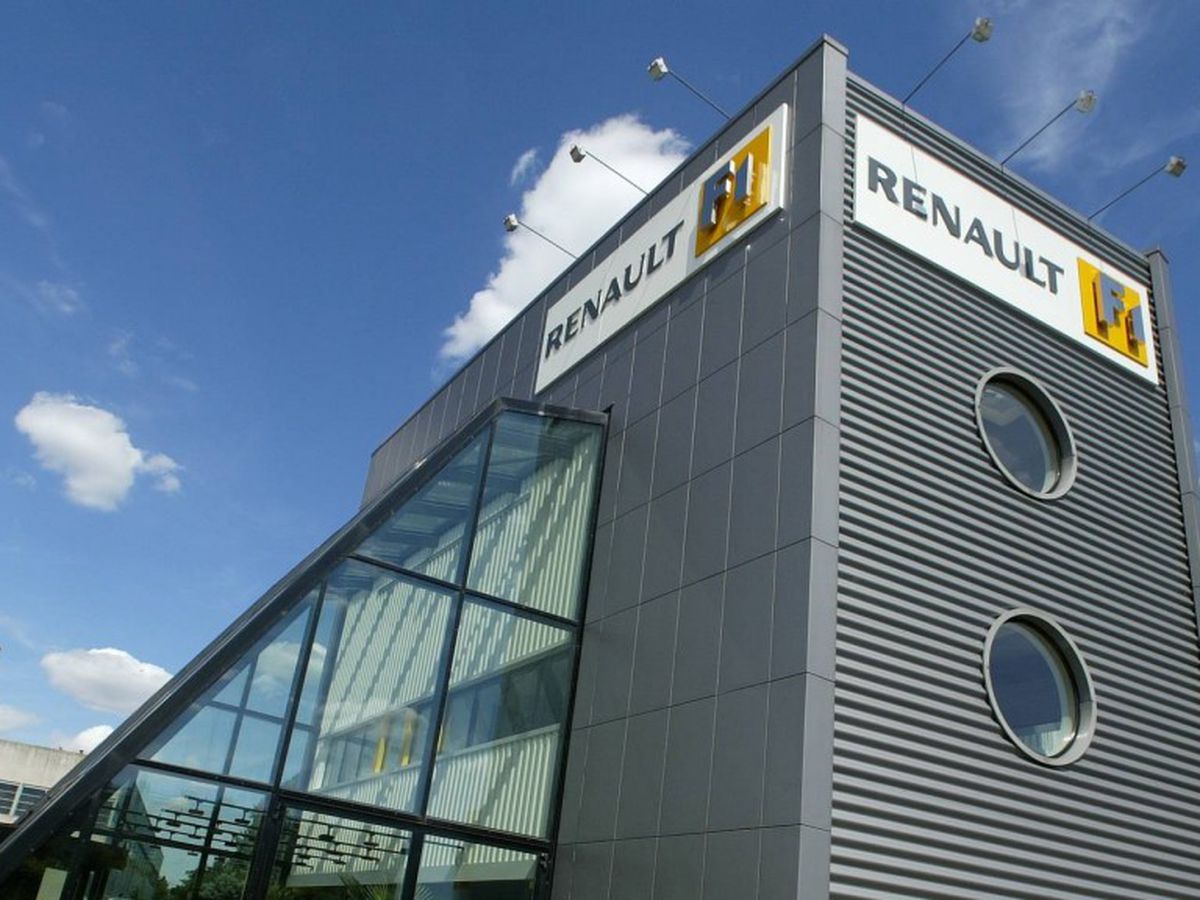
The sale of Renault's historic Viry-Châtillon engine facility to Belgian engineering firm Dumarey has been framed, understandably, as a Formula 1 story. The headlines read as motorsport obituaries: the end of a works engine programme, the final chapter in Alpine's troubled power-unit saga, another piece of French performance heritage handed to a foreign buyer.
But the more consequential story is not about grand prix grids at all. It is about what Renault is quietly telling the market regarding the traditional sedan — and the sophisticated engineering infrastructure once built to sustain it.
More Than an F1 Workshop
Viry was never merely an F1 workshop. For decades it functioned as Renault's high-performance powertrain brain trust, the place where combustion expertise, thermal management and packaging discipline were refined and then trickled into road cars.
The sale to Dumarey, which preserves roughly 150 jobs, is a genuinely pragmatic outcome and a credit to the negotiators. Yet it also formalises a strategic pivot: Renault no longer believes it needs a captive, world-class engine development centre to compete. The company is betting that its future competitiveness lies in electric platforms, software and cost discipline — not in the kind of powertrain depth that Viry represented.
Rational Bets, Sharp Segmentation
That bet makes sense for hatchbacks and crossovers. The Renault 5 E-Tech and Scenic E-Tech are precisely the products Renault should be building: compact, platform-efficient, emotionally appealing. The contrast with sibling Dacia, whose Bigster offers rugged SUV presence at a fraction of the outlay, shows how ruthlessly the group is now segmenting its capital. When your growth story is built on retro EVs and value-focused SUVs, a legacy engine centre becomes an expensive luxury rather than a strategic asset.
The Sedan as Casualty
The sedan, however, is the casualty of this logic. Saloons demand refinement, long-distance efficiency and a depth of powertrain engineering that has historically justified brands like Renault investing in serious combustion and hybrid capability. Even as Renault pursues hybridised powertrains — including its work with Geely on turbo units engineered to run while fully submerged, a remarkable piece of durability engineering — the institutional home for that expertise is being dispersed. Renault is not abandoning engineering excellence; it is outsourcing the conditions that once produced it.
Ambition and Its Awkward Timing
There is a further irony in the timing. Renault's CEO has signalled openness to a Ford partnership, but only if the Blue Oval's EVs are meaningfully differentiated. That is the language of a company shopping for platforms and scale rather than developing them alone. Meanwhile Alpine's CEO insists the electric A110 "has to be perfect" — a statement of ambition that sits awkwardly beside the disposal of the facility that gave the marque its performance credibility. And Adrian Newey's recent remarks about his Renault-era frustrations serve as a reminder that the relationship between Renault and its own engineering heritage has long been complicated.
None of this is mismanagement. The sale of Viry is a rational, well-executed decision by a company reading the market correctly. Defence contracts and partnerships offer niches, not lifelines, and Renault knows it.
But rational decisions have consequences, and one of them is this: a brand that once defined the European family sedan through engine-led engineering now has less institutional reason — and less institutional capacity — to build the next great one. Renault will sell excellent electric crossovers and clever retro hatchbacks. The sedan, increasingly, is someone else's problem.