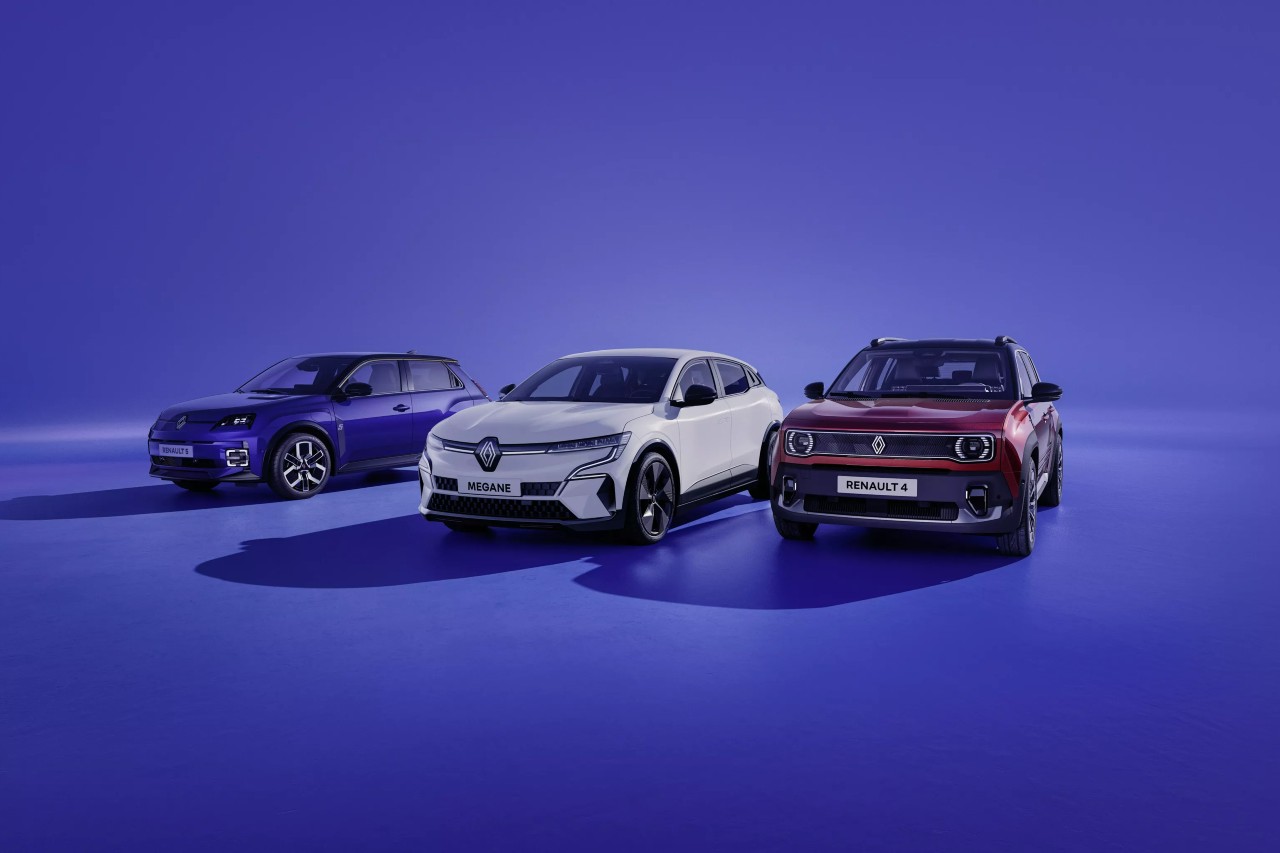
The headlines from Berlin and Paris read like a diplomatic triumph. For Renault, they carry the chill of exclusion. A freshly struck French-German automotive accord, reported by Le Monde, has pulled off a delicate feat of realpolitik: shielding Stellantis from the worst of Europe's tightening emissions regime while leaving Renault conspicuously exposed. For a marque whose recovery has been built on disciplined margins and a carefully pruned sedan and crossover line-up, the political geometry has suddenly turned unfavourable — and the stakes run well beyond the next quarterly earnings call.
The logic of the deal is uncomfortable for Boulogne-Billancourt. By carving out relief for Stellantis, the accord implicitly acknowledges that scale, not agility, is what Brussels and Berlin are willing to underwrite. Renault, which has spent the past several years shrinking its footprint to fund electrification, now finds itself in the worst of both worlds: too small to command the kind of political accommodation granted to its larger rival, yet too dependent on European volumes to shrug off the cost of compliance. The sedan — already the most fragile body style in the segment — sits directly in the blast radius.
A Defensive Moat, Not an Offensive
It is against this backdrop that Renault's €10 billion-plus commitment to French EV and affordable-car production should be read. Confirmed by CEO Luca de Meo and reported by Reuters, the programme is not expansionism; it is a defensive moat. The investment is designed to keep the industrial base viable and the entry-level offering credible as regulatory pressure mounts. Yet a capital programme of that magnitude demands volume — and volume is precisely what a sidelined sedan strategy cannot reliably deliver.
The irony is that Renault's product offensive has rarely looked stronger. The Scenic E-Tech has been upgraded for improved comfort, connectivity and electric performance. The E-Space concept has revived the minivan as a serious proposition. The 8 Gordini concept is generating genuine production speculation. At the Paris Motor Show, the group's ambition was on full display. But concept cars and halo models do not pay for compliance. The traditional three-box sedan — the segment where Renault once built its European credibility — is being quietly squeezed out of the conversation, and the French-German pact offers no lifeline.
De Meo's Battlefield
De Meo has not been silent. His characterisation of the UK's petrol-car ban as "stupid," reported by The Independent, and his alignment with Stellantis in backing EU-style industry protection for Britain, per The Guardian, reveal a CEO who understands that the regulatory battlefield now matters as much as the showroom. There is a certain consistency here: Renault is arguing for breathing room on combustion while simultaneously pouring billions into electric production. That is not contradiction — it is the arithmetic of transition under political uncertainty.
What makes the current moment so precarious is that Renault is being asked to compete on two fronts at once. In the volume market, the Duster — now compared directly against hybrid rivals such as the Maruti Victoris — must carry the brand's affordability credentials, even as it distances itself from the diesel heritage that once sold it. In the strategic arena, the company is navigating partnerships and political alignments that will determine whether its sedans and crossovers have a viable regulatory home. The Financial Times' observation that Renault has moved "from driveshafts to drones" captures the ambition, but ambition is not the same as leverage.
The Asterisk on Every Launch
The French-German accord may yet be revised, and Renault's investment in France gives it a credible industrial argument to make in Brussels. But the signal sent this month is unmistakable: in the new European order, the companies that shape the rules are the ones with the scale to demand exemptions. Renault's sedan strategy — and the broader passenger-car architecture built around it — now depends less on engineering brilliance than on whether Paris can secure for its champion the same consideration it has just extended to Stellantis. Until that question is answered, every E-Tech launch and every Gordini revival carries an asterisk.
For a brand that has always sold driving feel and design intelligence rather than sheer bulk, that is an unfamiliar position. Renault's philosophy — agile cars, clever packaging, a certain French flair — was never built for a game decided by political weight. But the game has changed, and the marque now has to prove that agility can survive a fight measured in scale.