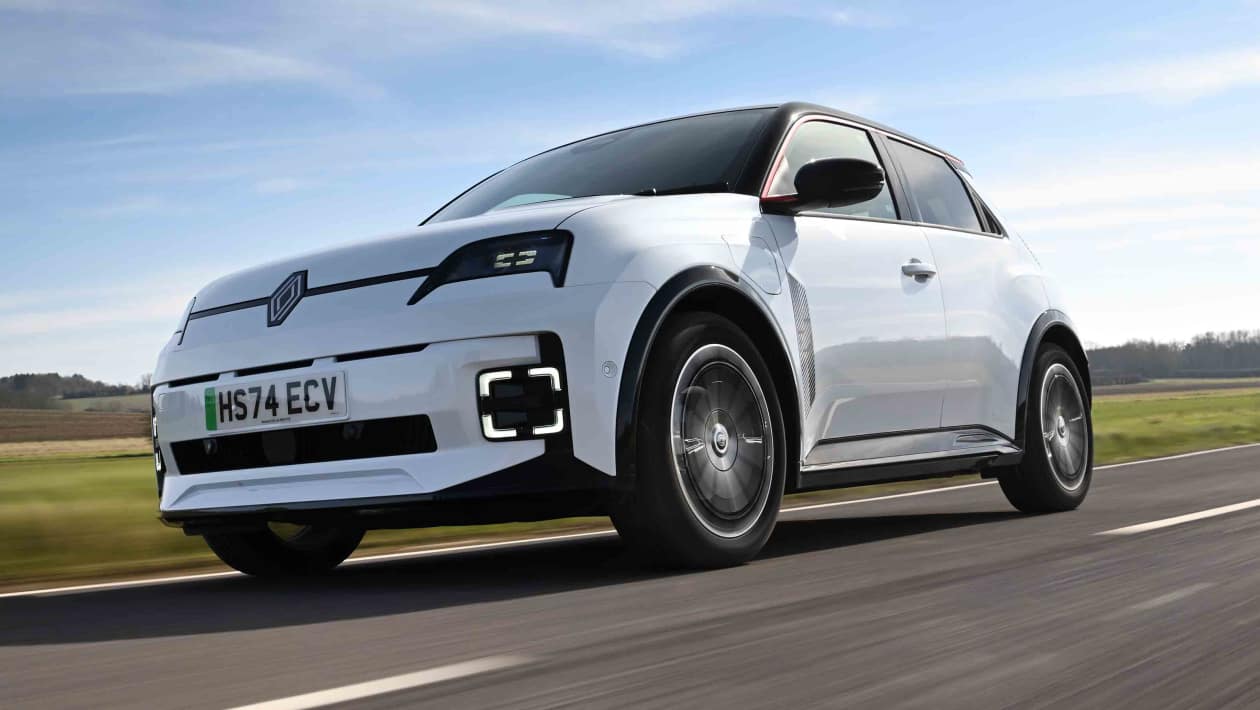
Renault has spent the better part of a decade telling us the future is electric. This week, it finally told us what that future costs — and, more intriguingly, what it sounds like when a 1960s rally icon gets a 270-horsepower electric heart transplant.
On one side of the garage sits the Renault 8 Gordini Concept, a rear-wheel-drive electric rally machine that resurrects one of the most beloved French performance nameplates of the 1960s. On the other sits the freshly updated Megane E-Tech, now available in the UK from £28,245 on the road after qualifying for the maximum electric car grant — a £3,750 price cut that transforms Renault's family hatchback into one of the sharpest value propositions in the segment. Sentiment and pragmatism, sharing a showroom. That's Renault in a nutshell.
The Gordini Returns, This Time on Silent Running
The original Renault 8 Gordini was the car that democratised speed for a generation of French drivers — a lightweight, rear-engined saloon that terrorised rally stages and built a legend on modest horsepower and enormous charisma. The concept's 270 hp electric powertrain and rear-wheel-drive layout are a deliberate, affectionate nod to that lineage.
The choice of an electric rally format is shrewd. Rallying has always been where Renault's engineering ambition meets its marketing instinct, and an electrified Gordini badge gives the brand a performance halo that the Renault 5 Turbo 3E alone cannot sustain. Where the 5 Turbo 3E courts the nostalgia of the Group B faithful, the Gordini concept speaks to something rawer: the idea that going fast doesn't require a soundtrack of exploding hydrocarbons, just clever packaging and instant torque. It is, in essence, a rally car for a generation that grew up on screens rather than spectators' banks — and Renault knows exactly what it's doing by putting the Gordini name on it.
The Megane's Quiet Offensive
Yet the more consequential news is the Megane's repositioning. The updated Megane E-Tech arrives with more range, faster charging, and a price that undercuts much of the mainstream EV competition in Britain. Renault has read the market correctly: with EV demand softening across several European markets, the battle is no longer won on novelty but on value.
Slashing drive-away prices is not a sign of weakness but of manufacturing confidence. It complements the aggressive deal-making already visible on the Symbioz, which recently saw its drive-away pricing cut by $4,000. Renault is signalling that it can build electric cars at scale and sell them at prices ordinary families can stomach — a claim few legacy manufacturers can make with a straight face. The Megane may not be the headline-grabber, but it's the car that pays the bills.
Ten Billion Euros and a Bet on France
Underpinning both moves is a staggering commitment to French industrial capacity. CEO Luca de Meo has confirmed that Renault will invest over €10 billion in France, directed squarely at EVs and affordable cars, with the caveat that political stability must permit it. That figure — reported variously as $11 billion — is not a vanity project.
It is the foundation on which the Gordini halo and the Megane's value proposition both rest. Without domestic battery production, without the ElectriCity cluster in northern France, neither the rally concept nor the price cut would be credible. Renault is betting that manufacturing sovereignty is the ultimate performance upgrade — and it's putting its money where its motor is.
The Numbers Are Starting to Sing
The commercial results are beginning to vindicate the strategy. In France, September 2026 saw EV sales surge 108.1% to a record 41.7% market share, with the Renault 5, the Twingo, and Tesla's Model Y leading the charge. Renault's own lineup is now doing the heavy lifting in its home market's electrification, and that momentum is precisely what the Megane's price adjustment is designed to export to Britain and beyond.
There is something quietly brilliant about Renault's current posture. It is simultaneously the most nostalgic and the most pragmatic player in European motoring — reviving a rear-engined rally legend as a 270 hp electric rocket while quietly shaving thousands off the price of a family hatchback. The Gordini concept will draw the headlines and the Instagram posts. The Megane's new price will sell the cars. And the €10 billion investment will determine whether either matters in ten years' time.
Renault, it seems, is done waiting for the electric future to arrive on someone else's terms. It's building the future in France, pricing it for Britain, and wrapping it in a Gordini badge for the romantics. That's not just a product strategy. That's a philosophy — and it's one worth watching closely.