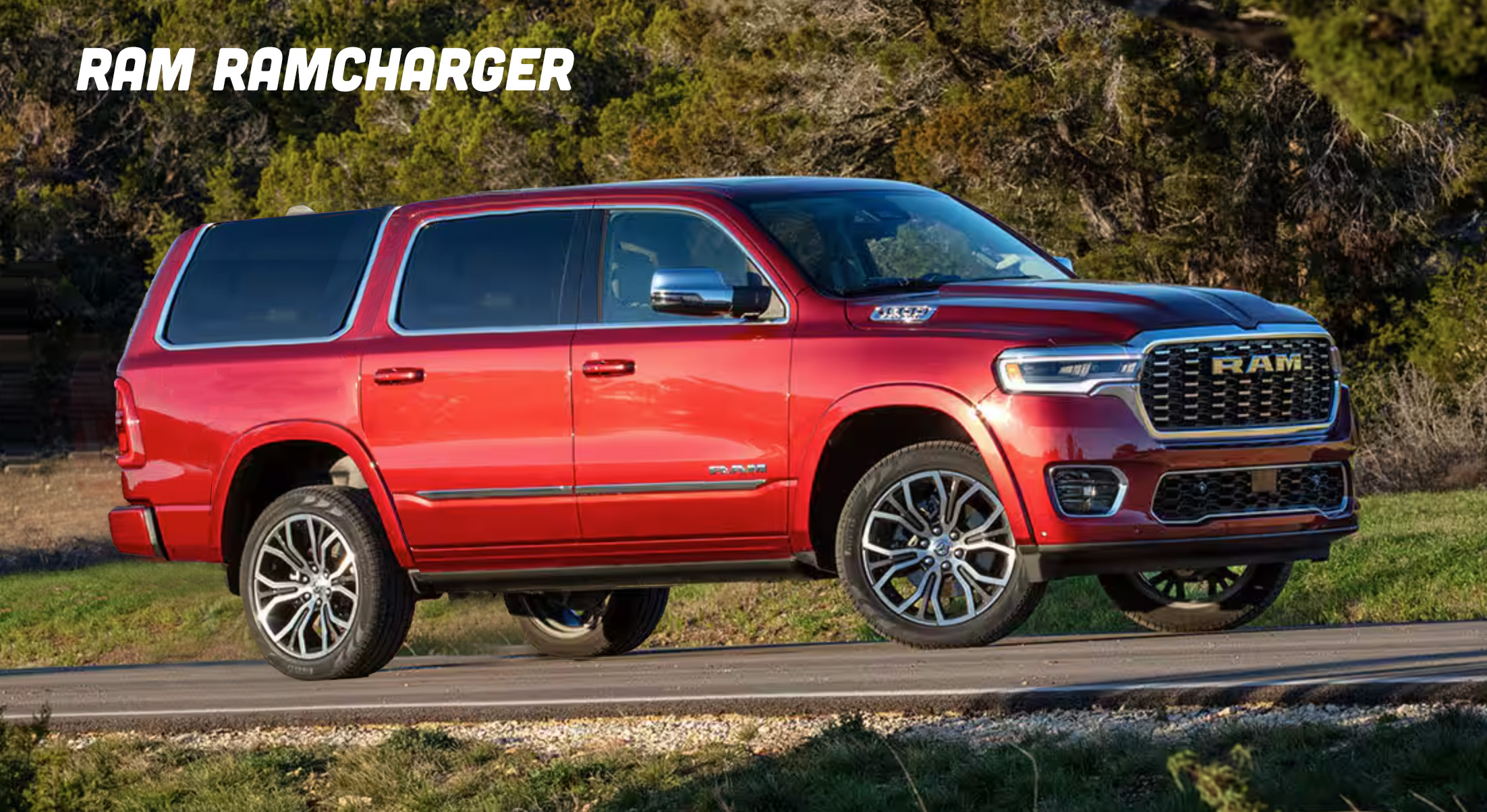
Ram built its modern reputation on noise. The supercharger whine of a TRX, the blunt swagger of a 1500 Rebel—these are trucks that announce themselves and apologize for nothing. So there's a particular irony in the position Ram now occupies. According to MotorTrend and Autoblog, Ram and Jeep are being cast as the rescue squad for a parent company that has spent two years absorbing criticism over inventory mismanagement, slipping dealer relations, and a North American product cadence that left showrooms thin.
For any brand, that's an unenviable role. For Ram, it means being asked to demonstrate something far less cinematic than horsepower: institutional competence.
The Business Case Writes Itself
The logic behind a Ram SUV is hard to argue with. Ram's showroom is effectively a one-trick portfolio in an industry where the pickup truck, however profitable, is a narrowing foundation. Rivals have already proven the formula—body-on-frame SUVs sharing truck architecture deliver margin without the development cost of a clean-sheet platform. A three-row Ram utility vehicle built atop the STLA Frame architecture is exactly the sort of logical adjacency product planners dream about.
Yet logic has not been Stellantis's reliable companion of late. And that's where the conversation shifts from product strategy to credibility.
The Skeptics Aren't the Loyalists
The buyers Ram must win over are not the brand faithful, who will debate tow ratings and axle ratios with affectionate obsession. They're the broader class of customers and dealers who have watched Stellantis's North American operation stumble—and who now apply a discount to every promise the corporation makes. When MotorTrend frames new Ram and Jeep models as having "a lot to prove," it's capturing a sentiment that has calcified into conventional wisdom. A new Ram SUV wouldn't enter a vacuum. It would enter a market already asking whether the company behind it can execute on time, at quality, and with the dealer support that premium-priced utilities demand.
Consider the texture of the coverage Ram generates. A Yahoo Autos report on a mechanic diagnosing a collapsed lifter on a 2019 Ram 1500 is not a scandal—but it circulates in the same feed as questions about whether Ram can anchor a corporate turnaround. Every reliability anecdote, every service-bay complaint, becomes part of the evidentiary record. The Autopian's wry clarification that a Cummins-powered truck is "NOT a Ram" lands because the brand's identity is so tightly bound to its powertrains that enthusiasts police the boundaries themselves. That's passion, and passion is an asset. It's also scrutiny.
Discipline Over Bravado
The path forward demands a discipline Ram hasn't always displayed. An SUV must arrive with the build quality to survive comparison against Jeep's Grand Cherokee and Wagoneer siblings, which occupy adjacent territory and have themselves faced skepticism. It must be priced with the restraint of a company that understands it's asking customers for trust, not just a deposit. And it must launch with the kind of transparent, on-schedule execution that repairs credibility rather than merely asserting it. Marketing bravado—Ram's historic strength—cannot paper over operational doubt.
A Precedent Worth Remembering
There is an encouraging precedent in the brand's own history. Ram's separation from Dodge in 2010 was itself an act of corporate conviction, and the run that followed—the 1500's ride-quality revolution, the Rebel's lifestyle positioning, the TRX's sheer audacity—demonstrated what focused investment can produce. The talent and the architectural toolkit remain. What remains unproven is whether the parent company can supply the stability that talent requires.
For Stellantis, Ram's SUV future is less a product question than a referendum. Deliver a credible, well-built, fairly priced utility vehicle on schedule, and the brand will have done more than diversify a portfolio—it will have begun rebuilding the institutional confidence the corporation has spent two years eroding. Stumble, and the skeptics will conclude they were right all along; the rescue narrative will curdle into confirmation.
Ram has always sold itself on capability. Now it must demonstrate the quieter kind: the ability to keep a promise.