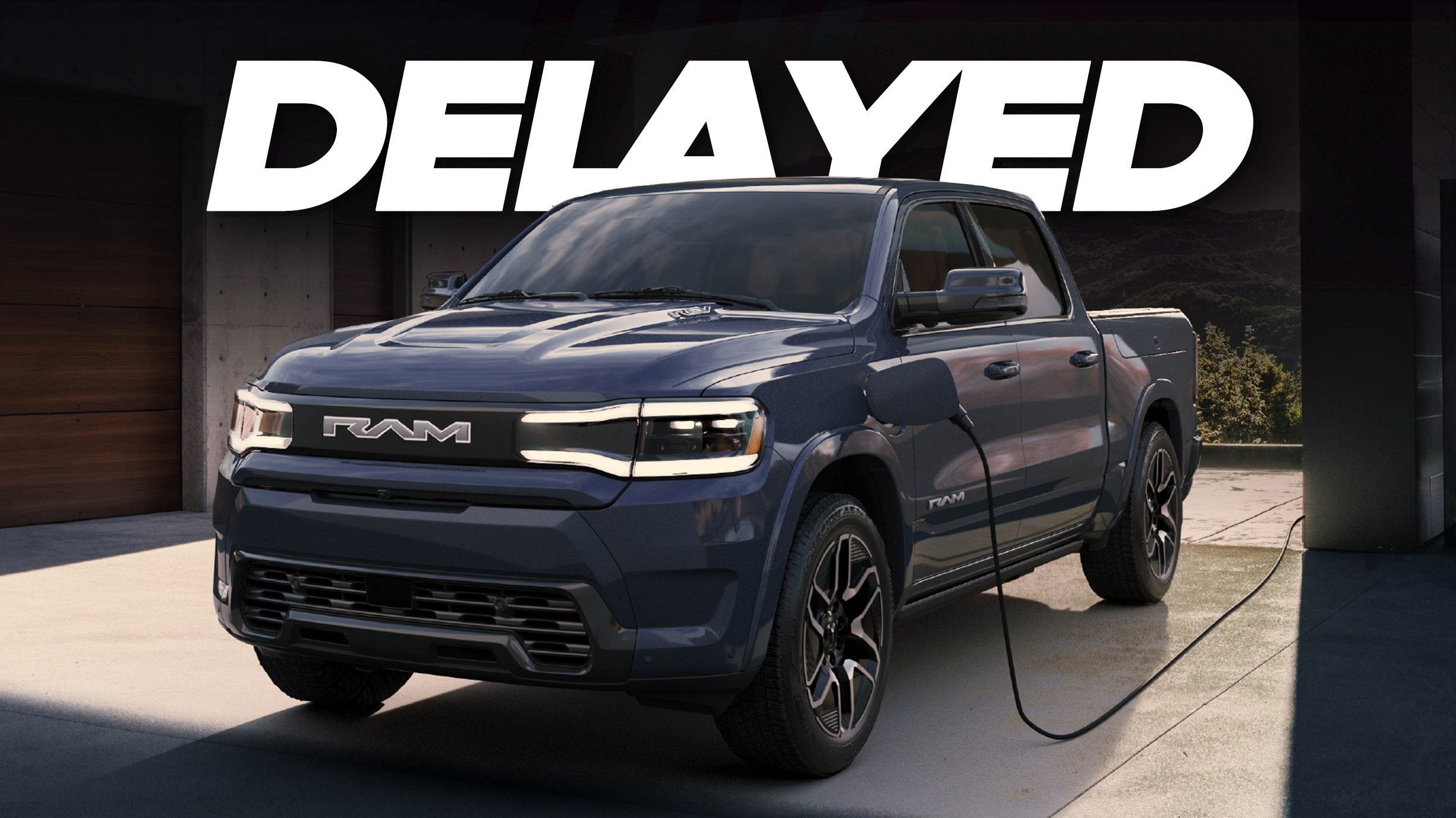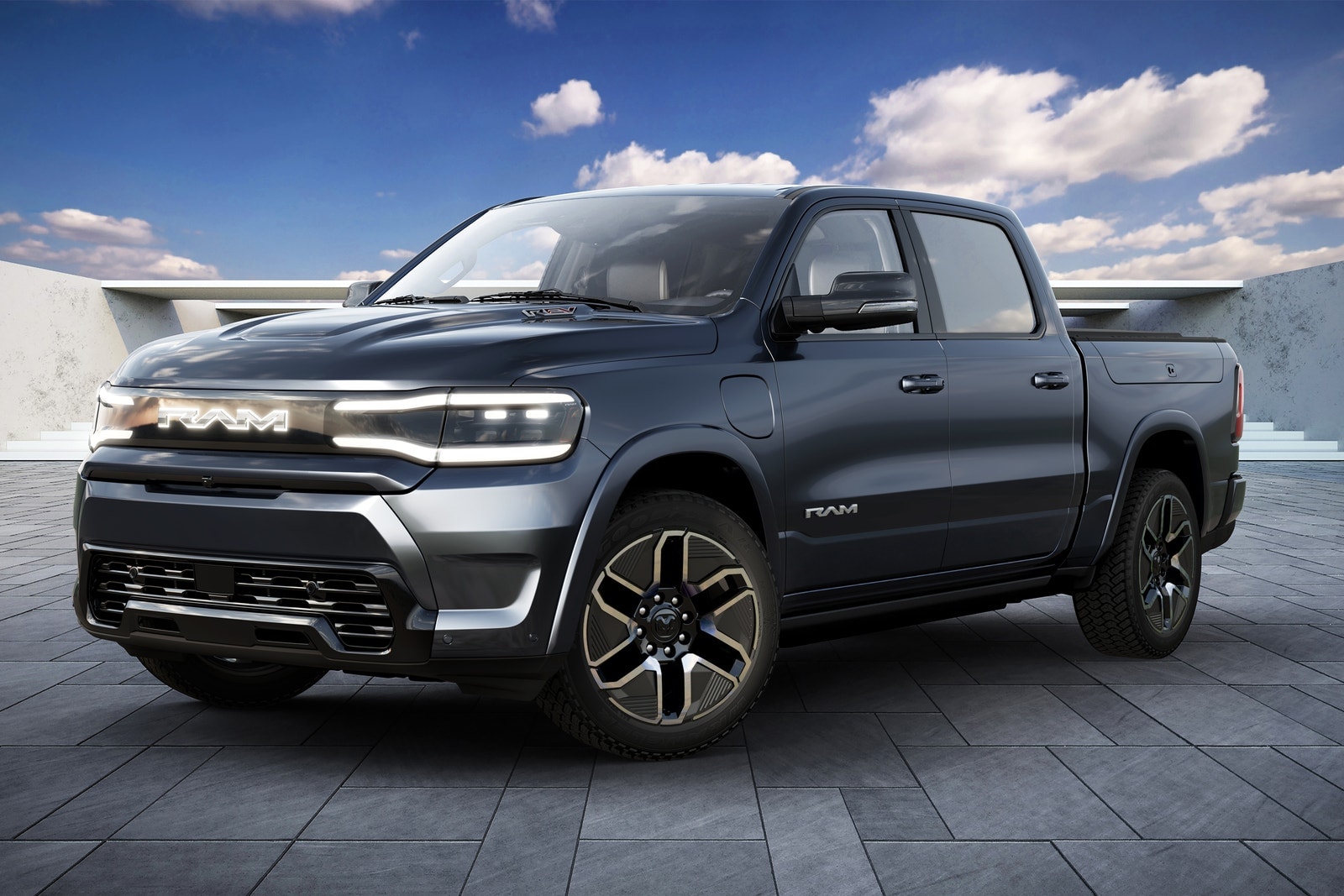
There's a particular sound a truck makes when it's stalling out, and Ram seems to be making it in slow motion. The Ram 1500 REV has slipped again — and this time the delay stretches alongside a promised wave of some sixty new models still to come. That's not a product roadmap. That's a wish list written on a napkin at a dealer conference, and the ink is starting to run.
For a brand that spent the past decade positioning itself as the boldest of Detroit's truck triumvirate, the repeated postponement of its flagship electric pickup is beginning to look less like prudent engineering and more like a crisis of conviction. Ram was never the first to promise an electric truck, but it was among the loudest. The 1500 REV arrived on a stage with range figures, towing claims, and a silhouette that promised familiar Ram bulk without the fuel stops. What followed has been a masterclass in the gap between a reveal and a reality.
The Reveal-to-Reality Gap
Each delay has been framed as a refinement, a recalibration, a decision to get it right rather than first. That's a defensible position in isolation. Repeated often enough, it becomes a pattern, and patterns have a way of calcifying into reputations. Every slipped date hands another rhetorical victory to the skeptics who insist electric trucks are a compliance exercise dressed up as a revolution.
Meanwhile, the internal-combustion side of the house is thriving in a way that quietly undercuts the electric narrative. MotorTrend recently tested the 2027 Ram TRX SRT and found it quicker than the original TRX — itself no slouch. CarBuzz has been dissecting the gulf between Ram's twin-turbocharged sixes, the 420-horsepower and 540-horsepower variants that now anchor the mainstream lineup. Even Motor1's review of the current Ram 1500 concedes that it isn't better with a V8, but it is charming — a backhanded compliment that speaks to something real.
The Combustion Engine Still Has a Pulse
That charm matters. Ram still knows how to build a truck people want, even when that truck isn't the one the marketing department promised. The TRX SRT is a statement of intent — a supercharged middle finger to the idea that performance must come with a plug. The twin-turbo sixes are quieter about their competence, but they deliver the kind of real-world muscle that keeps dealerships busy.
This is the tension at the heart of Ram's predicament. The brand's identity is built on brawn, on the swagger of a truck that doesn't apologize for its appetites. Electrification asks Ram to trade that swagger for something quieter and more cerebral. The company has yet to demonstrate it can make that trade convincingly. Every delay of the 1500 REV reminds buyers that the old formula still works — and that the new one hasn't arrived yet.
Sixty Models and No Flagship
The sixty-model promise compounds the problem. A pipeline that large implies a brand in transformation, but transformation requires a flagship to lead the charge. Ram's flagship EV keeps missing its cue. Rivals have their electric trucks on the road, accumulating real-world data and real-world customers while Ram accumulates press releases.
The engineering may well be sound. The optics are not. In an industry where momentum is a currency, Ram is spending it on apologies. Reports that a Land Rover Defender pickup could be built by the same parent suggest the manufacturing apparatus is flexible and in demand — proof that the capability exists. But flexibility is not the same as focus, and Ram's electric ambitions increasingly look like a promise made in a different market, one that assumed a smoother road to electrification than the one that actually materialized.
The Road Ahead
None of this means Ram is doomed. The brand retains deep reservoirs of loyalty, a genuinely competitive combustion lineup, and the institutional muscle of its parent company. The Hellcat faithful are still showing up, still buying, still keeping the lights on. But a brand cannot live on nostalgia alone, and the 1500 REV will arrive eventually — the question is whether it will arrive as a statement or as an afterthought.
Ram built its reputation on never being late to a fight. On electric trucks, it is running the risk of being late to its own. The truck that finally shows up may find the party has already moved on — and the Hellcat faithful, bless them, may not have noticed the invitation in the first place.