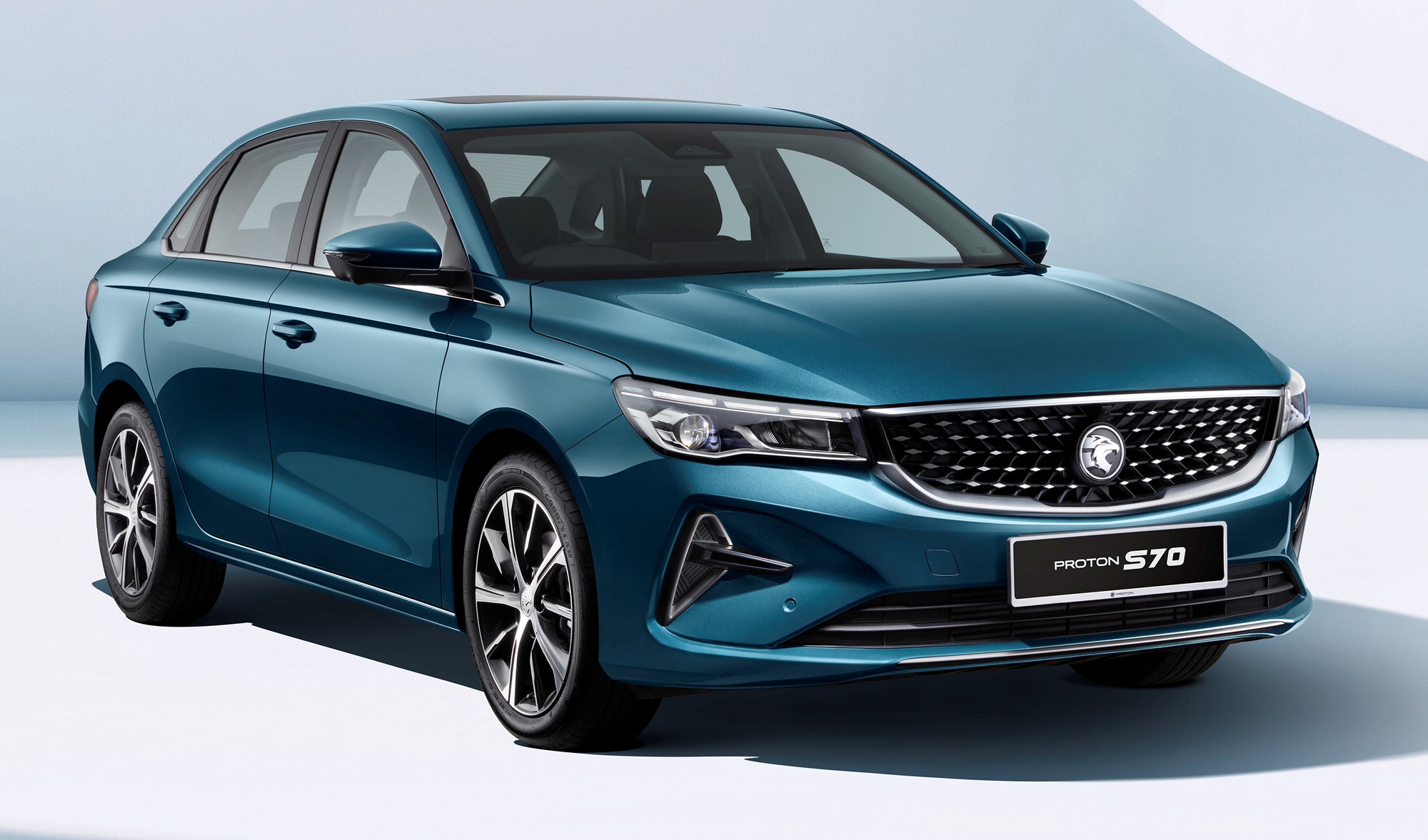
Type "Proton" into a search bar and the internet will hand you a discounted VPN, a compatibility layer for running Windows games on Linux, a particle therapy startup in Florida, or a point-of-view camera rig. What it will not hand you, at least not without a fight, is a sedan. Somewhere beneath that pile of results sits one of Southeast Asia's most storied automotive marques, still building the Saga, the Persona, and the S70 for buyers who already know exactly what they're looking for — and growing steadily invisible to everyone else.
This isn't a minor branding hiccup. It's a structural problem of the digital age, and it's worth taking seriously. A legacy industrial brand is sharing a single, common noun with a constellation of technology companies that have mastered the art of the search result. When Rolling Stone, The Hollywood Reporter, TechRadar, PC Gamer, and Mashable all publish Black Friday deal coverage for Proton VPN in the same news cycle, the automotive Proton doesn't just lose a ranking. It loses the entire frame of reference. A reader hunting for a family sedan gets pitched two years of encrypted browsing at $2.49 a month.
The Name Has Been Colonised
The collision is almost comical in its breadth. Recent headlines put "Proton" at the centre of a labour dispute over AI re-interviewing, a Canadian lawful-access bill, a surveillance-camera mapping project hosted on Swiss servers, and even a reported strike on a plant in Tolyatti. Toss in VKD3D-Proton releases covered by Phoronix and Valve's SteamOS compatibility layers dissected by Ars Technica, and the picture sharpens: the word itself has been taken over. For a carmaker whose brand equity was built over four decades of Malaysian roads, that's a slow-acting corrosion — the kind you don't notice until the metal has thinned.
The Sedans That Refuse to Disappear
Yet the cars endure, and that's the more interesting story. Proton's lineup survives not because it wins the search war — it can't, and it should stop pretending otherwise — but because it operates in a domain where the query isn't a word but a place. Nobody walks into a showroom in Shah Alam or Ipoh because a tech blog sent them. They arrive because a neighbour owns a Saga. Because the service centre is ten minutes away. Because the Persona costs less than the competition and the parts are everywhere. Proton's real search engine is word of mouth, and it remains remarkably well optimised.
Retreat to the Queries That Are Yours
The strategic lesson here is one that other heritage brands sharing common nouns — any company named after a fruit, a planet, or a weather event — would do well to study. You don't beat a better-funded competitor at its own game of generic visibility. You retreat to the queries that are unmistakably yours: Proton Saga price, Proton service centre near me, Proton S70 review. There, the Swiss privacy firm is irrelevant, the Linux compatibility layer is noise, and the Florida proton therapy clinic doesn't exist. The brand reclaims its name simply by attaching it to something no VPN deal can imitate — a car, a dealer network, a warranty.
A Small, Unmeasured Loss
None of this is to say the confusion is harmless. Every prospective buyer who types "Proton" into a browser and lands on a Black Friday promotion is a small, unmeasured loss — a test drive that never happens, a brochure that never gets downloaded. But the sedans are still moving, still financed, still traded in. In an era when a brand's name is merely the starting bid in an auction run by algorithms, Proton's automotive arm has stumbled onto something quietly reassuring: the people who matter were never searching for the word. They were searching for the car. That, more than any ranking, is the philosophy worth building on.


