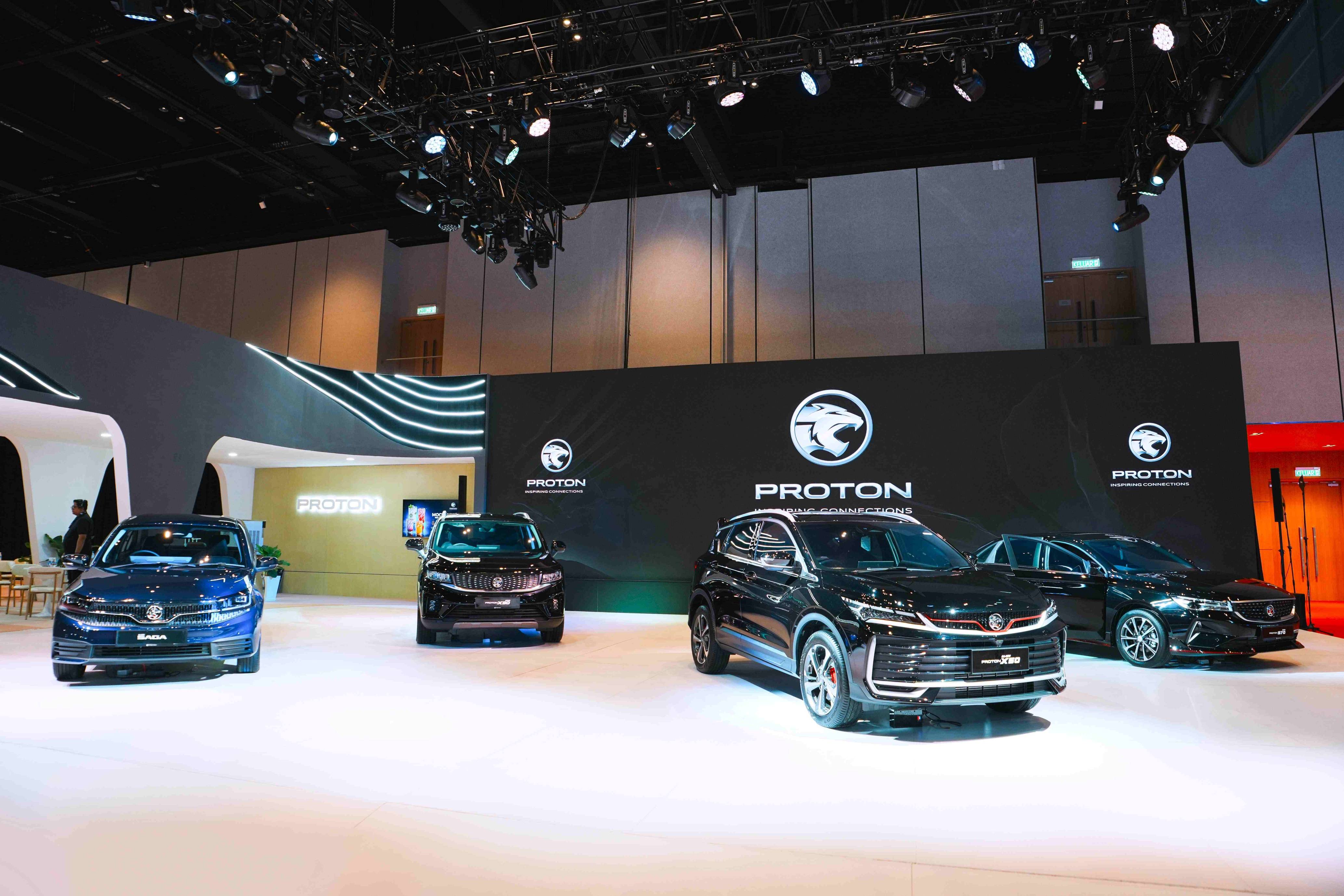
Type "Proton" into any search engine and brace yourself for a masterclass in brand invisibility. The first page won't hand you a single Malaysian sedan. Instead, you'll get a Proton VPN deal at $2.99 a month, a review of Proton Mail as "the inbox Google can't read," a walkthrough of GE-Proton 11-7 and its Wine Wayland upgrades, and maybe a clinical trial update on proton therapy from Penn Medicine. Scroll past the physics papers on proton-coupled electron transfer and the LANSCE proton radiography facility, and somewhere near the bottom, buried like a forgotten spare tyre, sits the company that once built the Proton Saga.
This isn't a marketing problem you can fix with a bigger advertising budget. It's a semantic catastrophe — the kind that no amount of billboard space can reverse.
The word "proton" has been colonised by the most dynamic sectors of the modern economy: privacy software, gaming infrastructure, oncology, particle physics. Meanwhile, the automotive brand that shares the name has been reduced to a footnote in its own search results. When Mashable, Lifehacker, TechRadar, and CNET all publish Proton headlines in a single news cycle, not one of them is writing about a car. That's not bad luck. That's a brand losing its grip on its own name.
A Name That No Longer Belongs to the Road
The irony is exquisitely cruel for a marque that spent decades building national pride in Malaysia. Proton was founded in 1983 as the country's first national carmaker — a symbol of industrial ambition that moved millions of families. But brand equity, unlike sheet metal, depreciates quietly and then all at once. Today, the equity of the word "Proton" belongs to a Swiss privacy company whose VPN division is being bundled with Amazon's new Vega OS Fire TV Sticks, and to a Valve compatibility layer that lets Windows games run on Linux. Both are thriving. Neither sells vehicles.
Consider what a prospective buyer in 2024 actually encounters. They hear the name Proton and, depending on their demographic, picture an encrypted email client, a cancer treatment modality, or a gaming translation layer. The automotive association, once automatic, now requires a geographic or generational qualifier: "Proton, the Malaysian car." That qualifier is the sound of a brand losing its default meaning.
In consumer psychology, being the second or third association for your own name is a slow-acting poison. It erodes top-of-mind recall, complicates paid search bidding against deep-pocketed software competitors, and makes every marketing dollar work harder for diminishing returns. The mind reaches for the familiar first — and for millions of users, the familiar Proton has nothing to do with driving.
The Cost of Being Invisible
The practical damage extends well beyond vanity metrics. Search advertising on the term "Proton" is now a bidding war against VPN affiliates, medical centres, and physics departments — none of whom are selling cars, but all of whom are willing to pay for the traffic. Organic discovery, the free oxygen of modern brand building, has been largely suffocated.
A young buyer researching their first sedan will never stumble onto a Proton S70 while looking for a Proton Mail alternative. And the algorithms that shape automotive consideration sets have no reason to connect the two. The result is a brand that must buy attention it once earned for free, fighting for space against competitors who don't even know they're in the fight.
The Uncomfortable Strategic Question
There's a strategic question buried in this mess, and it's worth confronting honestly. Does a legacy automaker with regional ambitions actually need global name ownership? Perhaps not. Perodua has thrived in Malaysia without global semantic dominance, and there's no shame in that playbook.
But Proton has spent years signalling export ambitions, motorsport heritage through its Lotus era, and a genuine desire to be taken seriously beyond Southeast Asia. Those ambitions require a name that travels. And this name now travels — just not in the direction the company intended. It arrives in foreign markets already occupied by a privacy brand that millions of users trust with their most sensitive data. That's a trust no automotive marketing campaign can easily displace.
What Can Actually Be Done
The remedies are unglamorous and slow. Sharper co-branding — always pairing the name with a model, a tagline, or a national identifier — can rebuild specificity over time. Regional campaigns that lean into Malaysian engineering pride rather than fighting a global keyword war may offer better returns on every ringgit spent. And an honest internal reckoning about which markets are actually winnable would spare the company from chasing customers who will always hear "VPN" before they hear "sedan."
None of this is a quick fix. Semantic territory, once lost, is reclaimed inch by inch, not with a single campaign.
What Proton faces is not a crisis of product. It's a crisis of language. The word was taken — quietly, completely — by industries that move faster and speak louder. The cars still exist, and for those who know where to look, they still carry the same promise of national engineering pride that defined 1983. But the name, in the minds of the world, increasingly does not. And in the end, a carmaker's greatest asset isn't what it builds. It's what people hear when they hear its name.