Two stories out of Stuttgart this quarter seem to have nothing to do with each other. The first is sobering: Volkswagen has posted a multibillion-euro quarterly loss, dragged down by a Porsche writedown, while Porsche itself carefully manages a restructuring that is only now beginning to deliver a profit rebound. The second is fantastical: confirmation that Porsche is building 15 one-off cars, one of them valued at an astonishing $15 million.
A casual observer might file the second story as a distraction from the first. In reality, it is the answer to it—and reading why tells you almost everything about how Porsche intends to compete in the years ahead.
The Arithmetic of the Volume Game
Mass-market electrification requires capital on a scale that dwarfs even Porsche's formidable margins, and the evidence of margin compression is everywhere. A 2026 Cayenne GTS shedding almost $40,000 in nine months is not a curiosity; it is a signal that the ordinary depreciation curve has steepened for even the most desirable volume models. Meanwhile, Porsche has publicly declined to chase US factory incentives while rivals like Audi commit $4 billion to Georgia—a decision that looks less like hesitance and more like a refusal to dilute the brand's engineering identity for the sake of scale.
Porsche is not trying to win the volume war. It is trying to make the volume war irrelevant.
Fifteen Cars, One Thesis
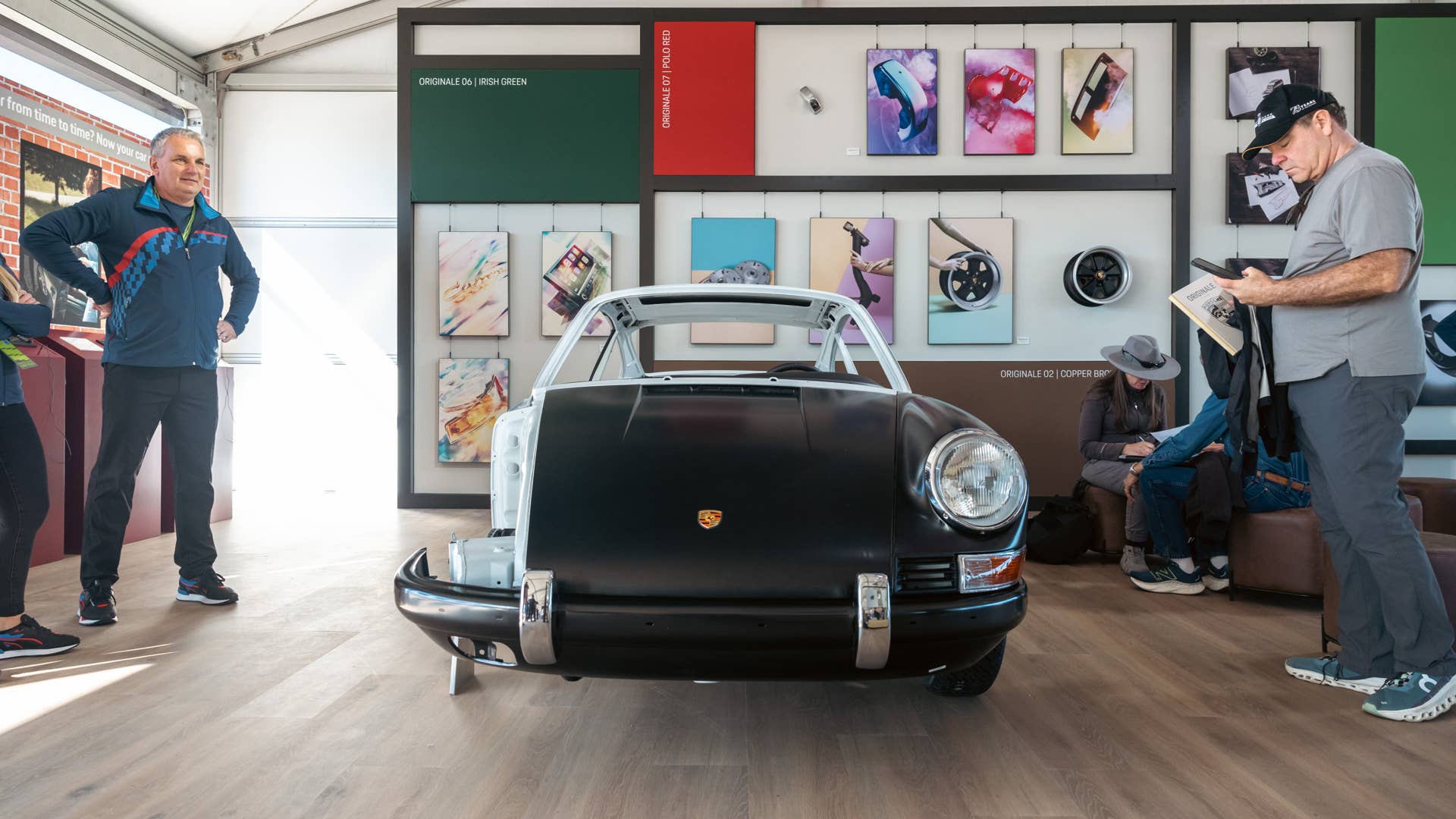
This is where the one-off programme becomes strategically brilliant. Fifteen bespoke commissions, built through the machinery of Porsche Exclusive Manufaktur and its Sonderwunsch programme, represent a rounding error in production terms and a fortune in margin terms. A $15 million commission carries profit density that no Cayenne or Macan can approach—and critically, it costs Porsche almost nothing in brand equity. It compounds it.
Every seven-figure one-off reinforces the central myth of the marque: that a Porsche is not a purchase but an inheritance, something crafted rather than assembled. The waiting lists, the allocation politics, the quiet auctions among collectors—these are not side effects of the business. They are the business, operating at its highest register.
Desire, Deliberately Unfulfilled
The surrounding ecosystem proves the point. The fevered debate over the Louis Vuitton-inspired 911 Reimagined by Singer—is it a hit or a miss?—matters far less than the fact that it exists at all, commanding attention and capital that no volume crossover could summon. Classic Driver's observation that ten different 911s share a name and little else is not a criticism of model proliferation; it is a testament to a platform elastic enough to sustain a thousand identities, each one a potential canvas for exclusivity.
Even the news that Porsche's new supercar enjoys overwhelming feedback but is not coming anytime soon fits the pattern: desire, deliberately unfulfilled, is the most valuable asset Porsche owns. Delay is not indecision. It is pricing power.
Engineering Credibility as Cultural Currency
There is a lesson here that extends beyond Zuffenhausen. The great trap of modern premium automaking is the belief that growth must mean more units—more factories, more variants, more market share. Porsche's turnaround, as the Reuters and WSJ coverage of its guidance suggests, is being built on the opposite conviction: that the top of the market is deeper and more durable than the middle. The V8-powered Macan successor, the EV sound engineering that CarBuzz reports, the La Marzocco collaboration—each is a move in the same game, converting engineering credibility into cultural currency and cultural currency into price.
The $15 million one-off is therefore not an indulgence but a thesis statement. In an industry convulsing over tariffs, write-downs, and the terrifying cost of electrification, Porsche has chosen to compete where it has always been strongest: at the summit, where scarcity is manufactured with the same precision as a flat-six, and where fifteen cars can say more about a brand's future than fifteen hundred thousand ever could. The volume game is for those who need to win it. Porsche, it seems, would rather set the terms.