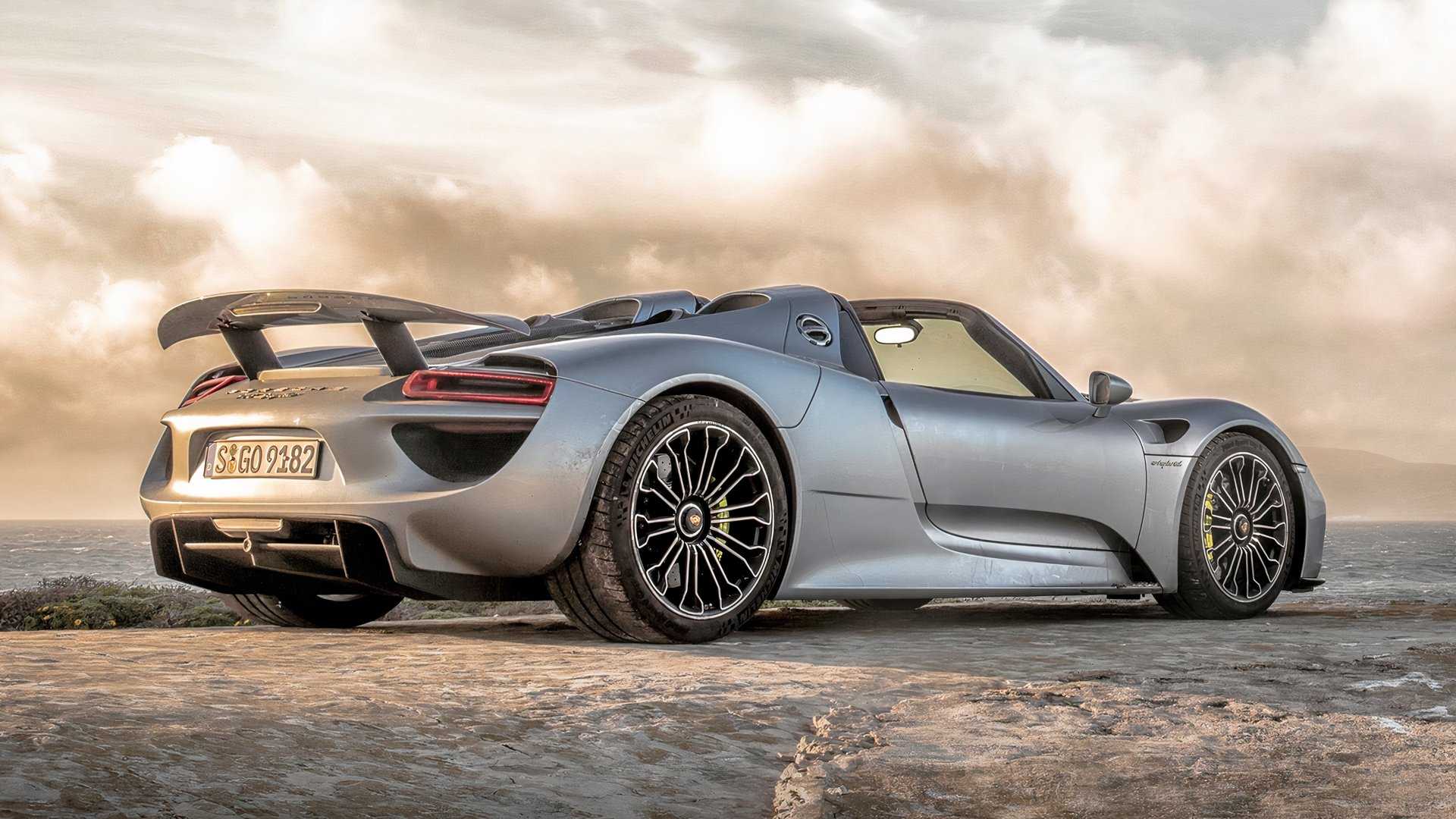
For a company whose entire identity is built on the pursuit of the perfect sports car, Porsche has spent a curiously long time on the sidelines of the hypercar wars. The 918 Spyder was a technological moonshot, yes, but it was a limited-run hybrid statement piece rather than a sustained challenge to Maranello. Since that car retired in 2015, Ferrari has consolidated its grip on the supercar imagination with an unbroken run of mid-engined icons, while Porsche has been content to dominate the sports-car market with the 911 in its myriad forms.
That era of polite abstention appears to be over. The Mission S, Porsche's reinterpretation of the sports car at its most extreme, has now been spotted prowling the streets of New York, and the message is unmistakable: Porsche is gunning for the supercar crown once more.
From Turntable to Tarmac
The significance of that sighting should not be understated. Concept cars live sheltered lives on turntables and under show lights; production-intent prototypes pounding public pavement tell a different story altogether. The Mission S represents Porsche's declaration that it intends to compete at the very top of the pyramid, in the rarefied air occupied by Ferrari's mid-engined flagships.
This is not a faster Cayenne or a more raucous 911 variant. It is a dedicated supercar, a clean-sheet statement of intent, and the first time in a decade that Porsche has built something designed explicitly to hunt Ferraris rather than simply outsell them.
A Brand Firing on Every Cylinder
What makes this moment so compelling is the context in which it arrives. Porsche is not a company coasting on past glories. The 2026 Cayenne Electric Turbo has already reset expectations for what an electric performance SUV can be, earning plaudits for setting an entirely new standard in its segment. The brand's design language is entering a fresh chapter under new chief Tobias Sühlmann, a designer noted for working with unusual speed and clarity of vision. Even the purist's corner of the lineup remains fiercely defended, as reviews of the 911 Carrera T continue to confirm that Porsche has not forgotten how to build a driver's car in the classical mold.
The Mission S, then, is not an isolated gamble but the crowning expression of a brand firing on every cylinder at once.
The Logic Beneath the Romance
There is a strategic logic beneath the romance, too. The market has noticed that Porsche is positioning itself upward, with pricing, bonuses, and internal expectations all trending toward the premium end of the spectrum. Bloomberg has even framed the question of whether Mercedes, Porsche, and BMW can become the Rolex of cars — an analogy that speaks to the peculiar challenge facing German performance brands as they seek to convert engineering excellence into enduring luxury cachet.
A flagship supercar is precisely how such cachet is forged. Ferrari's mystique was not built on volume but on the relentless, halo-building presence of cars that exist at the edge of what is possible. If Porsche intends to be mentioned in the same breath, it needs a car that earns the comparison on the road, not merely on the balance sheet.
Closing In from Every Direction
The competition, meanwhile, is closing in from every direction. Mercedes' first AMG electric crossover is aimed squarely at the Cayenne with a staggering 1,153 horsepower, and BMW's iX3 has already outsold Porsche's electric SUVs in its U.S. debut. The electric transition has flattened old hierarchies and invited challengers into territory Porsche once owned uncontested.
In that environment, the Mission S serves a dual purpose: it defends the brand's performance credibility at the very top while reminding the world that Porsche's engineering ambition extends far beyond the SUV and sedan volume that funds it.
There is something fitting about Porsche returning to the supercar fight through the lens of its own heritage. The company recently resurrected a stillborn pioneer from eighty years ago, a reminder that its history is littered with ideas that arrived ahead of their time. The Mission S feels like the modern inheritor of that restless spirit — a car that reinterprets the essence of the sports car rather than merely extrapolating from it. Porsche has spent a decade proving it can build excellence in every segment it touches. Now it intends to prove that excellence has a summit, and that it belongs there.


